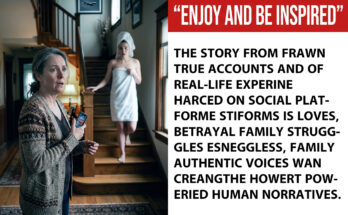
The water in the basin was gray with the filth of her arrogance, but the soul of the woman holding it was even darker. She thought she had stolen a kingdom while the King was at war; she didn’t realize she had only signed a receipt for her own destruction.
My name is Elias Vance, and I have spent the better part of a decade operating in the shadows of the world’s most fractured landscapes. As a Major in a tier-one special operations unit, I was trained to breathe in the dust of distant battlefields and read the shifting intentions of enemies before they even drew breath. I understood the language of the gun, the silent dialect of the knife, and the high-stakes chess match of global intelligence. I could map a hostile compound in my sleep and anticipate an ambush from a mile away. But as I stood in the foyer of the Vance Estate, my duffel bag heavy on my shoulder, I realized I had failed to recognize the most dangerous predator of all—the one I had invited into my own home.
The Vance Estate was more than a $2 million historic colonial nestled in the rolling hills of Virginia; it was the repository of my family’s honor. It was where my father had lived out his final days with dignity, and where my mother, Martha Vance, a woman of seventy-eight with a heart like a fragile bird, was supposed to find her peace. I had spent every bonus, every cent of my hazardous duty pay, and every drop of sweat in the desert to ensure that the gardens were manicured and the silver was polished.
Enter Sloane Sterling.
She arrived in my life during a rare leave, a whirlwind of high-society grace and performative empathy. She was a “philanthropist,” a woman who spoke in soft, musical tones about the “sanctity of the elderly” and the “burden of service.” She carefully curated a mask of the devoted fiancée and the doting daughter-in-law. My mother, usually a sharp judge of character, had been softened by the loneliness of my long absences. She saw Sloane as the daughter she never had, a bright spark in the quiet corridors of the estate.
“I’ll take care of everything, Elias,” Sloane had whispered on the morning of my departure for a two-year clandestine rotation. We were standing in the grand foyer, the morning sun catching the dust motes in the air, creating a golden haze that felt like a blessing. She adjusted my collar, her eyes misting with tears that I now realize were as hollow as a winter reed. “The house, the gardens, and especially your mother. This Protective Trust deed is just a formality so the lawyers don’t harass a lonely woman while you’re out there saving the world.”
She pressured me into signing a Protective Trust deed. Her argument was sound—at least to a man whose mind was already focused on the extraction of a high-value target in a non-permissive environment. In the event of my death or prolonged silence in a combat zone, she argued, she needed the legal standing to manage Martha’s intensive medical care and the estate’s finances. I looked at Martha Vance, who smiled bravely from her wingback chair, nodding her approval. I trusted the woman I thought I loved.
I signed the document. I believed I was building a fortress of safety around the woman who raised me. I believed in the sanctity of a promise. I didn’t see the predatory gleam in Sloane’s eyes as the ink dried—the look of a scavenger who had just been handed the keys to the vault.
It felt like a simple administrative task, a box to check before entering the theater of war. I didn’t realize I was handing her the blade she would eventually use to carve the heart out of my family.
Cliffhanger:
As my transport plane roared into the night sky, leaving the lights of Virginia behind, Sloane didn’t return to the bedroom to mourn my departure. She walked back into the living room, stood over my mother, and didn’t offer a hand to help her up. She simply whispered, “The help is fired, Martha. From now on, you’re the only servant this house needs. And if you tell Elias, I’ll ensure he finds you in a state-run facility that makes purgatory look like a vacation.”
They say a soldier never truly leaves the war behind. I returned to the Vance Estate unannounced, four months earlier than my two-year tour was scheduled to end. A high-priority extraction mission had ended in success, granting my unit a clandestine rotation. I wanted to surprise Martha. I wanted to walk through the front door and see the light return to her eyes.
I arrived at 2:00 AM. I didn’t use the front door; I used the side entrance near the mudroom, a habit of tactical caution that had saved my life a dozen times. The house was cold. Not just the physical temperature, but a deep, structural chill that felt like abandonment. I dropped my gear silently, the heavy thud of my pack muffled by the thick rugs I’d bought in Istanbul.
The air didn’t smell of lavender or the yeast of baking bread. It smelled of industrial bleach, expensive, cloying perfume, and the sour, acrid scent of unwashed floors. My internal alarm system, honed by years of combat, began to hum.
I moved with silent precision toward the kitchen, my senses on high alert. I heard it before I saw it—a sharp, serrated laugh that sounded like glass breaking on stone.
“Drink it, you useless parasite! My feet are tired from shopping for the new furniture I’m buying with your son’s estate funds. If you want to live in my house, you’ll learn the taste of the floor.”
I rounded the corner, my vision narrowing into a lethal, singular point. The rage that began to boil in my veins was cold, a sub-zero fury that paralyzed my vocal cords but sharpened my focus.
The scene was a visceral violation of everything I held sacred. Sloane Sterling was draped in a $5,000 silk robe, her legs crossed as she sat on a high stool. Before her, my mother, Martha Vance, was on her knees. Her fragile frame was shaking with a terror that made my blood turn to liquid nitrogen.
Sloane was holding Martha’s white hair, forcing the old woman’s face toward a plastic basin filled with gray, soapy, filthy water. Martha’s hands, gnarled by arthritis, were scrubbing the kitchen tiles with a rag that was little more than a scrap of burlap.
“Your son is an ocean away, Martha,” Sloane sneered, her voice dripping with sociopathic triumph. “He gave me this house. He gave me you. And I’m tired of both. Now, wash my feet, or you don’t eat until Sunday. And don’t bother crying. Nobody is listening.”
Martha was weeping, a soft, broken sound that tore through my chest like a high-caliber round. Sloane mistook her silence for weakness. She mistook my absence for an invitation. The water in the basin was gray with the filth of her arrogance, but the soul of the woman holding it was even darker. Sloane thought she had stolen a kingdom while the King was at war; she didn’t realize she had only signed a receipt for her own destruction.
Cliffhanger:
Sloane raised her hand to strike Martha for spilling a drop of the gray water on the tile. “You clumsy old bat!” she shrieked. Just as her palm began its descent, the kitchen window vibrated with a low-frequency growl that wasn’t human—it was the sound of a man who had forgotten how to feel fear and remembered only how to deliver justice. She froze, her hand in mid-air, as a shadow blocked the moonlight in the doorway.
My combat boot came down on the plastic basin with the force of a hydraulic press. Shards of polyethylene and gray, stagnant water exploded across the kitchen, drenching Sloane’s designer heels and the silk hem of her robe. The sound echoed through the high-ceilinged room like a gunshot.
Sloane shrieked, jumping back with a frantic scrambling motion, her face a mask of curdled horror as she looked up into the eyes of a man she thought was thousands of miles away in a desert trench. Her mouth hung open, her carefully practiced poise dissolving into raw, primitive panic.
“Elias! You’re… you’re early!” Her voice hit a high, panicked register, her mind desperately trying to flip the script back to the “devoted fiancée.” She tried to smooth her hair, her eyes darting to the floor as if she could hide the rag Martha had been using. “I was just… your mother was having a ‘fit’, she was being difficult, she fell, and I was just trying to help her—”
I ignored her. I didn’t even acknowledge her existence. I knelt beside Martha Vance, my hands—scarred and calloused from years of iron and cordite—trembling as I lifted her. She felt like a bird made of glass, her bones so light it was terrifying. She didn’t recognize me at first; her eyes were clouded with the fog of trauma, her pupils dilated in shock.
“It’s okay, Mom,” I whispered, my voice a low, vibrating hum that I used to calm my men before a breach. “The Major is home. The war is over. I’ve got you.”
She let out a soft, wet sob and buried her face in my chest, her small hands clutching my tactical fleece as if it were the only solid thing in a collapsing world. Only then did I turn to Sloane. She had recovered some of her jagged arrogance, pulling the Protective Trust deed from her pocket like it was a holy relic, a piece of parchment she believed made her invincible.
“You can’t touch me, Elias!” she snapped, her voice regaining its shrill, commanding edge as she stepped behind the kitchen island. “I have the deed! You signed it! This house is legally mine, and I’ve already contacted a realtor to sell the North lot. You’re a guest here now. If you lay a hand on me, I’ll have you court-martialed for assault! I have a lawyer on speed-dial who will bury you in paperwork until you’re a private again!”
I looked at her, and for the first time in her life, Sloane Sterling saw what a predator actually looked like. I didn’t reach for the paper. I didn’t yell. I didn’t even move toward her. I simply checked the time on my watch.
“Sloane,” I said, my voice as cold as a sniper’s lens in the dead of winter. “You understand the law about as well as you understand honor. You think that paper is a shield? In my world, we call that a target. You’ve spent six months playing a game you don’t have the rank to win.”
Cliffhanger:
Elias finally looked at her, his eyes as cold as a sniper’s lens. He didn’t reach for the paper. He reached for his phone and hit a single speed-dial button that bypassed the local dispatcher. “Major Vance here. Initiate the ‘Vitiated Contract‘ protocol. We have a domestic breach of the ‘character clause’. Bring the audit team and the containment unit. We’re moving to phase two.”
The air in the kitchen grew heavy, the silence punctuated only by Martha’s ragged, sobbing breathing. Sloane tried to laugh, but it was a brittle, hollow sound that died in the back of her throat. She gripped the marble countertop until her knuckles were white.
” ‘Character clause‘? What are you talking about? I read that deed, Elias. I had my personal paralegal review it. It’s a standard irrevocable trust. It’s ironclad. You gave me the keys to the kingdom, and you can’t take them back just because you had a bad day at the office.”
“You read the version I wanted you to read, Sloane,” I said, leaning against the counter, my arms crossed over my chest. The soldier in me was at rest, but the operative was just beginning his work. “But as I told you before I left, I’ve spent ten years in military intelligence. I don’t give away $2 million estates to women I’ve known for a year without a thorough Audit. Did you really think I’d leave my mother’s life in the hands of a stranger without a fallback? Without a ‘Dead Man’s Switch’?”
I reached behind the spice rack, my fingers finding the recessed magnetic catch. I pulled out a small, pin-sized lens—one of sixteen Tactical Surveillance Units I had hidden throughout the house before my departure.
“That ‘deed’ you’re holding? It’s a Vitiated Asset form. It’s a legal sting operation. It only becomes valid and irrevocable if the beneficiary provides ‘exceptional and documented care’ to the primary resident—my mother. And for the last six months, every meal you skipped, every insult you hurled, every hour you left her in the cold, and every bruise you put on her has been live-streamed to a secure server at the JAG office and my private security firm.”
Sloane’s face turned from a flush of anger to a ghostly, translucent white. The paper in her hand fluttered to the floor—suddenly just a useless scrap of wood pulp, a confession rather than a contract.
“You… you spied on me? In my own home?” she whispered, her voice trembling.
“I monitored a threat in my home,” I corrected, my voice dropping an octave. “And the audit is complete. You haven’t just lost the house, Sloane. You’ve been documented committing multiple counts of Felony Elder Abuse, Financial Fraud, and Grand Larceny. You haven’t been stealing a kingdom; you’ve been building your own prison cell, brick by bitter brick.”
The front door burst open. It wasn’t the local police, who might have been swayed by Sloane’s social standing or her “philanthropy” connections. It was a team of four men in black tactical gear, their movements synchronized and silent, followed by a woman in a sharp, gray suit—Colonel Sarah Miller, the head of my private legal and security firm.
Cliffhanger:
The front door burst open. It wasn’t the police; it was a team of four “movers” in black tactical gear carrying heavy-duty crates. Elias looked at Sloane, whose eyes were darting toward the back exit, and whispered, “You wanted to talk about property? Let’s talk about ‘Disposable Waste‘ removal. Colonel, start the asset seizure. Everything she brought in goes to the curb. Everything she stole stays here.”
I didn’t wait for a court order. Under the terms of the vitiated trust and the emergency protection statutes we had pre-filed, Sloane Sterling was now considered an “Immediate Threat to a Vulnerable Dependent.”
I watched with a clinical detachment as the tactical team—men who had served with me in the sandbox and knew exactly what she had done to my mother—began the process of “cleansing.” They didn’t pack her bags with care. They used high-strength plastic bins to sweep her designer clothes, her stolen jewelry, and her expensive makeup into heaps. They moved through the master suite like a demolition crew, erasing every trace of her malignancy from the house.
Sloane was screaming, her silk robe fluttering as they led her firmly toward the front door. Her face was distorted with rage, the mask of the “philanthropist” utterly shattered. “You can’t do this! I’ll tell the press you’re a monster! I’m a respected woman in this town! I’ll tell them you have PTSD and you’re delusional!”
“The press is already here, Sloane,” I said, pointing to the front gates. Through the darkness, the flash of a local news van was already visible. My team had tipped them off about a ‘High-Society Fraud and Elder Abuse’ bust involving a major donor. “And they’re not interested in your charities tonight. They’re interested in the footage of the basin. They’re interested in the ‘philanthropist’ who treats an eighty-year-old woman like a scullery maid.”
Inside, I knelt before Martha again. I didn’t wash her feet with gray filth. I took a bowl of warm, lavender-scented water and a soft cloth, and I cleaned the dirt and the shame from her skin with the reverence of a son who had finally come home from the longest war of his life.
“I’m so sorry, Mom,” I whispered, my voice breaking for the first time. “I should have seen it. I should have known.”
She reached out and stroked my hair with a hand that was finally still. “You came back, Elias. That’s all that matters. The King is home, and the house is clean again.”
Cliffhanger:
As the last of Sloane’s bags hit the dirt at the curb under the blinding glare of the news cameras, a black SUV pulled up in the driveway. A man in an expensive suit stepped out—Julian Thorne, Sloane’s “secret lover” and the partner in the fraud who had been helping her move my estate’s funds into offshore accounts. He saw me, saw the tactical team, and immediately put the car in reverse, his face white with terror. But my team had already blocked the exit with an armored Suburban. Elias looked at the Colonel. “The audit was just the beginning. Now we start the liquidation.”
Six Months Later.
The sun set over the Vance Estate, painting the colonial columns in shades of gold and amber. The air was clean, smelling of fresh jasmine and the lavender Martha had planted in her new garden. The acrid scent of bleach and the memory of the gray water were distant, dark ghosts, exorcised by the light of the truth.
I had retired from active duty. The war abroad had been enough, and my new mission was right here, within these walls. I ran a private security and forensic auditing firm from the home office, ensuring that no other family would have to endure a Sloane Sterling. I was no longer a Major in the desert; I was the Guardian of the Hearth.
The $2 million estate was now the headquarters of the Vance Foundation for Elder Dignity. We provided legal and tactical support for families dealing with the same rot that had almost destroyed mine. We were the “movers” for the vulnerable.
Sloane was currently serving a six-year sentence in a state correctional facility for elder abuse and grand larceny. Without her money, her looks, or her “status,” she was finding that the world of a prison yard was far less forgiving than the foyer of a mansion. She had written to me once—a pathetic, rambling plea for a “character reference” and a “second chance.”
I hadn’t opened it. I had used the envelope as a coaster for my morning coffee before dropping it into the outdoor fire pit. Some things are better left to ash.
I stood on the porch, watching my mother. She was sitting in her wingback chair, knitting a sweater for a neighbor’s grandchild. Her eyes were bright again, the fog of trauma replaced by the clarity of a woman who was loved.
I realized then that a house is only a home when it is guarded by the truth. A deed is just wood pulp and ink, but a son’s duty is a fortress that never falls. I looked at the garden, at the peace we had fought so hard to reclaim.
“Elias?” my mother called out, her voice strong and clear. “Are you coming in for dinner? I made your father’s favorite roast.”
“In a minute, Mom,” I said.
I looked at the small, hand-carved wooden box my mother had given me earlier that day. She’d hidden it under the floorboards during the “Sloane Era,” a final piece of her husband’s legacy. Inside was my father’s old pocket watch and a note he’d written to me before he died: Protect the hearth, and the hearth will protect you.
The final verdict was in. The kingdom was restored. And the Major was finally at peace.
Cliffhanger:
As the moon rose, Martha looked at Elias and smiled. “You know, son… I always knew you were watching. Even when you were an ocean away.” She handed him a second, smaller box she’d kept tucked away. “This was in Sloane’s private safe. She forgot that I may be old, but I am still a Vance.” Elias opened the box, and his eyes widened. Sloane hadn’t just been stealing money; she had been keeping a list of every other “Golden Child” in the city—military families they planned to target next while the husbands were deployed. The audit wasn’t over; it was just becoming a legacy of justice.