When Teresa’s key failed in the front door, you were standing upstairs in your bedroom, watching through the security camera on your phone. You saw her twist the key once, then again, harder the second time, as if the lock itself had insulted her. Behind her, Alejandro stood on the stone walkway in yesterday’s wrinkled shirt, holding two paper coffee cups like peace offerings.
Teresa knocked first. Then she pounded. Then she stepped back and shouted your name so loudly the gardener across the street turned his head.
“Mariana! Open this door right now!”
You didn’t move.
The new locks had been installed less than twenty minutes earlier. The locksmith had apologized for arriving early, and you had almost laughed because, for once, someone’s timing was perfect. Your lawyer had told you to document everything, so you did.
You recorded Teresa’s face as she realized the house no longer obeyed her.
Alejandro tried calling you. His name flashed across your phone once, twice, then seven times. You let every call ring until it disappeared.
The night before, he had watched his mother destroy your clothes and said almost nothing. That silence had been louder than Teresa’s insults. It had told you exactly where you stood in your own marriage.
And now, standing in the home you bought before you ever wore his ring, you decided silence could answer him too.
At 12:08 p.m., Teresa slammed both palms against the door.
“This is my son’s house!” she yelled. “You can’t lock us out of what belongs to him!”
You pressed the speaker button on the security app.
“Teresa,” you said calmly, “the police have already been notified that you are not allowed inside without my permission.”
She froze.
Alejandro looked up at the camera as if he had just noticed it for the first time. His face changed, not with guilt, but with fear. Men like him were never afraid when they hurt you.
They only became afraid when proof existed.
“Mariana,” he said, raising his hands, “come on. Let’s not do this in front of the neighbors.”
You almost smiled.
Not because anything was funny, but because his first concern was still appearances. Not your torn dress. Not your humiliation. Not the fact that his mother had treated you like an intruder in the kitchen you designed.
Just the neighbors.
“You should have thought about the neighbors last night,” you said.
Teresa pointed at the camera. “You arrogant little nobody. My son made you.”
“No,” you replied. “I hired him.”
The silence that followed was sharp enough to cut glass.
For the first time since you had met her, Teresa had no comeback ready. She turned toward Alejandro slowly, searching his face for denial. He looked down at the coffee cups in his hands.
That tiny movement betrayed him completely.
“What does she mean?” Teresa asked.
Alejandro swallowed. “Mom, not here.”
But it was already too late. Her entire world had been built on one belief: her son was the provider, the owner, the king of the house. She had used that belief to insult you, dismiss you, and tear your things apart.
Now the truth stood between them like a locked door.
At 12:15, the company SUV rolled up beside the curb.
The driver, a quiet man named Raúl, stepped out holding a clipboard. He looked uncomfortable but professional, which you appreciated. He had worked for Ruta Norte Logística for six years and knew exactly who signed his checks.
“Mr. Rivas,” he said to Alejandro, “I need the vehicle keys.”
Alejandro’s jaw tightened. “This is ridiculous.”
Raúl said nothing.
Teresa looked between them. “What vehicle keys?”
“The SUV is registered to the company,” Raúl said. “It has been recalled.”
Teresa’s mouth opened, but no sound came out.
Alejandro stepped closer to the gate, lowering his voice even though the camera still caught every word. “Mariana, don’t embarrass me like this.”
That sentence did something to you.
It did not break you. It did not make you cry. It simply confirmed that even now, after everything, he believed your job was to protect him from consequences.
“You embarrassed yourself,” you said.
Raúl waited.
Alejandro hesitated, then pulled the keys from his pocket and threw them toward the driver. They hit the pavement hard. Raúl picked them up without reacting.
As the SUV drove away, Teresa stared after it like she was watching money leave her bloodline.
Then your phone buzzed again.
This time it was not Alejandro.
It was your CFO, Isabel.
“Mariana,” she said, “we found something. You need to come to the office.”
You looked once more at the camera. Alejandro was still at the gate, arguing with his mother in angry whispers. Teresa kept waving her hands, demanding answers he clearly did not want to give.
You grabbed your purse, your laptop, and the folder your lawyer had delivered at dawn.
Then you walked out through the side entrance, where your private driver was waiting.
You did not sneak away.
You left through the exit only owners remembered existed.
By the time you reached Ruta Norte’s headquarters in Santa Fe, the building felt different. It was the same glass tower, the same polished floors, the same reception desk with white orchids you replaced every Monday. But that morning, every employee who saw you seemed to understand something had shifted.
Not because they knew all the details.
Because power has a temperature.
And yours had finally gone cold.
Isabel was waiting in the executive conference room with your attorney, Daniela Voss, and the head of HR. Three folders lay on the table. One was marked corporate expenses. One was marked unauthorized transfers. The last one had Alejandro’s name printed across the tab.
You sat down slowly.
“Tell me,” you said.
Isabel opened the first folder. “After you sent the video, I reviewed all expenses connected to Alejandro’s regional division. At first, I expected misuse of the company card. Hotels, restaurants, personal fuel, maybe gifts.”
You looked at her face. “But?”
She slid several printed statements toward you. “It’s bigger.”
The first page showed luxury hotel charges in Cancún. The second showed jewelry purchases. The third showed payments to a private club you had never approved. Then came tuition payments for a nephew, medical bills for Teresa, and monthly transfers to an account you did not recognize.
You read the account holder’s name twice.
Teresa Rivas.
Your mother-in-law had been insulting you while quietly living off your company.
Daniela leaned forward. “There is more.”
Of course there was.
There is always more once the first lie comes apart.
Isabel tapped the final folder. “Alejandro authorized several vendor contracts through companies connected to his cousins. Inflated invoices, repeated service fees, duplicate transportation charges.”
You stared at the numbers. “How much?”
She hesitated just long enough for your stomach to tighten.
“Preliminary review? Around $730,000 over eighteen months.”
For a second, the room became silent in that strange way rooms do after disasters are named. You were not shocked by betrayal anymore. You were shocked by the effort he had put into stealing from the very company that gave him the status his mother worshiped.
He had not only let her believe he maintained you.
He had funded her arrogance with your money.
HR placed another sheet on the table. “There are also complaints.”
You looked up.
“From staff?”
She nodded. “Three women in the regional office reported inappropriate comments from Alejandro. Two withdrew their complaints after his assistant told them their jobs might be affected. We have reason to believe he used his position to intimidate them.”
Your hands went cold.
That was the moment the story stopped being only about your marriage. It became about every person who had stayed quiet because Alejandro wore your company name like armor.
Your company.
Your reputation.
Your responsibility.
“Bring me everything,” you said. “No shortcuts. No favors. No family considerations.”
Daniela studied you. “Are you sure?”
You looked at the torn fabric still folded in your purse. You had brought a piece of the white dress with you, though you didn’t know why until that moment. Maybe you needed a reminder that disrespect begins as noise, but becomes a system if no one stops it.
“I’m sure,” you said.
At 3:40 p.m., Alejandro finally appeared at the office.
He had no access card, so security stopped him in the lobby. By then, he looked less like a regional director and more like a man whose borrowed costume no longer fit. Teresa was with him, wearing oversized sunglasses indoors and carrying the same designer bag she once claimed you bought only to impress people.
The receptionist called upstairs.
You told her to let them wait.
For forty-seven minutes, they sat in the lobby beneath the company logo you had designed nine years earlier on a borrowed laptop. You watched from the conference room camera as Teresa whispered angrily, and Alejandro checked his phone again and again. He was not used to waiting.
That was why you made him wait.
Not to be cruel.
To remind him that access was never the same thing as ownership.
Finally, Daniela went downstairs with security and escorted them to the smaller legal conference room. Not your office. Not the executive floor. Not the glass room where investors had once applauded him.
A legal conference room with recording equipment and no coffee.
When you entered, Teresa stood first.
“How dare you treat my son like a criminal?”
You placed the torn piece of your dress on the table between you.
“How dare you tear my property in my home while spending my company’s money?”
Her face twitched.
Alejandro sat stiffly. “Mariana, we need to speak alone.”
“No,” you said. “We’re done being alone with the truth.”
Daniela sat beside you, opened her laptop, and began recording with everyone’s knowledge. Teresa immediately objected. Daniela calmly informed her that after the prior night’s destruction of property and today’s threats at the residence, all communication would be documented.
Teresa turned to Alejandro. “Say something.”
He looked at you instead. “You didn’t have to suspend me. You could have talked to me first.”
You leaned back in your chair. “Like you talked to me before your mother tore my clothes?”
His jaw flexed.
“I told her to stop.”
“No,” you said. “You suggested she calm down. There is a difference.”
Teresa slapped the table. “I am his mother.”
“And I am his employer,” you said. “Today, that matters more.”
The sentence landed exactly where you meant it to.
Alejandro’s face burned red. For years, he had enjoyed the prestige of your company while pretending it embarrassed him that you were more successful. At dinner parties, he spoke over you when people asked about logistics. He called Ruta Norte “our business” when investors were listening and “your obsession” when he wanted you home earlier.
He wanted the crown without admitting whose head it belonged to.
Daniela began with the company vehicle, then the credit card, then the unauthorized charges. With each page, Teresa’s anger weakened into confusion. By the time the transfers to her account appeared on the screen, she stopped breathing normally.
“That was money Alejandro gave me,” she said.
“From my company,” you replied.
“I didn’t know.”
You looked at her. “You didn’t ask.”
That was the truth of Teresa’s entire life. She had never asked where comfort came from as long as a man handed it to her. She never questioned the house, the driver, the dinners, the medical bills, the gifts, or the monthly deposits.
She only questioned your right to stand inside the life you built.
Alejandro leaned forward. “Those were reimbursements.”
Isabel, who had joined silently by then, slid a spreadsheet across the table. “For what services did your mother provide Ruta Norte?”
Teresa looked offended. “I don’t work for you.”
“No,” Isabel said. “Exactly.”
You almost admired how cleanly she said it.
Alejandro pushed back his chair. “This is a family matter.”
You shook your head. “Last night was family. Today is fraud.”
That word finally cracked him.
He lowered his voice, the way he did when he wanted to sound wounded instead of guilty. “After everything we’ve been through, you’re going to destroy me over money?”
You looked at the dress. “No. You destroyed yourself over money.”
He laughed bitterly. “You think you built everything alone?”
The room changed.
There it was. The thing he had always kept hidden under charm. He believed your success was not truly yours because he had stood close enough to it.
You folded your hands. “Say what you mean.”
For a moment, you thought he might stop.
But arrogance is a car with no brakes.
“I gave you legitimacy,” he said. “People trusted Ruta Norte more after I joined. Clients liked dealing with me. You were too intense, too cold, too obsessed with control.”
Teresa nodded quickly, relieved to return to a story where her son was the hero.
You looked at Isabel. She looked at Daniela. No one interrupted.
So Alejandro kept digging.
“Half those contracts came because I knew how to talk to men who didn’t want to deal with a woman trying to act like a CEO.”
There it was.
The sentence that explained the marriage better than any affair could have.
You had thought Alejandro resented your long hours. Then you thought he resented your success. Now you understood: he had resented the fact that you did not need him to translate your power into something men could respect.
You smiled softly.
Not happily.
Precisely.
“Thank you,” you said.
Alejandro frowned. “For what?”
“For saying that on record.”
His eyes moved to Daniela’s laptop.
Too late.
By evening, the board had been notified. Alejandro was placed under formal investigation. His access to all company systems remained suspended, his corporate accounts frozen, and his regional team reassigned until the audit was complete.
Teresa was escorted out first.
She tried to leave with dignity, but rage kept tripping her. In the lobby, she turned back and shouted that you were a cold, ungrateful woman who would end up alone. Several employees heard.
No one defended her.
That silence was not like Alejandro’s silence.
This one protected you.
Alejandro stayed behind for one final conversation with Daniela present. His anger had cooled into panic. He asked if the company could “resolve this internally.” He said he would repay certain expenses. He said he had been under pressure from his family.
Then he said the sentence weak men always find when the walls close in.
“You know my mother is difficult.”
You stared at him. “Your mother did not forge approvals.”
He looked away.
There it was again.
Not confession.
But enough.
That night, you returned to the house alone.
The kitchen had been cleaned, but you could still see where the dress had fallen. The marble counter reflected the warm under-cabinet lights. Everything looked too beautiful for what had happened there.
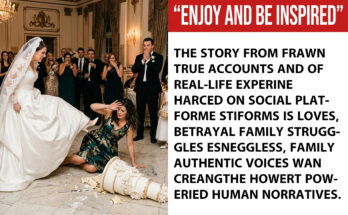
You walked to the trash bag where the housekeeper had placed the ruined clothing. The white dress was inside, split down the middle. The blue silk blouse lay beneath it like a bruise.
You pulled them out, folded them carefully, and placed them in a box marked evidence.
Then you made tea.
That was the strangest part of becoming strong. It did not feel like standing on a rooftop with lightning behind you. It felt like making tea in a quiet kitchen after the people who humiliated you finally lost their keys.
At 9:12 p.m., Alejandro texted.
“Please don’t let lawyers ruin our marriage.”
You stared at the message for a long time.
Then you typed back, “You let your mother ruin my dignity and used my company to finance your lies. The marriage was already ruined.”
He responded immediately.
“I still love you.”
You almost laughed.
Love had become the word he reached for when access failed.
You did not answer.
The next morning, the audit expanded.
Every hour brought a new piece of the map. A consulting contract with a fake vendor. Personal travel disguised as route inspections. Expensive dinners labeled as client acquisition. A warehouse maintenance invoice paid twice, once to the legitimate supplier and once to a shell company tied to Alejandro’s cousin.
By noon, Daniela had enough to recommend civil action.
By 3 p.m., Isabel had enough to notify the board that potential criminal conduct had occurred.
By 5 p.m., you had enough to understand your husband had not been careless.
He had been building a hidden exit with your money.
The worst discovery came from his company email archive.
A message to a private attorney.
The subject line read: “Asset strategy before separation.”
You opened it with Daniela beside you.
In the message, Alejandro described you as “emotionally unstable,” “obsessed with work,” and “vulnerable to reputational pressure.” He asked whether your home in Lomas could be challenged as a marital asset if he proved he had contributed to its “social and operational value.” He asked whether his position in Ruta Norte could support a claim to future revenue.
Then came the sentence that made your body go still.
“My mother can help pressure her into a settlement if needed.”
Your mother-in-law tearing your dress had not been spontaneous.
Maybe the exact moment was not planned. Maybe the rage was real. But the strategy behind it had been waiting.
Pressure you.
Humiliate you.
Make you emotional.
Then use your reaction as evidence.
For several minutes, you said nothing.
Daniela touched the table lightly. “Mariana?”
You stood.
“I need air.”
On the rooftop terrace of the office building, Mexico City stretched beneath you, endless and glittering. The sky was bruised purple, the kind of evening that made glass towers look like knives. You leaned against the railing and let yourself shake.
Not because you missed him.
Because you finally saw how close you had come to being trapped by a story someone else wrote about you.
For years, you had moderated your voice so you would not sound harsh. You had smiled when Teresa insulted your work because you didn’t want to make Alejandro choose. You had let him stand beside you in photos as if he had built what you built.
And all that time, he had been preparing to call you unstable the moment you stopped being useful.
When you returned downstairs, your decision had become simple.
“File everything,” you told Daniela.
She nodded. “Civil and criminal?”
“Yes.”
“And divorce?”
You looked through the glass wall at your company’s logo.
Your first truck route had nearly failed because you couldn’t afford proper software. Your first office had no air conditioning. Your first investor told you logistics was too rough for a woman and suggested you start a boutique instead.
You had survived all of that.
You would survive Alejandro.
“Yes,” you said. “Divorce too.”
Three days later, Teresa appeared at your house again.
This time she came without Alejandro. She stood outside the gate wearing black, as if attending a funeral for her own authority. The camera notified you while you were reviewing contracts in your study.
You considered ignoring her.
Then curiosity won.
You opened the audio but not the gate.
“What do you want, Teresa?”
Her face tilted toward the camera. The anger was still there, but now it had desperation wrapped around it.
“I want my son’s things.”
“His personal items are being inventoried and will be returned through counsel.”
She clenched her jaw. “You enjoy this, don’t you?”
“No,” you said. “I enjoyed peace. You interrupted it.”
Her eyes narrowed. “You think money makes you better than us.”
You stood from your desk and walked closer to the screen, though she could not see you. For years, she had reduced everything to money because money was the only language that protected her fantasy.
“No, Teresa. I think truth makes me freer than you.”
She laughed bitterly. “Truth? The truth is you were never enough woman for my son.”
There it was again. The oldest weapon.
You looked at her face and felt something surprising.
Pity.
Not gentle pity. Not forgiving pity. The kind you feel when someone has spent her entire life defending a cage because she decorated the bars herself.
“You raised him to believe women exist to serve his pride,” you said. “Now he may lose his career, his marriage, and his freedom because he believed you.”
Her mouth tightened.
For once, that hit.
“You don’t know what I sacrificed for him,” she snapped.
“No,” you said. “But I know what you expected me to sacrifice for him. I refuse.”
You ended the call.
She stayed outside for nine more minutes.
Then she left.
The divorce papers were served the following Monday.
Alejandro called you from an unknown number within an hour. His voice was low, controlled, almost tender. That tone had once worked on you. It was the tone he used after every dinner where he embarrassed you, after every family gathering where Teresa made you feel small, after every argument where he needed you calm enough to continue funding his comfort.
“Mariana,” he said, “I know you’re angry.”
“I’m not angry enough,” you replied.
He exhaled. “Please. We can fix this.”
“What part?”
“Our marriage.”
“You didn’t protect our marriage. You protected your access to me.”
Silence.
Then his voice hardened. “You’re making a mistake. If this goes public, clients will ask questions. The board will worry about instability. You think you can run a company while dragging your husband through court?”
You almost admired the speed of the shift.
From love to threat in under two minutes.
“Yes,” you said. “I can.”
“You’ll look vindictive.”
“No,” you said. “I’ll look audited.”
He hung up.
That call became part of the record too.
Over the next two months, the case widened. Vendors cooperated. Employees came forward. One former assistant produced messages showing Alejandro had asked her to process expenses under misleading categories. Another employee admitted he had been told to delete route reports that contradicted inflated billing.
The shell companies unraveled.
One cousin blamed another. One vendor claimed he thought Alejandro had ownership authority. Teresa insisted the monthly transfers were gifts and that she never knew where the money came from.
But ignorance is not innocence when you spend the benefits of theft while insulting the person who earned them.
Alejandro’s attorneys tried to negotiate.
First, they asked for a quiet resignation and private repayment plan. You refused. Then they offered a public statement citing “personal reasons.” You refused again.
Finally, they suggested both sides had made mistakes.
That was when Daniela laughed.
Not loudly.
Just enough.
You did not want revenge. Revenge would have been too small for what had happened. You wanted documentation, accountability, and clean separation.
You wanted your name removed from his lies.
At home, the house changed.
You replaced the kitchen curtains. You donated the dining chairs Teresa had once called “too modern for a family home.” You turned Alejandro’s media room into a reading lounge with deep green shelves and a long velvet sofa.
Piece by piece, the house stopped waiting for conflict.
One Saturday morning, your younger sister Camila came over with pastries and found you sitting on the floor surrounded by old photo albums.
Not the other Camila.
Your Camila. The one who had warned you before the wedding that Alejandro smiled too perfectly.
She sat beside you and picked up a photo from your engagement party. In it, Teresa had one hand on Alejandro’s shoulder and the other resting lightly on your arm, like she was claiming both of you.
“I hated this day,” your sister said.
You looked at her. “You never told me that.”
“I did. You said I was being dramatic.”
You winced.
She softened. “You were in love.”
“I was invested,” you said quietly. “I’m not sure it was the same thing by the end.”
Camila leaned her head against your shoulder.
For a while, neither of you spoke.
Then she said, “You know what the wildest part is?”
“What?”
“You were always the house. The company. The money. The stability. The future. And they still convinced you to act grateful for a chair at your own table.”
That sentence stayed with you longer than any legal document.
Because it was true.
You had been so busy proving you were not arrogant that you had allowed people to treat your achievements like shared furniture. You softened your success so Alejandro could stand beside it comfortably. You made yourself smaller inside the life you built.
Never again.
The board meeting that removed Alejandro formally happened on a Thursday morning.
He attended remotely with his attorney. You sat at the head of the table, not because you needed to prove anything, but because that had always been your seat. The audit findings were presented in full: unauthorized payments, policy violations, vendor conflicts, intimidation concerns, misrepresentation.
When given a chance to respond, Alejandro denied criminal intent.
He said the company had grown quickly. He said procedures were informal. He said you had trusted him with broad discretion. He said the family transfers were personal matters accidentally mixed with corporate accounts.
Then he looked directly into the camera.
“Mariana knows I would never steal from her.”
You felt nothing.
That was how you knew you were healing.
You no longer wanted him to admit the truth so you could feel sane. The evidence had already done that.
You simply said, “I know what the records show.”
The vote was unanimous.
Alejandro was terminated for cause.
His shares, which were limited and performance-based, were forfeited under the misconduct clause he had signed without reading carefully because he assumed you would never enforce it. His name was removed from company materials by the end of the day.
At 6 p.m., employees received a formal internal statement.
It was concise, professional, and devastating.
No gossip. No drama. No mention of your marriage.
Just facts.
Sometimes facts are the most elegant form of revenge.
That night, you went home, opened a bottle of wine you had been saving for a major contract win, and poured one glass. You did not toast Alejandro’s downfall. You toasted your own return.
Then the doorbell rang.
Not the gate.
The front door.
Your body went still.
Only someone with approved access past the outer gate could reach the door. You checked the camera and saw Teresa standing there, soaked from unexpected rain, her hair flattened against her face. She looked older than before.
Security had let her through because she claimed there was a family emergency.
You almost called them to remove her.
Then you saw she was crying.
Real tears, this time.
Against your better judgment, you opened the door but left the chain attached.
“What happened?”
Teresa looked through the gap.
“Alejandro won’t answer me,” she whispered. “He hasn’t been home in two days.”
You studied her.
There was a time when those words would have pulled you instantly into action. You would have called hospitals, friends, police contacts, anyone. You would have become the responsible woman cleaning up the crisis.
But you were learning that not every emergency belonged to you.
“Call his attorney,” you said.
“I did. He says Alejandro is under stress.”
“I’m sure he is.”
Teresa wiped her face with a shaking hand. “He lost everything.”
“No,” you said. “He lost what wasn’t his.”
She flinched.
For the first time, you saw not the cruel mother-in-law, not the woman who tore your dress, but a mother terrified because the son she worshiped had been exposed. That did not erase what she did. It only explained the shape of her panic.
“I don’t have money,” she said. “The account stopped. The medical bills—”
You almost closed the door.
Then she said the quiet part.
“He told me you approved it.”
The rain filled the silence between you.
“What?”
“The money,” she said. “Every month. He said it was part of his compensation. He said you knew because you loved family. I thought…” Her voice cracked. “I thought you were just pretending to be humble when you said you paid for things.”
You stared at her.
It would have been easy to believe she was lying. Maybe part of her was. But her confusion at the locked door, her shock at the company car, her horror in the conference room—some of it had been real.
Alejandro had lied to everyone.
He had fed Teresa the version of reality she already wanted, and she had swallowed it because it tasted like pride.
“That doesn’t excuse what you did,” you said.
“I know.”
You had never heard those words from her before.
Not once.
Teresa looked down. “I hated you because I thought you were taking from him. But he was taking from you.”
You did not open the door wider.
Forgiveness did not require foolishness.
“What do you want from me?”
She lifted her face. “Nothing. I just needed to know if he lied about that too.”
You looked at her for a long moment.
“Yes,” you said. “He lied.”
She nodded slowly, like the final piece of a terrible puzzle had clicked into place. Then she stepped back from the door.
“I’m sorry about the dress,” she said.
The apology was too small for everything.
But it was the first true thing she had given you.
You did not say it was okay.
Because it wasn’t.
You simply said, “Good night, Teresa.”
Then you closed the door.
Two weeks later, Alejandro was arrested.
Not dramatically. Not in a mansion. Not at a business dinner. He was picked up outside a serviced apartment in Polanco, wearing sunglasses and carrying a duffel bag.
The news reached you through Daniela.
“He was preparing to leave the country,” she said.
You closed your eyes.
Of course he was.
A man who built his life on borrowed things would try to escape before anyone collected.
The authorities had enough to proceed on fraud-related charges tied to the corporate scheme. The divorce continued separately. Civil claims moved forward as well.
Alejandro’s public statement called the matter “a misunderstanding arising from administrative differences during a painful marital separation.”
Your company’s statement did not respond.
It didn’t need to.
The court filings spoke louder.
Months passed, and the story became something people whispered about at restaurants, boardrooms, and family gatherings. Some said you were ruthless. Some said you were brave. Some said Alejandro was foolish for crossing a woman with lawyers and liquidity.
They all missed the point.
You had not won because you had money.
You had won because the truth had records.
And because the woman they expected to cry quietly in the kitchen had pressed record.
The final divorce hearing came almost a year after the torn dress.
You wore a cream suit, simple earrings, and no visible anger. Alejandro appeared thinner, his face drawn, his confidence patched together badly. Teresa sat behind him, but she did not glare at you.
She looked down at her hands.
The settlement was not generous to him.
His misconduct, documented financial abuse, and misuse of company resources destroyed most of his claims. The house remained yours. The company remained yours. The court recognized that the assets he tried to present as shared had been built, owned, and protected by you before and during the marriage.
Alejandro tried one final performance.
Before signing, he looked at you and said, “I did love you, Mariana.”
You looked at the man who had watched his mother humiliate you, stolen from your company, prepared to paint you unstable, and then tried to flee when the consequences arrived.
Maybe he believed it.
Maybe love, to him, had always meant access.
“I loved the person I thought you were,” you said. “Neither of us gets that person back.”
His hand shook as he signed.
Yours did not.
After court, Teresa approached you in the hallway. Daniela moved closer, but you gave a small nod to let her stay back. Teresa looked different now—less polished, less sharp, less certain that motherhood made her untouchable.
“I know you don’t owe me anything,” she said.
“You’re right.”
She accepted that.
“I sold my apartment,” she continued. “I’m moving in with my sister in Puebla. I came to say goodbye.”
You said nothing.
She swallowed. “I raised him wrong.”
That sentence surprised you more than any apology could have.
For a moment, you saw the entire tragedy in reverse. A mother teaching her son he deserved service. A son learning charm was easier than integrity. A wife paying the cost until she refused.
“Yes,” you said softly. “You did.”
Tears filled her eyes, but she did not argue.
That mattered.
“I hope one day you have a peaceful life,” she said.
You looked toward the courthouse doors, where sunlight spilled across the floor.
“I already do.”
And you walked away.
One year later, Ruta Norte opened its largest distribution hub outside Monterrey.
The launch event drew clients, press, executives, and employees from across the country. You stood on a small stage wearing a deep blue dress—not silk, not fragile, not chosen for anyone else’s approval. Behind you, dozens of trucks lined up beneath the company logo.
When you spoke, you did not mention Alejandro.
You did not mention Teresa.
You spoke about resilience, clean leadership, internal controls, and the drivers who kept shelves stocked across the country. You thanked the employees who came forward during the investigation. You announced a new ethics office, an employee legal support fund, and a leadership program for women in operations.
The applause was long.
Not polite.
Earned.
After the ceremony, Isabel hugged you so hard your ribs hurt.
“You did it,” she said.
You looked at the trucks, the employees, the sun flashing off the warehouse doors.
“No,” you said. “We did.”
That evening, you returned home to Lomas de Chapultepec.
The kitchen no longer carried the memory of Teresa’s screaming. You had renovated it with warm wood shelves, brass fixtures, and a round breakfast table that made the room feel human again. On the wall near the pantry, you had framed a small piece of white fabric from the torn dress.
People who visited thought it was abstract art.
Only you knew what it meant.
Not pain.
Evidence.
A reminder that the day someone tried to rip your dignity apart was the day you finally stopped negotiating with disrespect.
Your sister Camila came over for dinner and found you standing in front of it.
“Do you ever think about throwing it away?” she asked.
You smiled. “No.”
“Why?”
“Because I like remembering the exact moment I chose myself.”
She wrapped an arm around your shoulders.
For dinner, you cooked pasta, opened wine, and laughed so loudly the sound filled every room. No one complained that you were too much. No one told you to be grateful. No one sat silently while someone else hurt you.
Later that night, after everyone left, you walked through the house turning off lights.
At the front door, you paused.
You remembered Teresa standing outside, key useless in her hand.
You remembered Alejandro asking you not to embarrass him.
You remembered the sound of fabric tearing in your kitchen, the old version of you waiting for your husband to defend you, and the cold clarity that arrived when he didn’t.
Then you locked the door.
Not because you were afraid.
Because everything inside finally belonged to peace.
The next morning, you woke before sunrise and made coffee in the quiet kitchen. Your phone buzzed with a news alert about Alejandro’s case moving into its next phase. You read only the headline, then placed the phone facedown.
His story could continue without you.
Yours already had.
You stood by the window as the city slowly brightened, and for the first time in years, the house did not feel like a battlefield, a stage, or a place where you had to prove your right to exist.
It felt like home.
And the woman Teresa once called “nobody” had become exactly what they feared most.
The owner.
The witness.
The ending they never saw coming.