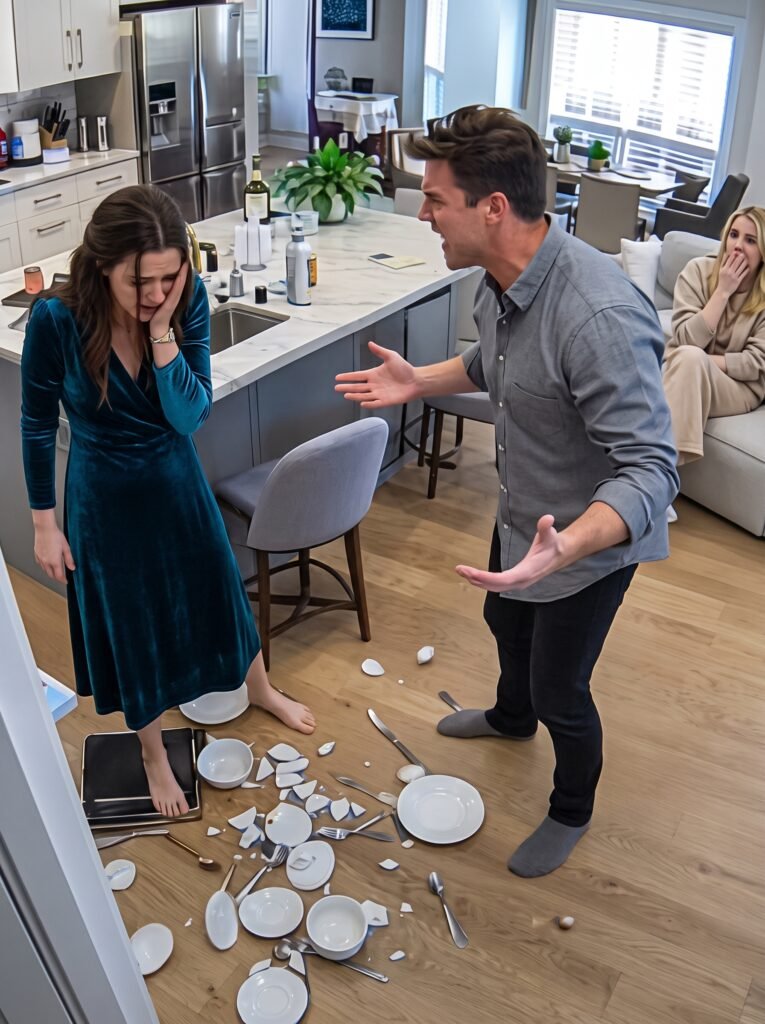
following that explosive evening, I found myself questioning everything I thought I knew about marriage, love, and respect. As I sat alone in the small studio apartment I hastily rented after leaving Daniel, I reflected on how quickly things had unraveled.
I had managed to grab a few personal belongings before walking out the door that night. My heart was pounding, and my cheek still burned from Daniel’s slap. I didn’t look back, afraid that if I did, I might falter and question my decision.
The first night in the new apartment was the hardest. The unfamiliar surroundings were a stark contrast to the home I had envisioned sharing with Daniel. I lay awake, replaying the incident over and over in my mind, struggling to comprehend how someone I had chosen to spend my life with could hurt me so easily.
The next day, I decided to take a leave of absence from work to process everything. I needed time to think, to plan my next steps, and most importantly, to heal. I called my best friend, Sarah, who was a pillar of support. She came over with coffee and pastries, something she knew would bring a bit of comfort.
“Emily, you’re so brave,” she said, sitting across from me at the small kitchen table. “Leaving was the right thing to do.”
“I don’t feel brave,” I replied, my voice barely above a whisper. “I feel lost.”
Sarah reached across the table and squeezed my hand. “It’ll take time, but you’ll find your way. And you have me—and everyone else who cares about you—by your side.”
Encouraged by her words, I decided to take small steps toward regaining my independence and confidence. I started by reaching out to a lawyer to discuss my options regarding the marriage. The thought of a possible divorce was daunting, but I knew it was necessary to protect myself.
I also began attending a support group for women who had experienced similar situations. Listening to their stories and sharing my own helped me realize I wasn’t alone and that I had the strength to move forward.
As days turned into weeks, I found a sense of empowerment in living for myself again. I redecorated the apartment, making it my own little sanctuary. I started cooking meals that I enjoyed, without worrying about someone else’s preferences.
One afternoon, as I sat by the window with a book, my phone buzzed with a message from Daniel. I hesitated, my heart racing as I read the words on the screen. He apologized, saying he regretted what had happened and wanted to talk.
I knew I had to think carefully about how to respond. Part of me longed for closure, while another part feared reopening old wounds.
In the end, I decided to take things one day at a time, focusing on my newfound sense of self-worth. I was determined not to let anyone take that away from me again.
The journey ahead was uncertain, but I felt more ready to face it than ever before. As I closed my book and glanced out the window, I realized that while this chapter of my life was ending, a new one was beginning.
I didn’t respond to Daniel’s message right away. I set the phone down on the windowsill and finished the chapter I’d been reading, forcing myself to sit with the discomfort instead of reacting to it the way I once would have — immediately, apologetically, as though his regret was something I needed to manage and soothe.
That night, I called Sarah instead of him.
“He texted,” I said, without preamble.
“What did he say?”
“That he’s sorry. That he wants to talk. The usual.” I stared at the ceiling of my new apartment, the popcorn texture unfamiliar in the dark, nothing like the smooth plaster of the bedroom I used to share with Daniel. “Part of me wants to hear him out. I keep thinking, what if this time is different?”
Sarah was quiet for a moment. “Emily, I love you, and I’m going to say this because I think you need to hear it, not because I want to hurt you. How many times has ‘this time is different’ come before?”
I didn’t answer. We both already knew.
“I’m not telling you what to do,” she continued. “I’m just asking you to notice the pattern before you decide anything.”
I thanked her, hung up, and sat with my phone in my lap for a long time before finally typing a response to Daniel — not the one he was hoping for, not an agreement to talk, but four words that felt like the hardest sentence I’d ever written: I need more time.
He didn’t respond well. The follow-up messages came fast, first pleading, then increasingly frustrated, the tone shifting in a way that felt uncomfortably familiar — the same escalation I’d learned to recognize in the months before that final night, the same slow tightening from apology into demand.
You’re being unreasonable.
I said I was sorry, what more do you want?
You’re going to throw away five years over one mistake?
I showed the messages to my lawyer, a sharp, no-nonsense woman named Patricia Nguyen, at our next meeting.
“This is useful,” she said, scrolling through them with a practiced eye. “Not just for the divorce filing. This pattern — the quick shift from apology to blame — that’s worth documenting if we need to establish a history for the protective order request.”
“Protective order,” I repeated. The words still felt foreign in my mouth, too serious for a marriage I’d once believed in completely.
“You don’t have to decide today,” Patricia said gently. “But given what you’ve told me — the slap wasn’t the first incident of aggression, just the first one that left a mark — I want you to have every option on the table. Not because I’m trying to scare you. Because I’ve seen this pattern enough times to know it rarely resolves itself through a heartfelt conversation over coffee.”
The support group met on Thursday evenings in the basement of a community center three blocks from my new apartment, a circle of folding chairs and bad coffee and women who understood, without needing lengthy explanation, exactly what it meant to still flinch at raised voices months after leaving.
I’d been attending for six weeks when a woman named Renata, who’d been coming to the group far longer than me, told her own story of an ex-husband’s apologies — years of them, each one sounding sincere, each one followed eventually by the same cycle repeating itself.
“The apology isn’t for you,” she said, looking directly at me, as though she’d overheard my private turmoil about Daniel’s messages. “It’s for them. It lets them feel like a good person again without actually having to become one. Real change doesn’t sound like sorry. It looks like months, sometimes years, of consistent, demonstrated difference — not words offered the moment they’re afraid of losing something.”
Her words settled into me that night and stayed there, quietly reshaping the shape of my thinking every time Daniel’s name appeared on my phone screen.
I stopped responding to his messages entirely by the end of that month. Not out of anger — though there was plenty of that too, buried beneath the exhaustion — but out of a growing understanding that my silence wasn’t cruelty. It was the first real boundary I’d ever managed to hold with him, uninterrupted by guilt or the practiced, persuasive warmth of his voice.
The divorce proceedings moved slower than I expected, dragged out by Daniel’s initial refusal to accept the terms Patricia had drafted, his lawyer arguing for a more “amicable, low-conflict resolution” that, upon closer inspection, mostly amounted to Daniel retaining more of our shared assets while offering me less time to establish financial independence.
“He’s trying to use the appearance of reasonableness as leverage,” Patricia explained, reviewing the counter-offer with a raised eyebrow. “It’s a common strategy. Looks generous on paper, benefits him significantly once you run the actual numbers.”
We countered. He pushed back again. It took four months of negotiations, mediation sessions where Daniel alternated between wounded charm and barely restrained frustration, before we finally reached terms that Patricia deemed genuinely fair — terms that acknowledged, in the careful language of legal documents, that I was leaving that marriage with something more valuable than I’d expected: the ability to actually build a life afterward, instead of scraping by in the wreckage of one designed to benefit someone else.
The finalized papers arrived on a Tuesday in early autumn, exactly eight months after that first terrifying night in my studio apartment. I signed my name — my full name, no longer sharing his — and felt something settle in my chest that I hadn’t expected: not triumph exactly, but a quiet, hard-won peace.
A year after the divorce was finalized, I moved out of the studio apartment and into a small house on the edge of town — nothing extravagant, but mine, purchased with money I’d earned rebuilding a career I’d nearly let atrophy during the years I’d spent managing Daniel’s moods instead of my own ambitions.
I’d gone back to work full-time by then, promoted twice in eighteen months, my manager telling me once, almost in passing, that she’d never seen someone come back from leave with that particular kind of focus — quiet, deliberate, unshakeable. I didn’t tell her why. Some things you carry privately, using them as fuel instead of explanation.
The support group had become something different for me over that year — not just a place to process what had happened, but a place I eventually found myself giving back to, sitting across from newer members in those same folding chairs, offering the same steady patience Renata had once offered me.
“The apology isn’t for you,” I told a woman named Bethany one Thursday evening, watching her hands shake around a phone she couldn’t stop checking. “It’s for them.”
She looked at me like I’d handed her something she hadn’t known she was looking for. I remembered that look. I’d worn it myself, once.
Daniel reached out one final time, almost two years after that night, a message that arrived on a Sunday afternoon while I was repainting the guest bedroom of my new house a soft, deliberate blue I’d chosen entirely for myself.
I heard you bought a house. I’m happy for you. I think about that night a lot. I’m not the same person anymore. I hope you’re doing well.
I read it standing in a half-painted room, roller still in hand, and felt something I hadn’t expected: not anger, not longing, but a kind of distant, settled indifference. The message didn’t ask anything of me. It didn’t demand a response, didn’t circle back toward reconciliation the way his messages once reliably had.
I didn’t respond. Not out of spite, but because I finally understood that I didn’t owe him closure, didn’t owe him confirmation that his growth — real or imagined — mattered to a life he was no longer part of. Whatever peace he was looking for, he’d have to find it somewhere that didn’t require my participation.
I finished the wall a soft, quiet blue, cleaned my brushes, and went to make dinner in a kitchen that belonged entirely to me.
Sarah came over for dinner that night, the way she often did, bringing wine and the same steady warmth she’d carried into my life since that very first morning with coffee and pastries in a studio apartment that had felt, at the time, like the loneliest place in the world.
“You look happy,” she said, watching me move around the kitchen with an ease that had taken years to rebuild. “Really happy. Not the performing kind. The real kind.”
“I think I finally am,” I admitted, setting two plates on the table. “It took longer than I expected. Longer than I wanted, honestly. But I don’t think I’d trade the version of myself I found on the other side of it.”
“To Emily,” Sarah said, raising her glass, the same toast she’d offered a dozen times over the past two years, each time meaning something slightly different as I’d slowly become someone new. “Who turned out to be a hell of a lot braver than she gave herself credit for.”
I raised my glass to meet hers, looking around a kitchen painted in colors I’d chosen, filled with furniture I’d picked, humming with a quiet that no longer felt lonely, only peaceful.
The night Daniel raised his hand to me had once felt like the end of everything I thought my life was supposed to be. It had taken two years, a good lawyer, a room full of women who understood exactly what I was carrying, and a slow, patient rebuilding of my own sense of worth to finally understand it differently.
It hadn’t been an ending at all.
It had been the very first page of the only story that had ever truly belonged to me.
THE END