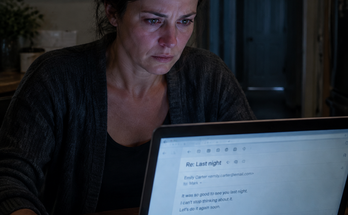
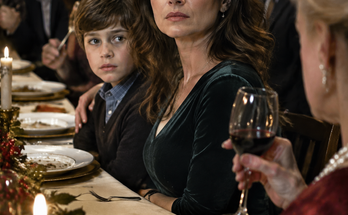
14 years, 3 months, and 12 days. That is exactly how long I managed to keep my distance from the house on Oak Street.
I told myself that time was a physical barrier, a wall of miles and bad memories that Brenda could never climb. I was wrong. The past didn’t stay in the cellar where I left it. It was just waiting for a phone call.
My father died on a Tuesday in late November. I was twelve, and by the time the frost had finished settling on his grave, Brenda had already decided my place in the house.
The master suite went to Julian, her son. The guest room with the bay window went to Chloe. And me? I got the cellar. It wasn’t a bedroom. It was a utility space with a water heater that groaned in the middle of the night and a concrete floor that seeped cold into my bones no matter how many blankets I piled on my cot.
For six years, I lived in that dark, damp silence. I learned to move like a ghost. I learned to keep my breathing shallow so I wouldn’t disturb the life happening above my head. Brenda treated me like a stray cat she was forced to tolerate until I was old enough to be put out. I remember the way she looked at me during dinner, her eyes hard and distant, as if I were a smudge on her clean kitchen floor.
The morning I turned eighteen, I didn’t say goodbye. I didn’t leave a note.
I just packed two thrift-store bags with everything I owned and walked out the back door while the house was still dark. I took the Greyhound south, then west, and didn’t stop until I found a job in a drafting office three hundred miles away. I spent my twenties learning how to build things, timber frames, historic restorations, solid structures that wouldn’t collapse when the wind blew. I built a life of sunlight and hardwood floors. I thought I had buried the cellar.
Then the notification popped up on my screen last month. Brenda Vance, 68, passed away after a short illness. I didn’t feel a thing. I didn’t cry. I just sat in my kitchen and watched the sunset, wondering if the house on Oak Street felt any quieter now that she was gone. I didn’t go to the funeral. I felt like I had paid my dues to that family in full.
Two days later, the phone rang. The voice on the other end was clipped and professional. It was a man named Arthur Pendelton. He told me he was handling Brenda’s estate and that I was named as a beneficiary. I laughed. I told him he had the wrong girl. Brenda didn’t leave things to people she didn’t like.
“I am holding the codicil, Ms. Vance,” he said, his voice flat as a ledger. “Your presence is requested at my office in Elmford. There is a locked container that can only be surrendered to you.”
I drove the four hours back home because I wanted to know what kind of final insult she had prepared. I expected a box of old papers or maybe a bill for the years of food she claimed to have provided. I didn’t expect the heavy steel box sitting on Mr. Pendelton’s mahogany desk.
“Where are Julian and Chloe?” I asked, looking at the empty chairs in his office.
“They chose not to attend,” Pendelton replied. “They were quite displeased with the terms of the will.”
He pushed a brass key toward me. It felt heavy and cold.
Before I touched it, he told me the truth about the house. He told me my father had set up an irrevocable trust, a detail Brenda had hidden from me for twenty years. She hadn’t owned that house. She had been a tenant, holding a life estate, and she had spent over a decade terrified of the day I would walk back through the front door.
“She diverted your monthly stipends,” Pendelton said, his voice quiet. “She used your father’s insurance money to pay for her children’s tuition and debts. She knew you would find the ledger.”
I felt my heart stop for a second. I didn’t say anything. I just stared at the steel box. I fitted the key into the lock, and the mechanism clicked. Inside, there was a stack of bank statements and a letter.
*Hannah,* she had written in that tight, pinched script I remembered from my high school report cards. *I was jealous. Looking at you reminded me of your father’s first wife, and I couldn’t stand the sight of you. I hid your inheritance, and I put you in the basement because I wanted you to feel small. My children took the money and left me the moment the accounts were empty. The house is yours. Everything I stole is yours.*
I read the letter three times. Then I drove to Oak Street.
The house looked tired. The paint was peeling, and the garden was a mess of dead weeds. I walked through the front door and felt nothing but the weight of my own history. I went straight to the cellar. It was exactly as I had left it. The bare bulb still hummed, and the damp smell of concrete still clung to the air. I found the loose flagstone by the water heater and pried it up with a screwdriver.
The green box was there. Inside was a check for thirty-eight thousand four hundred dollars, a gold pocket watch my father had worn every day, and a photo album of my parents. I sat on the cold floor and finally started to cry. It wasn’t because of the money. It was because the ghost of the girl in the basement finally had a name again. She wasn’t a guest in a house that didn’t want her. She was the rightful heir to everything.
I didn’t sell the house. I kept it. I spent the next six months turning it into a sanctuary for kids who didn’t have anywhere else to go. I ripped out the damp drywall and put in windows. I turned my old room into a library where the sunlight could actually reach the floor. Julian and Chloe tried to fight me in court, but they didn’t stand a chance against the paper trail Brenda had left behind. The judge threw out their petition in minutes. They disappeared, and I haven’t heard a word from them since.
Last Tuesday, I sat in the library I built in the cellar. The walls are warm wood now, and the air smells like old books and fresh coffee. I held my father’s watch in my hand and felt the steady tick of the gears.
I know some people think I should have walked away for good, that I should have let the house rot and never looked back. But I couldn’t. Walking away was the first step, but coming back was how I reclaimed the space I had been forced to vacate.
It cost me six years of my life to realize that the cellar wasn’t a prison. It was just a place that needed more light. I think about Brenda sometimes, sitting in her beautiful master suite upstairs, knowing that every night she slept, she was living in a house that didn’t belong to her. She was terrified of the day I would come back. She knew the truth would eventually find its way through the floorboards.
I looked up at the window, watching the late afternoon sun hit the oak shelves. I am thirty-two, and for the first time in my life, I am not waiting for someone to tell me where I belong. I belong right here. I am the one who keeps the light on now. And honestly, that feels like the only justice that matters.
I don’t need her apology. I don’t need her forgiveness. I have the keys, I have the house, and I have the future I built for myself, piece by piece, far away from that cold, damp corner. The cellar is gone, but the lesson stayed. No matter how deep you bury the truth, it always finds a way to grow, provided you give it enough room to reach the surface.