I never thought the woman I shared ten years with would become a stranger. My wife, Miranda, and I had two beautiful daughters—Sophie, five, and Emily, four. Life wasn’t perfect, but it was ours. I worked hard, we took vacations, and I did my share of cooking and cleaning. I thought we were stable.
But something shifted. Miranda spent hours on her phone, texting late at night, her face glowing in the dark. When I asked, she brushed it off—“friends, just catching up.” Her social media filled with photos: coffee shops, shopping bags, people I didn’t know. At home, she was distant, brushing off the girls when they wanted her attention.
The spark between us faded. She went out more, claiming she needed space, returning lighter, smiling in ways I hadn’t seen in months. Then one afternoon, she looked me in the eye and said, “I’m leaving, Charlie.”
I froze. “Leaving? What are you talking about?”
“I can’t live this life anymore. I’ve found myself. I’m not meant to be stuck here cooking and cleaning after you.”
I begged her to think of Sophie and Emily. She sighed, bored, as if repeating a rehearsed line: “You’ll manage. You’re a great dad. Better than I’ve ever been as a mom.” Then she grabbed her suitcase and slammed the door on our lives.
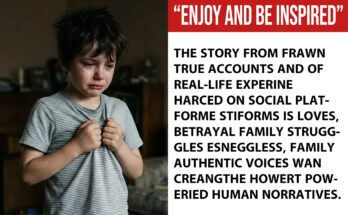
That night, Sophie tugged my sleeve. “Daddy, is Mommy mad at us? Is she coming back?” I couldn’t answer. The silence was heavier than any fight.
Weeks blurred. I clung to routine—packing lunches, working, cooking, bedtime stories. But Miranda’s absence was everywhere. Then I saw her Instagram: dressed in designer clothes, sipping champagne on a yacht with a man named Marco. Paris trips, five-star dinners, sunsets on beaches. She looked carefree, as if she hadn’t abandoned two daughters.
Meanwhile, Sophie drew our family with a blank space. “That’s for Mommy,” she whispered. My heart broke, but I kept going. I worked harder, saved more, and built new traditions with the girls—pancake Saturdays, dance parties, bedtime stories ending with “We love you, Daddy.”
Two years passed. I was tired but solid. We had rebuilt something. I didn’t think about Miranda anymore—until I saw her at the supermarket. Her hair was dull, clothes wrinkled, face hollow. She clutched a bag of carrots like a shield and fled when I called her name.
The next day, she texted: “Fine. Let’s meet tomorrow. At the park. 6 p.m.”
I found her on a bench, shoulders sagging, hands fidgeting. “Because I didn’t want you to see me like this,” she said. “Like a failure.”
“What happened to Marco? The yachts? The perfect life?”
Tears spilled. “He was a fraud. A con artist. He drained my savings, spent my inheritance, and left. I have nothing.”
I stared, stunned. She whispered, “I regret it every day. I want to get back to my kids. I want to fix this.”
Anger boiled in me. “Fix this? You think you can just walk back in? You abandoned them.”
She begged, but I stood firm. “No. You can’t see the girls. They deserve better. They’re happy, and so am I.”
I walked away. At home, Sophie asked, “Daddy, can we make pancakes?” Emily tugged my shirt: “With sprinkles?”
As batter sizzled, I felt peace. Miranda had made her choices. I had made mine. Watching my daughters laugh over pancakes, I realized everything I needed was right here. Miranda thought freedom was leaving us. She never understood what real happiness looked like. I did. And that felt truly poetic.