The first time Ethan Harrison asked his wife to serve his mistress coffee, he did it in front of three members of the household staff and a florist who was measuring the dining table for an arrangement Olivia herself had once chosen from a magazine and imported from Milan.
He did not raise his voice. That would have made the cruelty easier to name.
He stood near the long marble island in the kitchen, one hand braced on the counter, his navy suit jacket open, his expression calm in the way men looked calm when they believed they had already won. Across the room, Chloe sat on a cream barstool with one ankle folded over the other, scrolling on her phone as if she were alone in a hotel lounge instead of perched in another woman’s kitchen. Sunlight spilled through the floor-to-ceiling windows behind her, painting the white cabinetry with a soft gold that might have looked warm to someone who did not know what was happening inside that room.
“Liv,” Ethan said, without looking at her, “Chloe takes oat milk now. The almond was upsetting her stomach.”
There was a pause after that. Not long. Just long enough for everyone present to understand that this was not information he was sharing, but an instruction he expected to be obeyed.
Olivia stood by the counter where she had been reviewing the evening menu with the chef. She still held a fountain pen between two fingers. Her hair was pinned neatly at the nape of her neck. The pearl earrings her mother had given her on her wedding morning caught the light when she turned her head slightly toward him. For one brief second, the entire room seemed to wait for her to say the obvious thing.
That Chloe should not have been in the house in the first place.
That Ethan should never have known what milk another woman took in her coffee.
That there were lines, and vows, and humiliations a marriage could not survive.
Instead, Olivia set the pen down beside the menu card with such care it made the chef lower his eyes.
“I’m sure someone can handle that,” she said.
Chloe smiled at her screen. “I’d rather it be you.”
The florist pretended to become deeply interested in a vase of white roses. One of the maids, a quiet woman named Esther who had worked for them for four years, went very still with a silver tray in her hands. Ethan finally looked up then, and Olivia saw what unsettled her more than rage would have. He looked irritated, not guilty. As if she had become difficult over something administrative.
“Don’t start,” he said. “We’re not doing drama in this house.”
In this house.
The words passed through her like something cold and metallic. Because it had once been their phrase, spoken years earlier in laughter and exhaustion when they lived in a one-bedroom apartment in Yaba with a leaking window unit and a temperamental generator that coughed black fumes into the courtyard. They had said it over plastic takeout containers on the floor because they had no dining table yet. We’re not doing drama in this house. Back then it meant they would face trouble together. Back then it meant the world could embarrass them, reject them, underestimate them, but not each other.
Now it meant that if his wife objected to being reduced to domestic staff for the convenience of his mistress, she was the one disrupting the peace.
Olivia looked at the mug rack. At the coffee machine she had selected herself after a month of comparing finishes and pressure systems. At the polished counter where she used to lay out his ties and schedules on mornings when he had more ambition than sleep. Then she looked at Chloe, who finally lifted her eyes from the phone. They were clear, bright, unashamed.
The younger woman gave a tiny shrug. “Please?”
Olivia moved toward the machine.
It was not surrender. She would understand that later.
At that moment, it was shock arranging itself into stillness because outrage had nowhere safe to go.
The house was famous in Lagos before it had fully been photographed. People in certain circles called it the Harrison Residence with the slightly theatrical reverence that attached itself to wealth when wealth was still new enough to feel like a performance. The gates were the first thing visitors remembered—black wrought iron with gold filigree that flashed in the sun. Beyond them, a private driveway curved past imported palms, trimmed hedges, and a reflecting pool lined with stone that remained cool even in the afternoon heat. The house itself rose white and sharp against the sky, all glass, marble, limestone, and deliberate silence.
But Olivia never saw it the way guests did.
When she looked at the house, she saw receipts, compromises, late-night sketches, fabric samples, and arguments over staircase angles. She saw the years before the gates, before the drivers, before the architecture magazines and the business channel features and the smiling interviews in which Ethan spoke about resilience, innovation, and legacy. She saw the one-bedroom apartment in Yaba with the peeling paint and the rusted balcony rail. She saw the cheap notepad where the first version of the house had been drawn with a dull pencil while rain hit the corrugated roof hard enough to drown out the city outside.
They had been twenty-eight and twenty-nine then. Too old to be romantic fools, too young to recognize how often love disguised itself as labor.
Ethan had walked circles through that apartment rehearsing pitch decks aloud. He used to speak with his whole body when he was excited, hands slicing the air, shoulders tight with restless energy. Olivia would sit cross-legged on the mattress they had pushed against the wall to create the illusion of more space, laptop open, correcting grammar in his proposals while noodles cooled in a pot on a single burner. Sometimes the electricity failed halfway through a sentence and they would keep working by rechargeable lamp. Sometimes he would stop pacing, kneel in front of her, and say, with that fierce certainty that once made her heart swell, “One day I’ll build you a house so beautiful people will think it belonged to old money.”
She had believed him.
Not because of the house. Because of how he looked when he said it—like a man who was making a vow to himself and letting her overhear it.
When banks rejected him, she was the one who reorganized the projections and called smaller investors. When older men in polished shoes smiled too patiently across conference tables and explained why a young logistics startup without pedigree could not be taken seriously, she sat beside Ethan and took notes without letting humiliation show on her face. Later, in taxis, she would tell him precisely where he had lost the room and where he could win the next one. When he could not afford tailored suits, she learned how to alter shoulders and cuffs herself and styled him so cleanly he looked more established than the men who dismissed him.
Once, during the year things nearly collapsed, she sold the gold bangles her mother had left her and told Ethan the money had come from a “small family matter.” She watched him use it to secure a contract that became the foundation for everything after. She never corrected the myth that he built himself from sheer force of will. He repeated it often enough for both of them.
He had not always been cruel. That was what made the cruelty so difficult to explain.
It arrived gradually, as most believable devastations did. First as impatience. Then as entitlement. Then as a habit of speaking to her as if he were already somewhere else in the conversation, answering a more important audience in his head. Success altered the texture of his attention. Admiration attached itself to him in restaurants, at conferences, in private lounges and charity galas. Younger women laughed a little too brightly at his jokes. Men twice his age began clasping his shoulder as though he had always belonged among them. Magazine profiles praised his discipline, his instinct, his “uncompromising standards.” He started to enjoy the word uncompromising.
At first Olivia told herself this was pressure. Then she told herself it was vanity. Then, because she loved him and because women trained themselves too easily to be reasonable in the face of disrespect, she called it a season.
By the time she realized it was character, the house was already built around them.
The day Chloe arrived began in silence.
Olivia was in the kitchen with the chef, discussing a menu for a small dinner Ethan had mentioned two nights earlier but not fully explained. The house smelled faintly of lemon oil and fresh flowers. The air-conditioning hummed softly beneath the clink of bowls and cutlery. Outside, late afternoon light stretched long and pale across the garden, and from where she stood she could see the top edge of the pool turning silver in the heat.
Then she heard the tires on gravel.
It was an ordinary sound, except that something in it made her set down the menu card and turn toward the windows.
A black Range Rover came through the gates and rolled down the driveway with the smooth assurance of a vehicle that belonged there. Ethan stepped out first. He buttoned his jacket as he rounded the hood, then opened the passenger door. The woman who emerged was tall, blond, and arranged. Honey-colored hair fell over one bare shoulder. Her dress was cream and fitted, elegant in the calculated way that looked expensive because it made no obvious effort to. She wore oversized sunglasses. Ethan placed his hand at the small of her back as they crossed the entrance courtyard.
The gesture was not accidental. It was practiced intimacy.
Olivia felt something tighten low and hard beneath her ribs.
She walked out of the kitchen, through the rear corridor, and into the foyer just as the front doors opened. Cool air moved across the marble floor. Two house staff stepped aside. Ethan came in smiling the careful smile he wore when managing optics.
“Liv,” he said, too brightly, “come greet our guest.”
The word guest floated in the foyer like something fragile and false.
Olivia stood at the foot of the curved staircase and looked first at Ethan, then at the woman. Up close, Chloe was younger than Olivia had expected. Twenty-eight, perhaps. Early thirties at most. She had a face made for soft lighting and photographs, with large eyes and a mouth that knew exactly how pretty it was. But prettiness was not what Olivia noticed most. It was the self-possession. The absence of even performative embarrassment.
“Olivia,” Ethan said, “this is Chloe.”
Chloe removed the sunglasses. “I’ve heard so much about you.”
Olivia extended her hand because not extending it would have felt too revealing, and because dignity sometimes began as choreography. “I’m sure you have.”
For a fraction of a second, Chloe’s smile altered. Not enough for anyone else to catch, perhaps. Just enough for Olivia to understand that the younger woman had not expected resistance to arrive in a silk blouse and steady eye contact.
Ethan glanced between them, then laughed lightly, the way men laughed when they believed charm could mop up insult. “Chloe’s going to stay with us for a few weeks. Her apartment situation is a mess, and I told her there was no point wasting money on a hotel.”
A few weeks.
No prior discussion. No apology. Not even the courtesy of a warning.
Olivia looked directly at him. “You told her that?”
His jaw flexed once. “It was last minute.”
“I see.”
Chloe turned in a slow circle, taking in the foyer, the chandelier, the floating staircase with its hand-forged railing, the commissioned abstract over the console table. “This house is incredible,” she said, and her voice contained exactly the right note of admiration. “You must be so proud, Ethan.”
Ethan.
Not Mr. Harrison. Not even a careful, performative “you both.”
Olivia felt the truth of the situation settle inside her not as a revelation but as a confirmation. There were moments in life when denial collapsed so cleanly there was almost relief in it.
“Yes,” she said. “We built it together.”
Ethan’s expression cooled by a degree. It was the smallest change. But Olivia had been reading his face for eleven years. She saw what others missed.
“Show her the guest suite upstairs,” he said.
The command landed between them with the quiet brutality of a slap.
Olivia turned toward the stairs. She could feel Chloe watching the line of her back as she walked. Could feel the staff avoiding her eyes. Could feel, above all, the warning now moving through her more clearly than before.
This is not temporary.
By the second day, the house felt different.
Not because Chloe did anything dramatic. That would have been easier to resist. Instead, she moved through the rooms with the casual entitlement of someone trying on a future. She paused too long in spaces that mattered. The breakfast terrace. The library Ethan used as a study. The master bedroom doorway. She asked questions of the staff that were too specific for a visitor and too confident for an employee. She commented on floral arrangements. On lighting. On which guest towels felt “a little stiff.” She stood near Ethan in a way that required no physical contact to imply it.
Olivia watched.
That had always been one of her strengths. Not submission. Observation. She noticed what changed and when. Ethan’s later returns. The softened tone in his voice when he spoke to Chloe. The way he began correcting staff with added sharpness whenever Olivia was present, as though reminding everyone who now governed the atmosphere. She saw Chloe begin wearing Ethan’s cashmere robe at breakfast on the third morning. Saw Esther hesitate before placing coffee beside the younger woman. Saw the driver, Kunle, look down at the steering wheel when Chloe slid into the front passenger seat beside Ethan as though it were an ordinary thing.
Ordinary things were what made humiliation spread.
One evening Olivia came in from a charity board meeting to find them in the living room with glasses of wine and Ethan’s phone between them. Chloe laughed at something on the screen. Ethan’s hand rested behind her on the sofa. The room smelled of oud and lilies. The sunset beyond the glass had gone red and thin over the garden wall.
“You’re back early,” Chloe said.
Olivia set her clutch on the console. “This is my home.”
Chloe smiled as if the distinction were charming. “Of course. I just meant from your meeting.”
Ethan sat forward, already defensive. “Relax, Liv. She’s just being friendly.”
Friendly.
The word lodged somewhere in Olivia’s chest like a splinter.
That night he came into the bedroom later than usual, loosened his tie, and stood by the dresser with the grim focus of a man preparing to explain a decision he did not intend to negotiate.
“We need to talk.”
Olivia was seated at her vanity removing one earring. She met his reflection in the mirror. “Then talk.”
He took a breath. “Chloe’s uncomfortable in the guest suite downstairs.”
Olivia turned slowly on the stool. The room around them felt suddenly unreal in its beauty: the upholstered bench at the foot of the bed, the stone lamps, the French doors standing partly open to the terrace, where the fountain below sent up a steady hush of water. It was the room they had designed from scratch. The room where he had once stood in socks and jeans, laughing, because the carpenters had finally installed the bookshelves exactly as she wanted them.
“This is our room,” she said.
“I need peace in this house.”
She stared at him. “You need peace.”
“Yes.”
“And to achieve that, you’re giving her our bedroom?”
He spoke more quietly then, which was how he delivered his most brutal lines. “Don’t embarrass me by making this bigger than it needs to be.”
She stood. “Bigger than it needs to be?”
“Just for a while,” he said. “Move to one of the other rooms.”
The air left her in a slow, controlled breath. “You want me to leave my bedroom so your mistress can sleep in my bed?”
His face hardened not at mistress, but at the fact that she had said it aloud. “Enough.”
“No,” she said, and now there was a thin line of steel in her voice. “No, Ethan, enough was before you brought her here. Enough was before you made the staff watch you play house with another woman. Enough was when you decided I would be the last person informed.”
He walked toward the wardrobe as though the conversation had already been concluded. He pulled hangers aside, reaching for his suits. “We’ll move your things tonight.”
Your things.
Not ours.
Olivia stood so still she could hear the fountain outside. Could hear, too, the small sounds of the room that had once comforted her—the whisper of air from the vent, the faint tick of the mantel clock, the rustle of fabric as he handled clothes she had bought and pressed and packed for him on dozens of trips. This, she thought with a clarity so cold it felt almost luminous, is how erasure begins. Not with disappearance. With reclassification.
The next morning the staff moved her suitcases to the guest suite down the hall.
No one said much. Esther folded and carried garments with trembling care. The housekeeper supervised linens as if managing a funeral. Olivia herself directed where each item went because the alternative was to become passive in her own displacement, and she would not do that. She wore a pale blue blouse and tailored trousers. Her posture remained straight. If there was disgrace in the corridor, she refused to embody it.
Chloe appeared midway through the move.
“Oh,” she said, leaning lightly against the doorframe in a silk slip that looked too intimate for daylight. “You’re really moving out.”
Olivia placed a stack of folded cashmere in the open drawer. “Apparently.”
Chloe tilted her head, studying her with open curiosity. “I told Ethan I didn’t want to cause problems.”
The lie was so lazy it almost amused her.
“You seem very persuasive,” Olivia said.
Chloe smiled. “I usually get what I want.”
There it was. Not romance. Not delusion. Appetite.
That afternoon Olivia passed the master suite and heard music floating out through the partly open door. A low jazz record Ethan loved. She heard Chloe laugh. Heard Ethan answer in a tone she had not heard directed at her in months—soft, amused, indulgent. The sound did something to her that anger did not. It hollowed.
By evening the chef approached her in the back kitchen, nervous enough to wipe his hands repeatedly on his apron.
“Ma’am,” he began, “Miss Chloe said she prefers breakfast at eight-thirty. Avocado toast, egg whites only.”
Olivia looked at him. “And why are you telling me?”
He glanced toward the corridor as if the walls themselves might report him. “She said you would oversee it personally.”
“Personally.”
He nodded once, miserable.
Olivia inhaled slowly. The kitchen smelled of stock, herbs, and polished metal. Somewhere down the hall a vacuum cleaner whined briefly, then stopped. She could feel the line she was approaching, the one beyond which insult ceased being incidental and became systematic.
“Tell Miss Chloe,” she said, “that the kitchen operates under household instruction, not hers.”
The chef’s relief was immediate and frightened at once. “Yes, ma’am.”
But when breakfast came the next morning, the table on the sun terrace had already been reset.
The white lilies Chloe preferred had replaced Olivia’s usual hydrangeas. The silverware had been shifted. A pale linen runner lay across the table where there had never been one before. Chloe sat in the best chair, barefoot, phone beside her, dressed in cream lounge trousers and one of Ethan’s shirts. Ethan himself was reading messages at the far end, coffee untouched.
Olivia stopped just inside the doorway.
Chloe glanced up. “Good. The coffee is too strong. Can you fix it?”
The request hung in the air.
The chef, standing near the sideboard, froze.
Olivia did not move. “No.”
Chloe’s expression did not change. “I can ask Ethan.”
Ethan folded his phone slowly and set it down, the signal clear. Do not force me to choose.
That, more than anything, exposed the architecture of the situation. This was not an affair drifting carelessly through a marriage. It was a campaign of rearrangement. Territory. Hierarchy. A public rehearsal of replacement.
Olivia looked at Ethan. “Is this who you are now?”
He leaned back in his chair. “I’m asking for civility.”
“You are asking for compliance.”
His mouth tightened. Chloe reached for her cup and sipped, as if observing weather.
That day Olivia understood something she had not let herself say even privately.
He intends to keep her. He intends to diminish me until the house agrees.
The dinner parties began two weeks later.
At first they were intimate gatherings—business associates, brand consultants, a ministry contact, one or two women from the fashion circuit Chloe seemed to know. Then they grew. The staff adapted with the polished efficiency of people who depended on their employment more than their comfort. New flower orders were placed. The wine cellar was raided more often. The terrace lighting changed. A different jazz trio began appearing on Friday nights. Chloe moved through these evenings in fitted gowns and knowing smiles, learning names, storing loyalties, speaking of future plans with the easy vagueness of a woman who believed planning itself created legitimacy.
Olivia was not formally excluded. That would have been too obvious. Instead, she was blurred. Left standing at edges. Spoken around. Asked practical questions by people who once addressed her first. Ethan had become expert at treating her visibility as optional.
The snap came on a Saturday.
A larger dinner had stretched into drinks in the formal sitting room. Outside, rain hit the glass in slant lines, making the garden lights waver. The room glowed gold under low lamps and chandelier reflections. Men in dark jackets stood near the bar discussing port access and government tenders. Two women in lacquered heels sat on the curved sofa beneath the abstract painting Olivia had commissioned before the house was finished. Someone laughed too loudly near the piano.
Olivia stood by the sideboard speaking to one of Ethan’s older associates, a silver-haired man named Bayo who had known them since the early years. He was saying something kind but cautious about a recent expansion when she heard it.
A sharp snap of fingers.
The sound cut through the room.
She turned.
Chloe sat with one leg crossed over the other, holding out an empty wine glass. Her smile was mild. “Refill this, please.”
Several conversations faltered.
Ethan saw it. Olivia knew he saw it because his eyes flicked in her direction and then away. He did not intervene.
For a single suspended moment, the entire room became unbearable in its awareness. People knew. Not the details, perhaps. But enough. Enough to understand that what was happening exceeded impropriety and entered spectacle.
Olivia walked to the bar.
Her hands did not shake. She selected the bottle, poured to the proper measure, and carried the glass back with the controlled grace that had once made journalists describe her as “formidable but understated.” One woman on the sofa looked down too quickly. Someone whispered, “Isn’t that his wife?” Another voice answered in a hush too low to catch.
Chloe accepted the glass without thanks. “Could you also bring the dessert menu?”
Polite humiliation. That was almost the worst kind. It gave everyone plausible deniability.
Olivia held the younger woman’s gaze for one second longer than comfort allowed. Then she turned away.
Something changed in her that night, but not visibly. The shift was interior. Hurt receded, and in its place came structure.
The next weekend Ethan hosted an event large enough to justify valet parking and temporary staff. More than thirty guests. Musicians on the terrace. Press-adjacent people with cameras and good posture. The house was lit to flatter itself. Chloe wore a gold sequined dress that turned her into a moving source of light. Ethan looked exactly like the version of himself magazine covers preferred: tailored, composed, successful, younger than his age in the expensive way success sometimes allowed.
Olivia dressed simply in black.
Midway through the evening, Ethan clinked a glass.
The room quieted.
He drew Chloe toward him with one arm around her waist and smiled into the hush. “I want to thank all of you for coming. It’s been an extraordinary year. Expansion, recognition, growth. And I’m grateful to be sharing this season of my life with someone very special.”
The room was still.
Chloe lowered her gaze at exactly the right angle. Practice again.
Ethan looked down at her with theatrical warmth. “The future Mrs. Harrison.”
The words landed like shattered crystal.
Olivia was standing near the champagne cart when he said them. She had a tray in her hands because one of the hired servers had asked where to place the extra flutes and she had answered automatically, still trapped by reflexes of competence in a house increasingly arranged against her. She heard a small intake of breath somewhere to her left. Heard a murmur start and spread.
Then Ethan looked directly at her.
“Love,” he said, and the old term of endearment in his mouth sounded obscene, “serve the champagne.”
The cruelty was so complete it became clarifying.
Olivia lifted the tray.
She crossed the room without haste. She handed him a glass first. Then Chloe. Her voice, when she spoke, was steady enough to surprise even her.
“Congratulations.”
A ripple moved through the crowd. Not relief. Not approval. Recognition. Something in the scene had tipped from private disgrace into public evidence.
That night, after the guests left and the staff began clearing glasses and candle stubs and abandoned napkins, Olivia went to the bathroom in the guest suite and stood before the mirror.
The overhead light was too flattering. Her makeup remained intact. Her hair still fell in controlled waves over one shoulder. She looked like a woman who had had a tolerable evening at a very expensive house. Nothing in the reflection showed the humiliation of being asked to serve champagne at her husband’s engagement party.
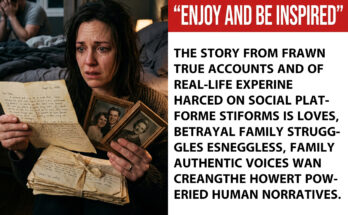
She took her phone from her clutch and replayed the short recording she had made from beside the champagne cart.
The angle was poor. A shoulder obscured part of Ethan’s face. But the audio was clean. His voice naming Chloe the future Mrs. Harrison. The room reacting. The quiet after he told Olivia to serve the drinks.
She saved the file into a hidden folder.
That was the first piece.
The next morning Chloe sat at breakfast reviewing wedding venues on a tablet. The word wedding no longer seemed absurd. It had become strategy. Ethan stood at the head of the table tying his cuff links, discussing dates as if paperwork and vows were mere accessories to intention.
“Victoria Crest has availability in eight weeks,” he said. “Prime season. We should lock it in.”
“Eight weeks is perfect,” Chloe said.
Olivia set a fruit tray on the table. “Ambitious.”
Ethan looked at her as though she had interrupted a board meeting. “Ambition built this house.”
Chloe smiled over the rim of her coffee cup. “I prefer decisive men.”
Olivia met her eyes. “Decisions have consequences.”
Ethan’s voice flattened. “That will be all, Liv.”
That afternoon she drove herself to Victoria Island and parked beneath the mirrored tower where Daniel Whitmore’s law firm occupied the top floor.
The lobby smelled of cold stone, polished wood, and expensive air-conditioning. A receptionist in a charcoal dress looked up, recognized her name, and led her to a conference room wrapped in glass and muted city light. Outside, the Atlantic lay pale and hard beneath the haze. Traffic crawled below like a separate species of stress.
Daniel Whitmore came in carrying a legal pad and no expression of surprise. He was in his late forties, lean, precise, one of those men whose courtesy had edges. Olivia knew him socially through board circles and had once helped seat him at a foundation gala beside a donor he wanted to meet. He had a reputation for discretion and for disliking men who thought money exempted them from procedure.
He listened without interrupting.
That, in itself, nearly undid her.
She told him what had happened in the house. Not theatrically. Not tearfully. She laid it out in sequence, like evidence. Chloe’s arrival. The forced move from the master bedroom. The increasingly public humiliations. The declaration of engagement while the marriage remained legally intact. The financial opacity that had crept in over the past year, joint accounts altered, property papers routed through Ethan’s office before she saw them. As she spoke, Daniel took notes in a hand so neat it seemed almost insulting.
When she finished, the city beyond the glass had shifted into late afternoon glare. He set the pen down.
“Are you prepared for what this becomes,” he asked, “if we do it properly?”
Olivia folded her hands on the table. “What does properly mean?”
“It means no emotional gestures. No informal threats. No dramatic confrontation. It means documentation, timing, and legal restraint. It means he will not get to call you unstable because you will give him nothing chaotic to describe.”
She nodded. “Good.”
He studied her for a moment. “Most people come here wanting revenge.”
“I want correction,” she said.
One side of his mouth moved very slightly. Approval, perhaps.
They filed that day.
Divorce on grounds of emotional cruelty and spousal misconduct. Petition for equitable division. Motion to preserve certain assets pending review. Request for injunction against remarriage until the matter was lawfully resolved. Daniel walked her through each page, each phrase, each potential challenge. By the time she signed the final document, the room had grown dim enough for the glass walls to reflect her face back at her.
Her hand did not tremble.
When she returned home, Chloe was in the drawing room with an interior stylist selecting wedding florals.
“Peonies are too soft,” Chloe was saying. “I want something cleaner. Something that says elegance, not romance.”
Olivia walked past them without altering her pace.
That night, in the privacy of the guest suite, she downloaded a recording application Daniel’s associate had recommended. She created encrypted backups. She changed passwords Ethan had not yet thought to ask about. Then she sat on the edge of the bed and listened to the house breathe around her. The muted footsteps. The closing doors. The faint laughter from down the hall. She understood, with a steadiness that surprised her, that she was not trapped. She was in the evidence phase.
The engagement party was larger.
By then, the relationship had leaked into public knowledge, though not officially. Social pages had begun pairing Ethan and Chloe in event galleries. Comments multiplied under photographs. Some admiring. Some cruel. Most speculative. There was no room in gossip for nuance, but Olivia had long stopped looking for fairness in public appetite. What mattered was timing.
The house glowed under hired lighting the night of the party. A temporary glass dance floor had been built over part of the pool. Musicians tuned under the covered terrace. Servers in black moved with trays of champagne and prawn canapés. The smell of perfume, citrus polish, and expensive catering spread through the lower floor. Political aides, investors, fashion people, media people, and business partners filtered in beneath the chandelier with smiles arranged for photographs.
Olivia wore emerald silk and no diamonds.
Chloe descended the staircase in silver couture with a camera-ready smile. Ethan stood below waiting for her, pride radiating off him like heat. Flashes followed them as though legitimacy could be manufactured through enough documentation.
At one point in the evening, Ethan took the microphone again.
“Tonight marks a new chapter in my life,” he said. “Success means nothing unless you have someone to share it with.”
Olivia stood near the bar, observing faces. A woman from a real-estate family smiled too widely. One of Ethan’s older business allies looked distinctly uncomfortable. Two younger men near the terrace exchanged glances when Ethan praised Chloe’s “light” and “vision,” as if the man who had built an empire had only now discovered illumination in a blonde woman with good posture and better timing.
Then his eyes found Olivia.
“Liv,” he said into the microphone, casually, almost laughing, “make sure the VIP table gets the premium bottles.”
A few people turned toward her immediately. Others pretended not to.
She nodded and moved.
It was in the pantry, minutes later, that Chloe cornered her.
The pantry was cool and brightly lit, lined with labeled shelves and backup glassware. Outside the swinging door, the band shifted into something slower. Inside, the air smelled faintly of citrus peel and dry champagne.
“You carry yourself well,” Chloe said, leaning against the doorframe. “For someone being replaced.”
Olivia set a bottle onto the counter. “You confuse replacement with interruption.”
Chloe laughed softly. “Ethan said you’d be emotional.”
“He misremembered me.”
The younger woman’s smile thinned. “You should start apartment hunting.”
Olivia picked up a tray. “You should start reading legal clauses.”
Something flickered across Chloe’s face then. Not fear. Not yet. But the first sign of unease.
“What’s that supposed to mean?”
Olivia lifted the tray. “Exactly what it sounds like.”
She left Chloe standing there.
From that point onward, the campaign accelerated. Wedding planners came and went. Couture fittings were delivered. Sample invitations stacked up in the study. Chloe spent afternoons on speakerphone discussing guest lists, honeymoon options, flowers, lighting, seating charts. Ethan’s legal awareness seemed either astonishingly poor or arrogantly selective. Perhaps he believed that if he behaved as though the future were already decided, reality would eventually conform. Men like Ethan often mistook momentum for immunity.
Meanwhile Olivia documented everything.
The audio of Chloe laughing about “moving into the primary position.” Ethan’s silence when she said it. His own voice instructing Olivia to “stop being theatrical” after asking her to clear a table while guests watched. A recording of him telling the chef, “Take food instructions from Chloe going forward.” Messages from his office regarding account transfers she had not authorized. Copies of property correspondence routed around her. Each item by itself looked survivable. Together, they formed a pattern.
Daniel Whitmore moved quietly in the background. His associate, a sharp woman named Rose Conway with a voice like clean glass, handled the filings with surgical precision. Rose was younger than Daniel, early forties perhaps, with braided hair always pulled back and an expression that suggested she had seen every variation of male vanity and no longer found any of them original. She met Olivia twice a week in the firm’s conference room or, when discretion required it, in the back corner of a private club where waiters knew better than to linger.
“Here is what matters,” Rose said one evening, spreading documents across the table between them. “Not whether he was disrespectful. Courts hear disrespect all day. What matters is pattern, intent, impact, and proof. Emotional cruelty. Public degradation. Financial conduct. Attempted remarriage before lawful dissolution. Your restraint helps us. Your paper trail helps us more.”
Olivia sipped sparkling water and looked down at the neat stack of transcriptions. “How much of this do courts actually care about?”
Rose leaned back. “Not enough. But more than arrogant men assume.”
It became the first thing that made Olivia smile in weeks.
At home, Ethan began noticing her calm.
One afternoon he entered the guest suite without knocking. He found her at the desk by the window, reviewing a nonprofit proposal she had barely absorbed. Rain clouded the sky outside, flattening the garden into shades of green and grey. The room smelled faintly of paper and the cedar sachets Esther still tucked into drawers out of old loyalty.
“You’ve been quiet,” he said.
Olivia closed the folder. “You prefer me quiet.”
He remained by the door. “You haven’t fought. You haven’t argued. You haven’t tried to make a scene.”
“My apologies for the disappointment.”
A muscle in his jaw moved. “Don’t do that.”
“Do what?”
“Pretend you’re above this.”
She stood then, slowly. “Above what? Adultery? Displacement? Public humiliation?”
He exhaled through his nose. “I’m trying to arrange this with as little mess as possible.”
“The wedding?” she asked. “Or the disposal?”
His eyes narrowed. “After the wedding, I’ll make sure you’re comfortable.”
Comfortable.
As though she were an ex-employee requiring severance.
“I don’t need your arrangements.”
He took a step toward her. “Don’t turn this into a war, Olivia.”
She met his gaze. “You turned it into one when you stopped respecting law, marriage, and basic decency in that order.”
Something close to unease entered his expression then. Not remorse. Calculation. He was beginning, perhaps, to understand that her stillness was not passivity but withholding.
“You sound threatening,” he said.
“I sound prepared.”
He left without another word.
The week before the wedding, Chloe came into Olivia’s room carrying her dress.
It was late afternoon. The house glowed with the exhausted prettiness of pre-event activity—flowers being delivered, calls being made, staff moving faster than usual. Olivia was sorting old paperwork at the desk, separating what was emotionally impossible from what was legally relevant, when Chloe tapped once and entered without waiting.
She held a garment bag with visible pleasure. “I thought you might want to see it.”
Olivia looked up. “Why would I?”
Chloe unzipped the bag partway and drew the fabric into view. Silk, crystals, handwork, a level of expensive delicacy meant to suggest purity while costing enough to feed families for a year. The dress was beautiful. Olivia could admit that without pain.
“It’s custom,” Chloe said. “Ethan insisted on the best.”
“Did he.”
“You’ll be there, won’t you?”
The question was almost childlike in its cruelty. A need not only to win, but to be witnessed winning.
Olivia rose from the chair. “Strange question.”
Chloe crossed her arms. “Do you still love him?”
Olivia considered her for a moment. Beneath the confidence there was something brittle. Not innocence. But dependency dressed as triumph. Chloe needed validation not because she had secured Ethan, but because she sensed somewhere that acquiring a man capable of this was not, in fact, victory.
“Love,” Olivia said quietly, “is not blindness.”
“Then why stay?”
Olivia stepped closer. “Because departure requires precision.”
For the first time, Chloe looked genuinely unsettled.
The night before the ceremony, Daniel called.
Olivia stood alone on the small balcony outside the guest suite, phone to her ear, while warm wind moved through the palms and the house hummed behind her with final preparations. Somewhere downstairs Chloe laughed with a planner. Glasses clinked. Music drifted faintly from someone’s speaker. The city beyond the walls glittered in broken stretches of light.
“The officer is ready,” Daniel said. “We can serve publicly if necessary. The injunction filing is in place. Timing matters. Once vows are complete, complications multiply. Before is cleaner.”
Olivia looked up at the sky. It was thick with the kind of heat that promised rain by morning. “Then we do it before.”
“Are you certain?”
“Yes.”
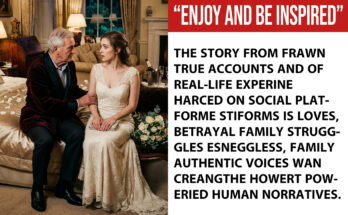
When the call ended, she went to the wardrobe and selected an ivory suit.
Not bridal. Not mournful. Tailored. Controlled. Beautiful in a way that could not be mistaken for pleading. She laid it across the bed and stood looking at it for a long time.
She did not cry that night. Not because she was beyond grief, but because grief had already been metabolized into something harder and more useful. She slept for three hours and woke before dawn to the sound of distant thunder.
The cathedral was full before noon.
It rose cool and pale above the city, all stone arches and vaulted ceilings, with white flowers cascading down pillars in arrangements designed to look effortless and therefore cost a fortune. Guests arrived in waves of silk, perfume, polished shoes, cautious smiles. Media were present, discreet in theory, alert in practice. The air smelled of lilies, incense, and expensive expectation.
Olivia entered midway through seating.
The whispering began almost immediately. It did not matter. She walked down the aisle in her ivory suit with her head level and her handbag hooked lightly over one wrist, then took a seat where she could be seen but not theatrical. Some people glanced and looked away. Others stared openly. A woman near the front shifted toward her husband and spoke into his ear. Across the aisle, Bayo gave Olivia the smallest nod. It was not approval exactly. More like acknowledgment.
Ethan stood at the altar in a black tuxedo that fit him perfectly. He looked magnificent and cornered at once, though perhaps only Olivia could yet see the second part. Chloe emerged moments later on her father’s arm, glowing under the filtered light, the couture gown doing its work, the veil softening everything sharp about her into a public fantasy of innocence.
The ceremony moved forward.
Readings. Prayers. The pastor’s warm, practiced cadence. Vows written to flatter the room rather than each other. Olivia listened to Ethan promise partnership with the same voice that had told her to move out of her bedroom. She listened to Chloe speak of honesty and devotion while remembering the younger woman in the pantry, smiling through conquest.
Then came the final question.
“If anyone here has any lawful reason why these two should not be joined in holy matrimony,” the pastor said, “speak now or forever hold your peace.”
Silence fell.
Not ordinary silence. Charged silence. The kind that seemed to pull the oxygen out of a room and hold it just above reach.
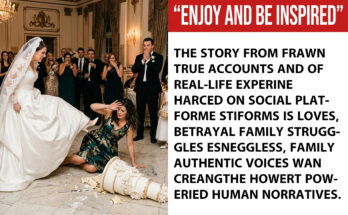
Olivia stood.
Gasps rippled through the cathedral.
She stepped into the aisle. Her heels struck the stone in measured clicks that seemed louder than the organ. At the altar, Chloe’s face had gone very still. Ethan’s color receded visibly.
“There is a lawful reason,” Olivia said.
The pastor blinked. “Ma’am?”
“My name is Olivia Harrison.” Her voice carried without effort. “I am legally married to Ethan Harrison. Divorce proceedings are active and unresolved. This ceremony cannot proceed lawfully.”
The room exploded in whispers.
Chloe turned toward Ethan. “Tell them that’s not true.”
He said nothing quickly enough.
That was all the answer anyone needed.
From the rear doors, a court officer entered carrying an official envelope. His footsteps echoed down the aisle with grim, bureaucratic finality. A wedding could survive scandal in certain circles. It could not survive documentation.
Ethan leaned toward Olivia, his voice low and ragged. “Have you lost your mind?”
She looked at him with more calm than she felt. “No. I found it.”
The officer reached the altar and addressed Ethan formally. “Mr. Ethan Harrison, you are hereby served notice of pending divorce proceedings and injunction against remarriage until final disposition.”
The pastor stepped back, hands half-lifted in stunned discomfort. Chloe’s father muttered something harsh beneath his breath. Several guests had already raised phones despite the sanctity of the setting. Sanctity, Olivia thought distantly, had left this story a long time ago.
Chloe stared at Ethan as if seeing him clearly for the first time. “You told me everything was finalized.”
“It was in process,” he hissed.
“In process?”
Her voice cracked, and with it something in the performance shattered. What came into view beneath was not nobility or victimhood, but humiliation—real, hot, undeserved in that particular moment even if earned elsewhere. Olivia felt no triumph. Only consequence unfolding.
The pastor cleared his throat. “I cannot proceed under these circumstances.”
A murmur swept through the pews. Some guests looked shocked. Others looked grimly satisfied, the way people often did when a rich man’s private arrogance finally collided with a public boundary. Bayo closed his eyes briefly and shook his head. Two rows back, an older woman Olivia recognized from a philanthropic board pressed a hand to her chest and whispered, “My God.”
Ethan took a step toward Olivia. “You could have handled this privately.”
“I tried privately,” she said. “You preferred audience.”
Her words landed. Not just on him. On the room.
Then she stepped aside.
“I have nothing further to add.”
She turned and walked back down the aisle.
Behind her, the wedding collapsed by degrees. A planner whispering frantically into a headset. Guests shifting into knots of speculation. Chloe’s mother reaching for her daughter. Ethan standing motionless for one beat too long, like a man realizing that reputation, once cracked, did not obey money’s repair schedule.
Outside, the press arrived within minutes.
By the time Ethan emerged, jaw clenched, tie loosened, the first online posts had already gone live. Phones thrust toward him. Questions shouted. Was he still married? Had he attempted bigamy? Was Chloe aware? Was this a legal dispute, an affair, a public deception?
Chloe came out later, veil gone, makeup just beginning to fail around the eyes. She climbed into a car without looking at the cameras. Ethan followed. Through the rear window, Olivia saw them turn toward each other at once, mouths moving fast. Blame beginning. Alliances breaking. Exactly as Rose had predicted they would once shame entered the bloodstream of a relationship built on entitlement and fantasy.
Olivia left in a separate vehicle.
She sat in the back seat and removed her earrings one by one. The city passed outside in fragments—vendors at intersections, rain-dark sidewalks, a woman balancing a tray on her head beneath a grey umbrella, the ordinary motion of lives untouched by headlines. Her phone vibrated repeatedly. Messages. Calls. Notifications. Daniel. Rose. People who cared. People who were curious. People who wanted proximity to scandal. She silenced all of them and looked out the window until the house was far behind.
The courtroom was quieter than the cathedral and less forgiving.
No flowers. No flattering light. No music to guide emotion. Just polished wood, paperwork, air-conditioning that ran too cold, and the steady choreography of procedure. That, Olivia discovered, was one of the reasons she came to love it. Courts did not care about charisma. They cared, imperfectly but usefully, about sequence and proof.
Ethan sat at the respondent’s table with his legal team. His public composure had returned in fragments, though never fully. The wedding interruption had cost him more than embarrassment. Investors had begun asking questions. One government contract stalled under “review.” A magazine feature on his “new chapter” quietly vanished. Social commentary shifted from admiring speculation to forensic dissection. People loved success until it came dressed in contempt.
Chloe was absent on the first major hearing day.
Rose Conway stood beside Olivia, immaculate in dark suiting, and arranged their documents in stacks so precise they looked punitive. Daniel sat behind them, hands folded, watching the room as if it were a chessboard. Olivia wore navy. No statement jewelry. No perfume. She wanted nothing extraneous between herself and credibility.
The judge reviewed filings. Then evidence.
Audio first.
Chloe’s voice played through the courtroom speakers, laughing about how “the house was always going to need a softer feminine touch.” Ethan’s silence in response. Another recording: Ethan telling Olivia to serve guests. Another: his instruction that the household take direction from Chloe. The sound in the room changed each time—not noise exactly, but the subtle shift of people realizing that what had sounded like private gossip now had structure.
Ethan’s counsel tried for minimization.
“These are marital disagreements,” he said smoothly. “Hurt feelings captured in secret recordings. My client’s conduct may have been insensitive, but sensitivity is not the legal standard.”
Rose rose.
“Public degradation of a lawful spouse in the marital residence,” she said, “coupled with displacement, financial opacity, and an attempted remarriage before lawful dissolution, is not mere insensitivity. It demonstrates pattern, intent, and disregard.”
The judge listened without expression.
Then came the financial records.
Those were less dramatic to hear and more devastating to understand. Joint accounts redirected. Household authorizations amended without mutual review. Property-related correspondence routed through Ethan’s office. Nothing individually cinematic. Everything cumulatively corrosive. Ethan shifted in his seat for the first time.
When called to speak, Olivia stood.
The room settled.
She did not look at Ethan. She looked at the bench.
“Your Honor,” she said, “I did not come to court because my marriage failed. Many marriages fail. I came because my husband attempted to erase me while benefiting from everything I built with him. I supported his business when it existed only as ambition and debt. I sold personal property to secure early contracts. I handled introductions, strategy, appearances, and the invisible labor that protects a man while he becomes important in public. When he became successful, he did not ask to leave the marriage with honesty. He attempted to humiliate me into making myself disappear.”
She paused. The courtroom was very still.
“I documented what happened because I understood something too many women learn late. Silence without evidence protects the person with more power.”
Rose did not move. Daniel did not move. Even Ethan’s counsel kept his eyes down.
“I am not here for sympathy,” Olivia said. “I am here for fairness.”
Afterward, in the corridor outside the courtroom, a younger lawyer from another matter stopped her and said quietly, “That was one of the clearest things I’ve heard in here.”
Olivia thanked her and kept walking.
The ruling took weeks.
During that time, the mansion became both battlefield and mausoleum. Chloe did not return after the wedding collapse, though some of her belongings remained for a while—cosmetics in the en suite, clothes in the wardrobe Ethan had given her, books she likely never intended to read. The staff moved more softly than ever. Esther began leaving tea outside Olivia’s door again, as she had during the early months of the marriage when Ethan traveled too much and Olivia forgot to eat. Kunle drove without asking questions. The chef, once frightened into neutrality, began quietly checking whether Olivia had had lunch.
Integrity, she learned, often returned first in the small places.
Ethan and Olivia crossed paths rarely. When they did, the air between them was almost unbearable in its accumulated history. He worked longer hours. Took more calls behind closed doors. Came home smelling of stress rather than perfume. Once, late at night, Olivia found him standing alone in the downstairs study holding a tumbler of whiskey and staring at the dark garden.
He did not hear her immediately.
The study lamp cast warm light over the shelves, the leather chairs, the framed photograph on the credenza from a charity gala ten years earlier. They were both younger in it. Poorer. Still facing the same direction.
“You should sleep,” he said without turning.
“So should you.”
He laughed once under his breath. It was not amusement. “You always did know how to make yourself sound reasonable.”
She looked at the photograph. “That was never the problem.”
He turned then. Fatigue had changed him. Not made him softer, exactly. But thinner around the edges where arrogance had once felt effortless.
“You made a spectacle of me.”
Olivia met his eyes. “You made a spectacle of me first. Repeatedly. In my home.”
“It didn’t have to go that far.”
“It went exactly that far because you believed it wouldn’t.”
The truth of it landed. He looked away.
For a moment, the room filled with the old ache of knowing someone too well. She could see regret beginning to form in him, but it was not moral regret. It was the kind born when consequences finally exceeded appetite.
“I never thought you’d do this,” he said.
She looked at the man who had once paced a tiny apartment describing a future he wanted them to own together. “Neither did I.”
The ruling came three weeks later.
The courtroom filled again. Not because this was the most important case on the docket, but because by then enough people knew the outlines to make attendance a kind of social observation. Wealth drew witnesses. Public correction drew even more.
The judge spoke carefully.
Emotional cruelty substantiated. Financial misconduct partially established. Injunction against remarriage upheld pending final decree. Equitable division of marital assets granted. The Harrison mansion ordered sold, with proceeds divided according to the court’s findings. Additional financial settlement awarded to Olivia. Public clarification of marital status required to mitigate prior misrepresentation.
Each phrase entered the room with the clean weight of a locked mechanism.
Ethan sat very still through most of it. Only once did something visible crack—when the mansion was mentioned. The house he loved as proof of himself. The house he had used as theatre. The house he thought could be rearranged until it ratified his version of power.
Outside the courtroom, he approached her.
No cameras waited there that day. No guests. No organ music. Just the corridor, lined with framed legal notices and potted plants trying valiantly to civilize fluorescent light.
“You’ve destroyed everything,” he said.
His voice was low, strained.
Olivia faced him. “No. You destroyed it when you confused power with immunity.”
“You could have let me settle.”
“You kept calling humiliation a settlement.”
He searched her face as though hoping to find victory there, perhaps so he could hate it more easily. But she felt no exhilaration. Only fatigue, grief, and an odd kind of peace. Justice, she was learning, rarely felt triumphant. Mostly it felt like breathing after a long period of standing underwater.
For the first time in months, Ethan seemed almost about to say something honest. But honesty had become unfamiliar to him. It hovered and vanished.
Olivia turned and walked away.
The mansion sold six months later.
The final weeks before the sale were strangely quiet. Rooms emptied. Art came down. Closets were sorted. Surveyors walked through measuring what had once felt immeasurable. Olivia packed selectively. She took the pieces that were truly hers by law or sentiment: her mother’s framed photograph, the coffee machine she had chosen before the cruelty began, books annotated in her own hand, the blue-and-white ceramic bowl from their first apartment, the custom desk from the study, the sketches of the staircase, a stack of old notebooks, and almost nothing from the master suite. That room belonged to a version of hope she no longer wished to furnish.
On her final morning in the house, she stood alone in the empty foyer.
The chandelier still hung overhead. Light still moved across the marble. The gates still opened to the same curved drive, the same palms, the same reflecting pool. Yet without furniture, without staff moving through it, without the dense layering of event and ego and hurt, the house looked less like victory than architecture. Just stone, glass, design, and silence.
Esther came to say goodbye.
The older woman stood near the doorway twisting a handkerchief between her fingers. “Madam,” she said, and her voice wavered, “you were always kind here.”
Olivia embraced her.
“Be kind to yourself too,” she said.
Esther began to cry quietly. Olivia held her until she stopped. There were no witnesses. It was one of the truest moments the house had held in years.
Her new home was smaller and higher.
A penthouse overlooking the ocean, all clean lines, warm wood, soft light, and rooms that breathed instead of performed. It did not try to impress from the doorway. It opened gradually. A terrace with low planters and wind. A living room arranged for comfort rather than spectacle. A study with built-in shelves and a desk facing the water. A kitchen designed for actual use. Quiet luxury, if anyone insisted on naming it, but the kind that did not beg to be photographed.
On her first morning there, Olivia stood barefoot on the balcony with coffee in both hands and watched sunlight gather over the Atlantic in slow layers of gold and grey. The city woke below her. Traffic thickened. Boats moved like patient thoughts across the water. For the first time in a long time, she inhabited a space no one was trying to take from her.
Recovery did not arrive as revelation.
It came in increments. Therapy on Tuesdays. Sleep without anticipating footsteps outside her room. Meals eaten because she was hungry rather than because a schedule required them. Legal debriefs that slowly became strategic planning sessions for something else. Rose, who turned out to have a dry sense of humor so well concealed it felt like a reward when it appeared. Daniel checking in only when useful, which Olivia appreciated more than excessive softness. Calls from women she barely knew who had watched the case unfold and wanted referrals, advice, language for what had happened to them.
That last part changed everything.
The first woman was a banker from Ikoyi who asked if public humiliation “counted” if there was no violence. The second was a woman in Port Harcourt whose husband had moved another woman into a guest property while freezing joint funds. The third was younger, unmarried, describing coercion that did not fit neat categories. By the sixth call, Olivia understood that what happened to her was not rare. Only rarely documented.
The Phoenix Initiative began as a legal aid idea and became something larger.
She founded it with part of the settlement money and a ferocious clarity that surprised even her. Legal referrals, financial literacy support, emergency consultation, documentation training for women dealing with emotional and economic abuse—nothing glamorous, everything practical. Rose connected her with two excellent litigators and a forensic accountant who could make hidden transfers sound less like numbers and more like violations. A communications consultant encouraged discretion over grandstanding. Olivia agreed. She did not want a crusade built on her face alone. She wanted infrastructure.
Still, interviews came.
Not tabloids. Not dramatic tell-alls. Thoughtful programs, print features, moderated panels. She accepted only those that respected complexity. In one televised conversation, the host—a seasoned woman with intelligent eyes and no patience for simplification—leaned forward and asked, “How did you remain silent for so long?”
Olivia thought about the question before answering. The studio lights were warm on her skin. Beyond the camera, crew members shifted quietly. Somewhere in the city, traffic would be thickening toward dusk. Life continuing, indifferent and specific.
“Silence is not always surrender,” she said. “Sometimes it is information-gathering. The danger comes when silence has no plan behind it.”
The host nodded slowly. “Do you still love him?”
Olivia let the silence sit for one beat. “Love is not a permanent license. Respect sustains what love begins. Once respect is repeatedly broken, love eventually follows.”
The clip traveled.
Public opinion, which had already tilted in her favor after the courtroom evidence, settled decisively. Ethan’s reputation never fully recovered. Some contracts survived. Others did not. Certain men still did business with him because wealth often forgave what decency would not. But something essential had changed. He no longer entered rooms unquestioned. People now brought context with them. Whispered. Remembered.
Chloe vanished from public orbit with astonishing speed. There were occasional sightings—restaurant openings, a birthday trip, a brief attempt at reemergence beside another businessman—but nothing that lasted. Olivia sometimes wondered whether Chloe had learned anything, then stopped herself. Other women’s lessons were no longer her responsibility.
One evening near the start of the rainy season, Olivia received a message from Ethan.
I never thought you would fight back like that.
She read it standing in her kitchen while thunder moved over the water beyond the glass. The apartment smelled of ginger and garlic from a meal she was cooking herself because she had discovered, unexpectedly, that chopping vegetables in a quiet kitchen could feel like repair. Rain began tapping at the balcony doors.
She looked at the message for a long time, not because she was tempted to respond emotionally, but because it so perfectly expressed the wound at the center of everything. He had not thought she would fight back. Not really. Not strategically. Not successfully. He had built his conduct on that assumption.
Finally she typed:
I never thought you would force me to.
She sent it, then set the phone face down on the counter.
That night she ate dinner at the small table by the window and watched the storm move across the city. Wind bent the palms below. Headlights streaked wet roads into bright lines. Somewhere nearby a generator clicked on. The ordinary world, stubborn and unspectacular, carried on.
Months later, on the anniversary of the cathedral interruption, Rose joined her on the terrace for coffee.
“You know,” Rose said, leaning back in the chair, “I still think the ivory suit was one of your best decisions.”
Olivia laughed. “Legally or aesthetically?”
“Yes.”
The wind moved between them carrying salt and the scent of impending rain. In the study behind the glass doors, draft documents for the Phoenix Initiative’s second expansion were stacked beside a blue ceramic bowl from Yaba. The office plant Esther had insisted she take from the old house was somehow thriving.
“Do you regret any of it?” Rose asked.
Olivia took her time answering.
She regretted trusting too long. She regretted how thoroughly she had once confused sacrifice with proof of love. She regretted the years spent curating Ethan’s mythology without insisting he remain accountable inside it. She regretted, perhaps most of all, the private humiliations she had normalized before the public ones made denial impossible.
But regret was not the same as wishing reality had remained hidden.
“No,” she said at last. “I regret what happened. Not that it was exposed.”
Rose nodded as if that was the answer she expected.
After she left, Olivia stood alone on the balcony until dusk.
The city below shifted into evening. Lights came on in towers and apartments and roadside stalls. The ocean darkened from silver to slate. Behind her, the penthouse glowed softly through the glass—warm wood, books, documents, the life she had rebuilt not out of fantasy but out of procedure, grief, work, and choice.
That was the part stories often rushed past. Recovery was not dramatic. It did not arrive in a single triumphant scene. It arrived in the discipline of rebuilding identity after someone had tried to reduce it to a role. In learning that dignity was not whatever other people recognized in public, but what you refused to surrender in private. In realizing that the end of a marriage, even an ugly one, was still an ending that required mourning before it could become freedom.
Olivia did mourn.
Sometimes unexpectedly. At traffic lights. In hotel lobbies. While hearing a jazz song that used to play in the old bedroom before it became a battleground. Grief for the young woman in Yaba who had believed partnership meant mutual protection. Grief for the man Ethan had once perhaps almost been. Grief for the years when she had mistaken his ascent for theirs.
But the grief no longer ruled the room.
It sat down politely now and left when asked.
On a bright Tuesday morning nearly a year after the wedding collapse, Olivia visited the Phoenix Initiative’s new office. It occupied two modest floors in a building that would never appear in a design magazine. The waiting area had practical chairs, clean lines, filtered water, and shelves of printed guides explaining financial documentation, legal processes, housing rights, and digital safety. Nothing performative. Everything useful.
A young woman in reception stood when Olivia entered. “Good morning, ma’am.”
Olivia smiled. “Please don’t call me ma’am in my own office. It makes me feel like I should own a cane.”
The receptionist laughed, startled into ease.
From one of the consultation rooms, she heard a lawyer explaining to a client why account access mattered and how to preserve evidence without escalating risk. From another, the low murmur of a counseling intake session. In the conference room, a whiteboard held plans for a workshop on coercive financial control. The place buzzed not with drama, but with competence.
This, Olivia thought, is what restoration sounds like.
Later that day she stood by the office window with a cup of tea while rain streaked the glass. Rose joined her after a meeting, loosening her collar slightly.
“You know,” Rose said, “hearing you in court, I thought that would be the climax. Turns out it was just the pivot.”
Olivia watched traffic blur below. “Most people think the point is to win.”
“And it isn’t?”
She looked out at the wet city. “The point is to stop disappearing.”
When she went home that evening, the penthouse was quiet.
She left her shoes by the door, set her bag on the console, and walked barefoot across the warm wood floor to the balcony. The sky was clearing after the rain. Across the water, the horizon had gone soft and gold. She could hear distant horns, a dog barking somewhere below, the hush of tires on wet streets. Ordinary sounds. Honest sounds.
She thought, not for the first time, of the cathedral.
Of Ethan at the altar. Of Chloe’s bouquet crushing in her hand. Of the court officer walking forward. Of all the ways people later described that moment—revenge, karma, public disgrace, a lesson, a scandal, a takedown. None of those words were entirely wrong. But they were incomplete. Because what had actually happened there was simpler and more serious.
A woman had refused to be erased quietly.
That refusal had echoed through a marriage, a house, a courtroom, and a life. It had cost her illusions. It had cost her the future she once thought she was building. It had cost her, in some deep and irreversible way, the innocence of believing love alone could protect dignity. But it had given her back something more durable than all of that.
Herself.
The balcony doors stood open behind her as night settled in. Warm air moved through the apartment carrying salt and city light. Olivia lifted her cup, felt the heat of it in her hands, and breathed.
Not as a woman who had been humiliated.
Not as a woman who had been replaced.
Not even as a woman who had won.
As a woman who had understood, at last, that calm was not weakness, silence was not surrender, and timing—when joined to truth—could speak louder than any man’s attempt to silence her.