At exactly eight o’clock on the morning my son was supposed to buy his dream house, I picked up the phone and stopped $87,500 from leaving my bank account.
Across Knoxville, Caleb and his wife were probably drinking coffee, getting dressed, and congratulating themselves.
Their closing was at two.
They believed the hardest part was over.
They believed the house was practically theirs.
Most importantly, they believed my money already belonged to them.
They were wrong.
“Mrs. Bennett?” the escrow officer asked. “I have the file open. Your gift authorization is still unsigned.”
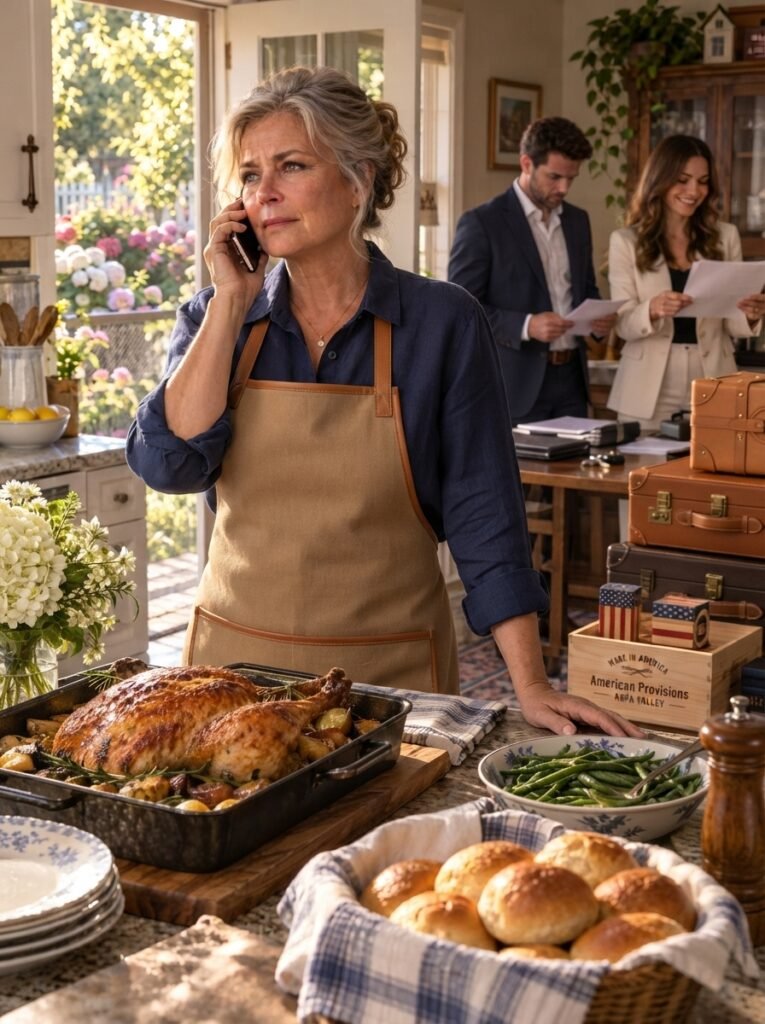
I stood at my kitchen window, staring at the garden my late husband Harold and I had planted more than twenty years before.
“Yes,” I said.
“Would you like us to send another electronic copy?”
“No.”
There was a pause.
“What would you like us to do?”
My hand tightened around the phone.
For months, I had swallowed little humiliations because Caleb was my only son.
I had ignored Lindsay’s assumptions.
Ignored the expensive furniture she casually discussed as though I were another financing option.
Ignored the way Caleb stared at the floor whenever his wife spoke to me disrespectfully.
Then, four days earlier, Lindsay had finally said the sentence that broke something inside me.
“My mother comes first. Accept it, or we handle things separately.”
She had said it after canceling a dinner I had spent hours preparing because her mother, Donna, supposedly wanted Italian food downtown.
And Caleb?
My sweet, gentle, conflict-averse son?
He had sent me a text afterward.
Hey, Mom. Hope that’s okay. She really wanted to do something special for her mom.
Hope that’s okay.
As if I were being asked whether they could change dessert.
As if I hadn’t been told exactly how little I mattered.
So Thursday morning, while the sunrise was still turning the Tennessee hills gold, I finally answered the question Lindsay had accidentally asked me.
Could we handle things separately?
Yes.
“Yes, ma’am?” the escrow officer prompted.
I took one slow breath.
“Remove me as the gift donor. I will not be transferring the funds.”
The woman on the other end became very still.
“I understand. Just to confirm, you are withdrawing the eighty-seven-thousand-five-hundred-dollar gift?”
“Yes.”
“All right. I’ll document that immediately.”
I thanked her.
Then I hung up.
For several seconds, I didn’t move.
No lightning struck.
No alarm sounded.
The world didn’t end.
The refrigerator hummed behind me. Birds hopped between the hydrangeas outside. Somewhere down the road, a lawn mower started.
And for the first time in months, I felt like my own life belonged to me again.
The first call came at 1:17 that afternoon.
Caleb.
I watched his name flash across my phone until it stopped.
Thirty seconds later, he called again.
Then Lindsay.
Then Caleb.
At 1:24, I answered.
“Mom.”
His voice sounded breathless.
“What happened?”
I sat at my kitchen table.
“What do you mean?”
“The escrow company says the gift funds are unavailable.”
“They are.”
A beat of silence.
“Why?”
“I withdrew the gift.”
He didn’t speak.
In the background, I heard a door close and Lindsay asking something sharply.
Then Caleb returned.
“Mom, we’re supposed to close in half an hour.”
“I know.”
“You know?”
“Yes.”
His voice dropped.
“Why would you do this today?”
That question almost made me laugh.
Not because anything was funny.
Because he genuinely sounded as if the timing were the problem.
“You mean why didn’t I inconvenience myself more politely?”
“Mom, come on.”
“No, Caleb. You come on.”
I heard him exhale.
“We can talk about the dinner later.”
“It isn’t about dinner.”
“Then what is it about?”
I looked around the kitchen.
The roast chicken from Saturday had become sandwiches, soup, and leftovers before finally disappearing into the trash.
“It’s about being treated like a bank account with a pulse.”
“Mom—”
“And it’s about the fact that your wife told me her mother comes first, and you decided the correct response was asking whether that was okay.”
Lindsay’s voice suddenly sounded beside him.
“Give me the phone.”
A moment later she was on the line.
Her voice was no longer polished.
“What exactly are you trying to prove?”
“Nothing.”
“You realize we lose the house if you do this.”
“I realize you cannot buy it using my money.”
“You promised us!”
“I promised my son help with a home. I did not promise to surrender my dignity to buy one.”
“That is unbelievable.”
“No, Lindsay. What became unbelievable was the assumption that you could speak to me however you wanted because closing was already scheduled.”
She gave a bitter laugh.
“So this is punishment.”
“No.”
I surprised myself with how calm my voice sounded.
“It’s a boundary.”
She hung up.
Caleb called again ten minutes later.
I ignored it.
Then came a text.
We need to talk.
I typed back:
Yes. We do.
At 4:36, their car pulled into my driveway.
I had expected anger.
I hadn’t expected fear.
Caleb came through the kitchen door first. His tie was gone, his shirt collar open. Lindsay followed in a cream suit, her face pale beneath perfectly applied makeup.
Nobody sat down.
Caleb spread his hands.
“Can we fix this?”
My first instinct was automatic.
Maternal.
I wanted to tell him yes.
Wanted to soothe him the way I had when he scraped his knees, failed his first driving test, or got dumped by his college girlfriend.
Then I remembered Bob Whitmore’s words.
A promise is not a transfer.
“I don’t know,” I said.
Lindsay stared at me.
“The seller gave us until Monday.”
“That was generous.”
“Roberta, please stop acting like this is some sort of moral lesson.”
“And please stop acting like eighty-seven thousand five hundred dollars is something you forgot in an Uber.”
Her mouth tightened.
Caleb stepped between us.
“Everybody needs to calm down.”
I looked at him.
There it was again.
His favorite position.
The peaceful man standing between two emotional women.
The reasonable one.
The good son trapped in conflict.
For years, I had admired his gentleness.
Suddenly I wondered whether gentleness and silence were always the same thing.
“I want to see the closing documents,” I said.
Caleb blinked.
“What?”
“All of them.”
“Why?”
“Because if I’m contributing $87,500, I would like to understand exactly what I am contributing it to.”
“It’s the down payment.”
“I know what you told me. I want the paperwork.”
Lindsay folded her arms.
“That’s private financial information.”
I looked at her.
“Then use private money.”
Her face flushed.
Caleb rubbed his forehead.
“Mom, there’s nothing weird in the paperwork.”
“Wonderful. Bring it tomorrow.”
He hesitated.
It was small.
Barely noticeable.
But I noticed.
And once I saw it, I couldn’t unsee it.
“Why are you hesitating?”
“I’m not.”
“Yes, you are.”
Lindsay looked at him.
“Just show her.”
“I will.”
“Now.”
“We don’t have everything here.”
Something passed across Lindsay’s expression.
Confusion.
Not fear.
Not guilt.
Confusion.
For the first time, I wondered whether there were things in those papers Lindsay hadn’t seen either.
The next morning, I drove back to Bob.
He was seventy-one by then, broad-shouldered, silver-haired, and still capable of making financial documents look guilty merely by putting on his reading glasses.
Caleb had emailed me forty-three pages at 11:52 the night before.
I printed all of them.
Bob worked silently.
Page after page.
Loan estimate.
Closing disclosure.
Insurance.
Tax estimates.
Title instructions.
I drank coffee and watched his face.
Eventually, his finger stopped.
“What?”
He didn’t answer.
He read the page again.
Then the next one.
“Bob?”
“Did Caleb tell you they had to pay off debt to qualify?”
“No.”
“How much debt?”
“About fifty-two thousand dollars.”
The room seemed to shrink.
“What?”
He turned the paper toward me.
There it was.
A payoff listed in connection with a personal obligation.
$52,418.63.
My stomach tightened.
“What kind of debt?”
“Doesn’t say here.”
“Is my money paying it?”
“Not directly. But money is fungible, Roberta.”
He tapped the paperwork.
“If they need your $87,500 in order to bring enough cash to close while simultaneously clearing another obligation, then economically speaking, yes. Your gift makes the payoff possible.”
I stared at the number.
“Caleb never mentioned any debt.”
Bob went back through the pages.
“There’s something else.”
Those four words would change everything.
He removed one sheet and placed it beside the first.
“Who is D. Mercer?”
I looked down.
Donna Mercer.
Lindsay’s mother.
“That’s Donna.”
Bob nodded.
“According to this, she transferred thirty-five thousand dollars toward borrower reserves six weeks ago.”
I felt my pulse in my throat.
“Donna gave them $35,000?”
“It appears so.”
Nobody had told me.
Not Lindsay.
Not Caleb.
And suddenly the expensive sectional, the granite samples, the casual comments about families helping with “big stuff” felt different.
They weren’t asking one mother for help.
They were draining both.
Bob removed his glasses.
“You need to ask some questions before signing anything.”
“I’m not signing.”
“Good.”
I looked at him.
“What could Caleb owe fifty-two thousand dollars for?”
Bob’s expression softened.
“Don’t guess. Find out.”
Donna called me that afternoon.
I almost didn’t answer.
“Roberta?”
Her voice was uncertain.
“Yes?”
“I think we need to talk.”
I waited.
Then she said something I never expected.
“I’m sorry about Saturday.”
I frowned.
“For what?”
“The restaurant.”
“You wanted Italian.”
“No.”
I stopped breathing for half a second.
Donna continued.
“I didn’t even know you had invited us to dinner until Sunday morning.”
My fingers tightened around the phone.
“What?”
“Lindsay told me you weren’t feeling well and canceled. She said she thought we should go downtown instead.”
A cold sensation moved through me.
“So you didn’t ask for a proper welcome dinner?”
Donna gave a humorless laugh.
“Roberta, I drove four hours. I would have eaten peanut butter in your kitchen.”
I sat down.
Something about the story I had built inside my head suddenly shifted sideways.
Donna spoke again.
“Lindsay told me you withdrew your money.”
“Yes.”
“Good.”
I stared at the wall.
“Good?”
“Yes.”
Then her voice broke.
“Because I think I’ve made a terrible mistake.”
Donna arrived an hour later carrying a thick envelope.
In person, she looked different than I remembered.
Older.
Tired.
Embarrassed.
We sat at my kitchen table, two mothers who had spent months being positioned as rivals without fully understanding why.
She pushed the envelope toward me.
Bank statements.
Checks.
Transfer confirmations.
“I’ve given them forty-three thousand dollars since Christmas.”
I looked up.
“The paperwork showed thirty-five.”
“The rest wasn’t for the house.”
“What was it for?”
Donna swallowed.
“Caleb.”
I felt something inside my chest go quiet.
She showed me the first transfer.
Eight thousand dollars.
Caleb had told Donna that Lindsay had an emergency dental procedure insurance wouldn’t cover.
Lindsay had never had one.
Another $5,000 had supposedly been for a car transmission.
Their car was leased and under warranty.
Another $3,200 had supposedly covered a tax bill.
Lindsay knew nothing about it.
I looked at Donna.
“Why didn’t you ask your daughter?”
Her face twisted with shame.
“Because Caleb asked me not to worry her. He said she was already under too much stress.”
The kitchen became very quiet.
Then Donna said, “What did he tell you about me?”
I hesitated.
“That Lindsay needed the restaurant Saturday because giving you a proper welcome was important.”
Donna shook her head.
“What else?”
I thought about the previous months.
The comments.
The resentments.
The assumptions.
“He said you thought my house was old-fashioned.”
Donna stared.
“He told me you called me flashy.”
We looked at each other.
Slowly, horribly, pieces began fitting together.
Lindsay had absolutely behaved badly.
She had made demands.
She had treated my gift as an entitlement.
But someone else had been feeding the fire.
And every time the women around him became angry with one another, Caleb became the quiet man in the middle.
The innocent man.
The peacekeeper.
The person nobody questioned.
My phone rang.
Bob.
I answered immediately.
“Roberta, I spoke to someone I used to work with who knows the lender involved.”
My heart started pounding.
“Can he tell us what the debt is?”
There was a pause.
“Yes.”
I closed my eyes.
“What?”
Bob exhaled.
“Online gambling.”
Fifty-two thousand dollars.
That was only the documented part.
By Saturday evening, Lindsay had discovered two additional credit cards Caleb had kept hidden.
Total debt:
$76,904.11.
I knew the exact number because Lindsay called me crying.
Not angry.
Crying.
“He told me it was twenty thousand,” she whispered.
I sat on the back steps.
“What?”
“Three months ago. He admitted he’d lost money betting. He said twenty thousand. He promised it was over.”
“Did you know Donna had been giving him money?”
“No.”
“Did you know about the fifty-two-thousand-dollar payoff?”
Silence.
Then:
“No.”
Her voice sounded so small that I almost forgot how furious I had been with her.
Almost.
“He told me the debt on the closing papers was from an old business investment,” she said.
“Why didn’t you question it?”
“I did.”
“And?”
“He said it was handled.”
I looked at the garden.
“He told everyone different stories.”
“Yes.”
A bitter laugh escaped her.
“He’s very good at that.”
I said nothing.
After a moment, she whispered, “I owe you an apology.”
“Yes, you do.”
Another silence.
“I was awful to you.”
“Yes.”
“I thought…”
She stopped.
“What?”
“I thought you were trying to control him with money.”
My heart sank.
“Why?”
“Because that’s what Caleb told me.”
There it was.
“He said you always made him feel like he owed you. That you used everything you’d done for him as leverage.”
I shut my eyes.
“Did he say that?”
“All the time.”
It hurt more than I wanted to admit.
Then Lindsay added, “He told me you had offered to help furnish the house.”
“I never did.”
She began crying again.
The $4,000 sectional.
The countertops.
The casual talk at Sunday dinners.
Lindsay had believed I had already promised more.
Caleb had told each of us exactly enough to make the other person look unreasonable.
Not every cruel thing Lindsay said could be blamed on him.
But he had cultivated the resentment.
Encouraged it.
Used it.
And while we fought, nobody looked closely at Caleb.
We asked him to come over Sunday afternoon.
He arrived believing only I would be there.
When he walked into my dining room and saw Lindsay, Donna, and Bob sitting around the table, he stopped.
His face changed.
Just for a second.
Then the familiar expression returned.
Concerned.
Gentle.
Confused.
“What’s going on?”
No one answered.
I placed the closing papers on the table.
Then Donna added her bank statements.
Lindsay placed two credit card bills beside them.
Caleb looked at everything.
His face drained of color.
“Sit down,” I said.
“Mom—”
“Sit.”
He did.
I had never spoken to my son that way before.
He rubbed his palms together.
“Okay. I can explain.”
Bob leaned back.
“That’s usually what people say when the explanation is going to be interesting.”
Caleb glared at him.
“This is family business.”
“No,” I said. “This became Bob’s business when I asked him to protect me.”
Caleb looked at me.
The wounded-son expression appeared.
“Protect you from me?”
For thirty-eight years, that look would have worked.
That afternoon, it didn’t.
“Yes,” I said.
He flinched.
Lindsay shoved a statement toward him.
“How long?”
Caleb stared at it.
“How long have you been gambling?”
He looked at his wife.
“Lindsay—”
“How long?”
“About two years.”
Donna covered her mouth.
“Two years?”
“It got out of control.”
“That is not an answer,” I said.
He finally looked directly at me.
“I thought I could win it back.”
Those seven words have destroyed more families than almost any other sentence in the English language.
He started with sports bets.
Then online poker.
Then live betting.

Then borrowed money.
Then credit cards.
Every loss required one more bet to repair it.
Every lie required another lie to protect the first.
“What was the house?” I asked.
He looked down.
“A reset.”
Lindsay laughed in disbelief.
“A reset?”
“If we paid everything down and closed, I could start fresh.”
“With our mothers’ money?” she snapped.
“I was going to pay everyone back.”
“How?”
He didn’t answer.
Donna’s voice trembled.
“You told me Lindsay needed surgery.”
Caleb closed his eyes.
“I’m sorry.”
“You told me your car broke down.”
“I know.”
“You looked me in the face and told me not to tell my own daughter because she was stressed.”
“I panicked.”
Donna stood so quickly her chair scraped across the floor.
“No. Panic is forgetting where you put your keys. You created stories.”
Caleb looked at Lindsay.
“Please.”
She turned away.
Then he looked at me.
“Mom.”
There was that word again.
The oldest key he had.
Mom.
I waited.
He whispered, “I screwed up.”
“Yes.”
“I need help.”
“Yes.”
His eyes filled with tears.
“Then help me.”
And that was the moment I finally understood something terrifying.
Even now, with every lie exposed, part of him still believed help meant money.
“No.”
His expression changed.
“Mom.”
“No more money.”
“I could lose everything.”
“You already lost things.”
“The house—”
“You never had the house.”
“My marriage.”
Lindsay gave a small, broken laugh.
“That’s not your mother’s responsibility either.”
He turned desperately toward Bob.
“What am I supposed to do?”
Bob’s answer was simple.
“Tell the truth. Sell what you can. Work. Get treatment. Pay your debts.”
“That could take years.”
Bob nodded.
“Yes.”
Caleb stared at him as though he had suggested prison.
Maybe, in Caleb’s mind, consequences and prison were the same thing.
He left without hugging me.
For three days, I heard nothing.
Then Wednesday morning, someone knocked.
Caleb stood outside.
He looked terrible.
Unshaven.
Eyes swollen.
No jacket.
No charming smile.
“Can I come in?”
I let him.
He sat at the kitchen table.
For a while, neither of us spoke.
Then he said, “Lindsay left.”
My heart hurt for him despite everything.
“Where did she go?”
“Donna’s.”
I nodded.
“She should.”
He looked toward the garden.
“I canceled my betting accounts.”
“That’s good.”
“I’m meeting with a counselor tomorrow.”
“Good.”
“I talked to a bankruptcy attorney.”
“Good.”
His mouth twitched.
“You’re not going to rescue me, are you?”
“No.”
He nodded slowly.
“I think I always knew you would.”
The sentence unsettled me.
“What do you mean?”
He rubbed his face.
Then came the confession that changed the entire story.
“Do you remember when you always said I hated conflict?”
“Yes.”
“I don’t.”
I stared at him.
He looked directly at me.
“I never hated conflict, Mom.”
My chest tightened.
“What are you saying?”
He swallowed.
“I hated being blamed.”
I didn’t move.
He continued.
“When Lindsay got angry at you, I stayed quiet because then she became the difficult one.”
His voice shook.
“When you got upset with her, I stayed quiet because then you blamed her.”
I felt cold.
He stared at his hands.
“It made everything easier.”
“For whom?”
He looked up.
“Me.”
The room seemed to tilt.
Every dinner.
Every uncomfortable conversation.
Every time Lindsay pushed too far and Caleb stared at the floor.
I had believed I was watching cowardice.
I had been wrong.
I had been watching strategy.
“You let me think she was responsible for everything.”
“Yes.”
“You let your wife think I was controlling you.”
“Yes.”
“Why?”
His eyes filled.
“Because as long as you two were angry at each other, nobody asked what I was doing.”
I stood up.
I needed distance from him.
He began crying.
“I know how horrible that sounds.”
“Do you?”
“Yes.”
“No, Caleb. I don’t think you do.”
He looked like the six-year-old boy who had once cried because a bird hit our kitchen window.
But I forced myself to see the thirty-eight-year-old man sitting in front of me.
The man who knew exactly which parts of his personality inspired trust.
His gentleness.
His silence.
His discomfort with confrontation.
All of it had become camouflage.
Then he said the sentence I would remember for the rest of my life.
“I knew you’d never say no to me if I made sure you were angry at someone else.”
I stopped breathing.
There it was.
Not Lindsay.
Not Donna.
Not the house.
Not the debt.
The true betrayal.
My son had studied my love for him and learned how to use it.
I didn’t speak to Caleb for six weeks.
Not because I stopped loving him.
Because I finally understood that love without boundaries had become part of the machinery destroying him.
Lindsay filed for a legal separation.
Donna hired a financial adviser.
The house went to another buyer.
And my $87,500 remained exactly where it had been all along.
In my account.
At first, I felt guilty every time I looked at the balance.
Then Bob said something that helped.
“Money doesn’t become selfish simply because you stop letting other people decide how it should be spent.”
So I began spending some of it.
Not recklessly.
Deliberately.
I replaced my seventeen-year-old Civic.
Nothing extravagant.
A reliable blue SUV with heated seats.
The first morning I drove it, I laughed out loud when the steering wheel warmed my hands.
Then I bought the sewing machine I had postponed purchasing for twelve years.
I took Joyce to Charleston for five days.
Oceanfront room.
Good seafood.
No apologizing.
No waiting for someone else to need something first.
But I didn’t spend all the money.
Most of it stayed invested.
Because I had learned something I should have understood long before sixty-three.
Security is not greed.
And sacrifice is only noble when it is freely chosen.
Caleb entered a gambling recovery program.
I know because six weeks after our last conversation, he mailed me a letter.
Not a text.
Not a request.
A letter.
He apologized without asking for forgiveness.
He listed every lie he remembered telling.
There were seventeen.
Some were small.
Some were enormous.
He admitted that the reason he had encouraged Lindsay’s resentment toward me was because Lindsay had started asking questions about the missing money.
He admitted that he had exaggerated things I said.
Invented things Donna said.
And sometimes deliberately scheduled events in ways that guaranteed conflict.
Then, near the end, he wrote:
I spent years pretending I was the peaceful person in the family when really I was hiding behind everyone else’s anger. I don’t expect you to trust me because I finally admitted it. I just wanted you to know that you were right to stop the money. If you hadn’t, I would have kept going.
I read that paragraph eleven times.
Then I put the letter in the drawer where I had once put my phone after his insulting text.
I didn’t answer immediately.
Recovery deserved encouragement.
Trust deserved time.
Those were different things.
Just like Bob had taught me:
A promise and a transfer were different things.
So were love and trust.
So were forgiveness and access.
Eight months after the failed closing, Caleb asked if I would meet him for coffee.
I agreed.
He was thinner.
Quieter.
But this time the silence felt different.
Not tactical.
Not defensive.
Just humble.
He had sold his expensive watch and his motorcycle.
He had taken a weekend bookkeeping job in addition to his regular work.
He was paying Donna back monthly.
He and Lindsay were still separated.
“Do you think she’ll come back?” I asked.
“I don’t know.”
He stirred his coffee.
“She shouldn’t unless she wants to.”
That answer told me more than any apology could.
Then he looked at me.
“Can I ask you something?”
“Yes.”
“If I had never said anything about the money… if the closing had happened… would you ever have found out?”
“About the gambling?”
He nodded.
“Eventually.”
“Probably.”
He looked out the window.
“You know what scares me?”
“What?”
“I was relieved when you canceled the gift.”
I stared at him.
He gave a weak smile.
“For about five seconds.”
“Why?”
“Because the whole thing was getting too big. I couldn’t remember which lies I had told which person.”
He swallowed.
“I wanted somebody to stop me.”
I reached across the table and touched his hand.
Not because everything was repaired.
It wasn’t.
But because he was my son.
And because for the first time, he wasn’t asking me to make his consequences disappear.
A year after the canceled closing, Lindsay asked to see me.
We met at my house.
She stood in the same kitchen where the roast chicken had cooled untouched that Saturday evening.
“I owe you something,” she said.
“You already apologized.”
“Not enough.”
She looked toward the counter.
“I said my mother came first.”
“Yes.”
“I said it because Caleb told me you had said I would always choose Donna over my marriage anyway.”
I stared at her.
“He told me you said I was just waiting for an excuse to put my mother above you.”
I closed my eyes.
Even after everything, there were still lies surfacing.
“I didn’t say that.”
“I know.”
She smiled sadly.
“I know that now.”
Then she took something from her purse.
A folded check.
I didn’t touch it.
“What is that?”
“Four thousand dollars.”
I almost laughed.
“The sectional?”
Her face reddened.
“Yes.”
“You never bought it.”
“I know.”
“Then why are you giving me four thousand dollars?”
“Because that was the moment I decided your money was ours.”
Her eyes filled with tears.
“I didn’t steal it. But I spent it in my head.”
I pushed the check back toward her.
“Keep it.”
“Roberta—”
“Use it to rebuild your life.”
She shook her head.
“No.”
Then she said something that surprised me.
“I need to learn the same lesson you learned.”
“What lesson?”
“That other people don’t get to decide what my money is for.”
She left the check.
I used it to start something Harold would have loved.
A small emergency fund at our local community center for women over fifty rebuilding their lives after divorce, widowhood, job loss, or financial abuse.
I named it The Later Fund.
Because I had spent most of my life saying later.
Later to the sewing machine.
Later to the car.
Later to myself.
I wanted other women to learn sooner.
Two years passed.
Caleb and Lindsay eventually divorced.
Quietly.
Without war.
Donna and I became something neither of us expected.
Friends.
Real ones.
Sometimes she drove up from Atlanta and sat at my kitchen table while I cooked.
The first time I made roast chicken for her, we both laughed.
“If you ask for Italian,” I warned, “you’re walking home.”
She nearly choked on her wine.
Caleb continued recovery.
He repaid Donna.
Slowly.
He never asked me for the $87,500 again.
Then one October afternoon, he came to my house carrying a cardboard box.
“What’s this?”
“Something I found when I moved.”
Inside were photographs.
Old school papers.
Baseball trophies.
A Father’s Day card he had made Harold when he was nine.
Then, underneath everything, I saw an envelope.
My name was written across the front.
Roberta.
I knew that handwriting immediately.
Harold’s.
My hands began trembling.
“Where did you get this?”
“It was in Dad’s old desk.”
Harold had been gone thirteen years by then.
I opened the envelope.
Inside was a single sheet of paper.
No date.
No dramatic final message.
Just Harold’s familiar block handwriting.
Bertie,
If you find this someday, I hope we are both old enough to laugh at how worried we used to be about money.
You give too much.
I stopped reading.
Caleb looked at me.
I continued.
That is one of the things I love most about you, and one of the things that scares me.
You think love means making sure everyone else has enough before you take anything for yourself.
Please don’t do that forever.
My vision blurred.
Then came the final lines.
If Caleb ever needs your help, help him become a man. Don’t help him avoid becoming one.
I covered my mouth.
Caleb began crying before I did.
For a long time, neither of us spoke.
Then he whispered, “Dad knew.”
I shook my head.
“No.”
Harold hadn’t known about gambling.
Or Lindsay.
Or an $87,500 house.
He had known something simpler.
Human nature.
Mine.
And perhaps Caleb’s.
I folded the letter carefully.
Then I looked at my son.
“You know what the strangest part is?”
“What?”
“I thought the phone call on closing day was about keeping my money.”
He waited.
“It wasn’t.”
“What was it about?”
I smiled through tears.
“It was about finally giving you something more valuable.”
He frowned.
“What?”
I reached across the table.
“A consequence.”
Caleb laughed.
Then cried harder.
And so did I.
Outside, evening light settled over Harold’s garden.
My newer car sat in the driveway.
My sewing machine waited in the spare room.
The money I had once been prepared to hand over without conditions had become something entirely different.
Part security.
Part freedom.
Part charity.
Part lesson.
But the greatest thing it bought never cost a dollar.
It bought the moment when a mother finally stopped confusing sacrifice with love.
It bought the moment when a son could no longer hide behind his wife, his debt, his fear, or his mother’s generosity.
And it bought the truth.
The truth that Lindsay’s cruelty had hurt me.
The truth that Caleb’s silence had hurt worse.
The truth that sometimes the quietest person in the room isn’t avoiding the conflict.
Sometimes he is directing it.
For years, I believed my son was too gentle to stand up for me.
I was wrong.
He had known exactly what he was doing.
And strange as it sounds, learning that terrible truth may have saved all of us.
Because the house disappeared.
The closing collapsed.
The marriage ended.
The lies came apart.
But eventually, something better was built in their place.
Not with granite countertops.
Not with a $4,000 sectional.
Not with borrowed money.
With accountability.
With boundaries.
With truth.
And on certain mornings, when I sit on the back steps with coffee and watch sunlight reach the garden Harold planted beside me all those years ago, I think about the woman I was before that Thursday at eight o’clock.
She believed saying no to her son would make her a bad mother.
Now I know better.
Sometimes “no” is the most loving word a parent can say.
Sometimes the money you refuse to give is the very thing that saves someone.
And sometimes the person you think you are protecting from a cruel world is the person who has quietly learned to use your love against you.
I nearly gave my son $87,500 because I believed love meant keeping him from falling.
Instead, I stepped aside.
I let him fall.
And for the first time in his adult life, he learned how to stand up on his own.
As for the eighty-seven thousand five hundred dollars?
Most of it is still mine.
Exactly where it belongs.