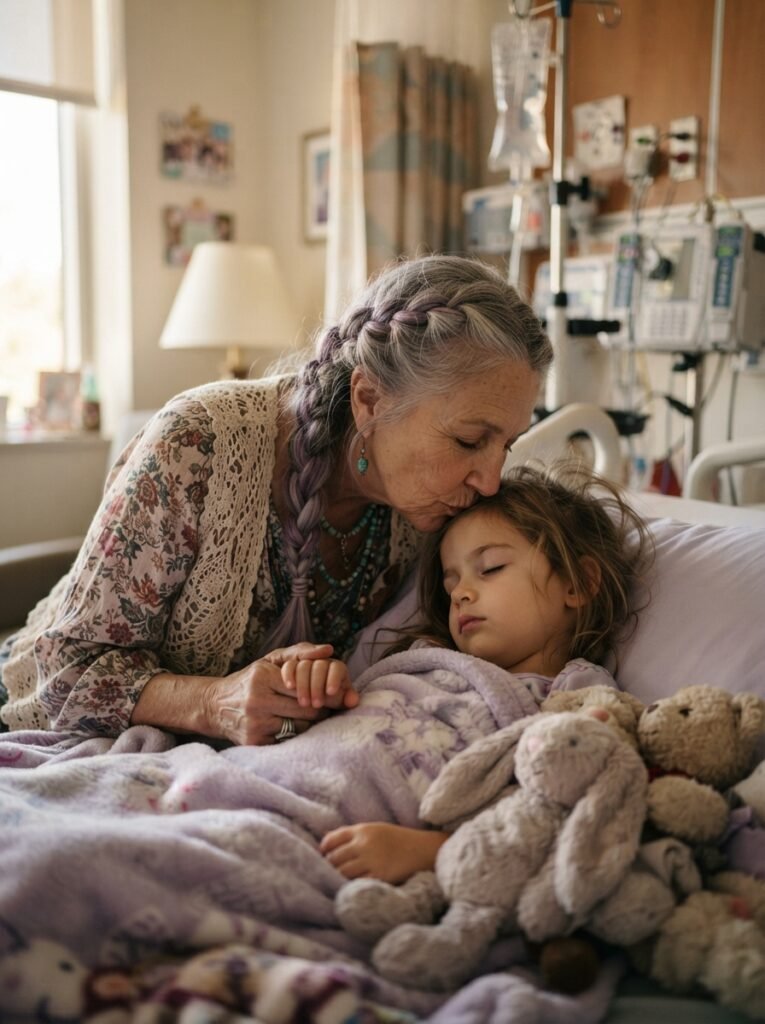
My 14-year-old daughter had been unconscious for three weeks when I found a strange woman whispering in her ear. I reached to pull her away, but my daughter’s fingers moved. The stranger said she’d repeated something Erica had told her every Friday, and I realized my child had hidden a life from me.
The last time my daughter was awake, she complained that I was pulling her hair.
“You’re supposed to start at the ends, Dad.”
My child had hidden a life from me.
“I’ve been doing this for fourteen years.”
“And I’m still teaching you.”
She stole a piece of toast from my plate.
“Don’t forget lunch.”
“That’s my line.”
“I’ve been doing this for fourteen years.”
“You’re bad at following your own advice, Dad!”
Then she grabbed her backpack and hurried outside.
I watched her walk toward the corner, her braid swinging against her jacket.
She’d recently convinced me she was old enough to walk to school with a friend.
“You’re bad at following your own advice, Dad!”
I was still getting used to watching her leave without me.
At 11:42, my phone rang.
A school administrator told me Erica had fallen during a supervised activity in the gym.
She’d struck her head badly.
At 11:42, my phone rang.
An ambulance had taken her to the hospital.
I remember asking whether she was conscious.
The woman paused.
“You need to come now.”
By the time I arrived, Erica was in surgery.
An ambulance had taken her to the hospital.
A doctor explained that bleeding and swelling around her brain had required emergency treatment.
I signed forms, answered questions, and waited beneath a television playing a cooking show.
When the surgeon finally came out, he said the operation was over.
Erica was alive.
But she hadn’t woken up.
Her brain had required emergency treatment.
Sandra died the day Erica was born.
For 14 years, it had been the two of us.
Crooked birthday cakes.
Grocery lists on the refrigerator.
School projects that somehow became my responsibility at ten o’clock at night.
Sandra died the day Erica was born.
Erica calling from upstairs, “Dad, where did you put my charger?”
Usually, it was exactly where she’d left it.
I’d never realized how much of my life was spent listening for her.
Now I sat beside a hospital bed, waiting for a voice that didn’t come.
“Dad, where did you put my charger?”
The doctors were careful with their words.
Her injury was severe.
Her chances of meaningful recovery were uncertain.
They couldn’t promise she’d wake.
I kept her phone charged anyway.
Her injury was severe.
By the third week, the days had begun to blur together.
Her classmates visited with stuffed animals and cards.
They told her stories from school, kept looking at her, and eventually ran out of things to say.
A girl named Hannah left a bracelet beside her hand.
The days had begun to blur together.
“You can give it back when you come home.”
After they left, I brushed Erica’s hair.
I started at the ends.
“See?” I whispered. “I’m learning.”
Sometimes I read her messages aloud.
I brushed Erica’s hair.
Sometimes I told her what I’d eaten.
At night, I held her hand and tried not to remember another hospital room where I’d begged someone I loved to stay.
One afternoon, a nurse suggested I stretch my legs.
I went downstairs for tea.
I told her what I’d eaten.
When I returned, an elderly woman was leaning over Erica’s bed.
She wore a patchwork coat, scuffed boots, and a purple streak through her gray hair.
Her mouth was close to Erica’s ear.
She was whispering.
An elderly woman was leaning over Erica’s bed.
I set my tea down so hard it spilled.
“What are you doing?”
The woman didn’t immediately straighten.
I crossed the room.
“Get away from my daughter!”
I set my tea down so hard it spilled.
I reached for the woman’s arm.
Then Erica’s fingers moved against the sheet.
My hand stopped inches from her sleeve.
There was another small movement beneath her closed eyelids.
I reached for the woman’s arm.
“Nurse! Please, her hand!”
The woman stepped back.
I caught her sleeve.
“Who are you? What did you say to her?”
She blinked quickly and looked back at Erica.
“Nurse! Please, her hand!”
“The same thing she told me every Friday last winter.”
A nurse hurried in and asked us both to move aside.
She checked Erica and called the medical team.
I stood near the doorway, watching every movement.
“The same thing she told me every Friday last winter.”
The doctor examined Erica and explained that a single finger movement didn’t necessarily mean she was conscious.
They would look for responses she could repeat reliably.
I wanted to argue.
I’d seen her move.
The doctor examined Erica.
But I’d also spent weeks hoping every twitch meant something.
The nurse explained that a desk error had allowed Molly upstairs with a community-center volunteer delivering cards.
She apologized and promised that future visits would require my permission.
Every twitch meant something.
Then I turned to the stranger.
“What did Erica tell you?”
The woman wiped her eyes.
“She told me I was still somebody’s mother.”
“What did Erica tell you?”
“My name’s Molly,” she added.
“Justin.”
We sat in the hospital family room while Erica rested.
Molly kept turning a silver ring around her finger.
“Your daughter came to our community garden last winter. School project.”
“My name’s Molly.”
I remembered Erica leaving on Fridays.
She’d told me she was working with a friend on something for school.
Even after the project was supposed to be finished, she’d kept going.
“She was only required to help for six weeks,” Molly admitted. “But she kept coming.”
I remembered Erica leaving on Fridays.
“Why?”
“At first, I thought she liked the gardening.”
“And then?”
Molly let out a small laugh.
“She hated pulling weeds.”
I almost laughed.
“Why?”
Erica hated pulling weeds at home too.
Molly looked toward the hallway.
“She was very good at making people feel useful.”
I didn’t understand what that had to do with my daughter lying unconscious upstairs.
Not yet.
Erica hated pulling weeds at home too.
Molly explained that she’d been forgetting appointments, misplacing her keys, and losing track of whether she’d watered the plants.
“Some days are better than others,” she said. “I write things down.”
One Friday, she’d watered the same seedlings twice.
She’d been forgetting appointments.
When Erica pointed it out, Molly became upset.
“I told her I couldn’t even keep a few plants alive anymore.”
“What did she say?”
Molly looked at me.
“She brought over our notebook and showed me the dates.”
Molly became upset.
She paused.
“Then she said, ‘Forgetting something doesn’t mean you stopped loving somebody.'”
I stared at her.
That sounded exactly like Erica.
But Molly wasn’t finished.
“She asked me something afterward.”
I stared at her.
“What?”
“About her mother.”
I sat forward.
“What about Sandra?”
“She wanted to know whether you could miss someone you’d never met.”
“About her mother.”
I looked down at my hands, still wrapped around the untouched cup.
I’d told Erica stories about Sandra since she was little.
How she sang while cooking.
How she loved terrible detective shows.
I’d told Erica stories about Sandra.
How she’d bought an enormous secondhand dining table because she said we’d need room for a family.
I thought those stories were enough.
“She never asked me that,” I said.
Molly nodded.
“She said she didn’t want to make you sad.”
I thought those stories were enough.
I looked toward the corridor.
All those Fridays.
All those conversations I hadn’t known about.
Molly touched my arm.
“She wasn’t keeping secrets to hurt you, Justin.”
All those Fridays.
“Then why didn’t she tell me?”
Molly considered that.
“Maybe she needed somewhere to ask questions without worrying about the answers.”
Two days later, I visited the community center.
“Then why didn’t she tell me?”
Erica’s doctor had encouraged me to take short breaks, and my sister agreed to stay with her.
The garden sat behind a low brick building, with two planting beds, a battered bench, and a shed with a crooked door.
Molly was waiting beside a row of marigolds.
My sister agreed to stay with her.
“These were Erica’s idea,” she said.
“Why marigolds?”
“Because they’re difficult to kill.”
That sounded like my daughter too.
Molly showed me a notebook.
“Why marigolds?”
Inside were watering dates, crossed-out instructions, and little drawings beside the plant names.
One entry read:
Molly forgot what we planted last week. We checked the labels. She was right about the marigolds.
I turned the page.
Inside were watering dates.
Erica had written the next week’s schedule in larger letters.
“Can I water those?” I asked.
Molly handed me a can.
I poured generously.
“Good grief!” she exclaimed. “You’re drowning them!”
“Can I water those?”
I stopped.
“Sorry.”
“Did your daughter teach you nothing?”
“Apparently not enough.”
Molly laughed.
It was the first time I’d smiled without immediately feeling guilty.
“Did your daughter teach you nothing?”
Then she pointed toward the notebook.
“She liked writing things down. Said it helped her remember what she’d done.”
I looked at Erica’s handwriting.
Some pages were tidy.
Others had dirt smudges and crooked arrows.
“She liked writing things down.”
She’d been coming here for months.
Building a friendship.
Learning things I hadn’t taught her.
And asking questions I hadn’t known she carried.
She’d been coming here for months.
Inside the center, Molly made tea.
She told me about one Friday when Erica had asked whether it was strange to love someone you couldn’t remember.
Molly had asked what she knew about Sandra.
“She told me your wife sang while making dinner.”
She told me about one Friday.
“Badly,” I said.
“Erica mentioned that.”
I smiled.
“She also said you sometimes laugh when you talk about Sandra. Then you get quiet.”
I stared into my cup.
“She notices that?”
“She also said you sometimes laugh when you talk about Sandra.”
“Children notice more than we think.”
Molly hesitated.
“Erica said sometimes she changes the subject because she doesn’t know whether you’re supposed to be happy or sad.”
I put my cup down.
“Children notice more than we think.”
I’d always thought I was protecting her by keeping my grief small.
I hadn’t realized she was watching me manage it.
Molly reached into her coat pocket and unfolded a paper covered in gardening notes.
“There’s something else.”
I was protecting her by keeping my grief small.
I waited.
“She asked what would happen to you when she grew up.”
I frowned.
“What do you mean?”
“She said you spend most of your time looking after her. She worried you wouldn’t know what to do when she moved away.”
“She asked what would happen to you when she grew up.”
I almost dismissed it.
Erica was 14.
College was years away.
But then I remembered the questions she’d been asking lately.
“Why don’t you ever go out with your friends, Dad?”
I almost dismissed it.
“Don’t you want to take a vacation without me?”
“Are you going to be lonely when I’m older?”
I’d laughed them off.
“Maybe when things settle down,” I’d always said.
“Don’t you want to take a vacation without me?”
I hadn’t realized she was waiting for that day too.
That evening, I went home for clean clothes.
Erica’s hair ties lay beside the sink.
Her unfinished grocery list was stuck to the refrigerator.
She was waiting for that day too.
At the bottom she’d written:
Dad needs actual vegetables.
An old friend had messaged weeks earlier to ask me to dinner.
I had never replied.
This time, I opened the conversation.
Dad needs actual vegetables.
“Sorry I’ve been out of touch. Erica’s in the hospital. Could you call me?”
He called within five minutes.
At the kitchen table, I told him what had happened without pretending I was managing fine.
“Erica’s in the hospital.”
Over the following weeks, some of Erica’s movements appeared reflexive.
Then she followed a simple instruction repeatedly during an assessment.
These responses appeared deliberate.
The doctor called it encouraging but warned that recovery could be slow and unpredictable.
Erica’s movements appeared reflexive.
I tried not to build an entire future out of one good afternoon.
Molly visited when the staff and I arranged it.
Sometimes she remembered Erica’s favorite flowers.
Sometimes she asked me twice.
Molly visited when the staff and I arranged it.
When she asked for the notebook, I handed it over.
One afternoon, she sat beside Erica and talked about the marigolds.
“Your father nearly drowned them,” she said.
I shook my head.
“You’re never going to let that go.”
She asked for the notebook.
“No!”
I brushed Erica’s hair while Molly described the garden.
At the ends first.
Always at the ends.
Months passed.
Erica moved into rehabilitation.
At the ends first.
There were better days and difficult ones.
She tired quickly.
Some words came slowly.
Her right hand was weaker than before.
But she could answer questions.
There were better days and difficult ones.
She could recognize people.
And she could complain when I put too much milk in her oatmeal.
One morning, I brought her hairbrush.
She watched me work through a knot.
“You’re getting better,” she said.
She could recognize people.
“At what?”
“My hair.”
“I’ve been doing this for fourteen years.”
Erica looked at me for a long moment.
Then she said, very quietly, “I know.”
“I’ve been doing this for fourteen years.”
I waited.
She reached for my wrist.
“Not the braiding.”
I set the brush down.
Erica was still holding my wrist.
“Not the braiding?” I asked.
She reached for my wrist.
She shook her head.
“Everything else.”
I looked at her thin fingers, still struggling with movements that had once come easily.
“Sweetheart, I liked those fourteen years.”
“Even when I was annoying?”
I looked at her thin fingers, still struggling with movements.
“Especially then.”
She smiled.
“Even the science fairs?”
“Most of the science fairs.”
Her smile faded.
“Molly said I don’t have to worry about you being alone.”
“Especially then.”
I pulled my chair closer.
“She’s right. And you don’t owe me anything for raising you.”
Erica considered that.
“Not even a decent birthday cake?”
“That’s negotiable.”
“You don’t owe me anything for raising you.”
She laughed, then closed her eyes to rest.
I stayed beside her, holding the brush.
Three months later, Erica was well enough for a short visit to the community garden.
She used a wheelchair for longer outings and still attended rehabilitation.
I stayed beside her, holding the brush.
Molly greeted her with a hug.
“You’ve missed a terrible amount of weeding.”
“Nice to see you too,” Erica said.
Molly showed her the marigolds.
Molly greeted her with a hug.
Then she frowned.
“Did we plant these in March?”
Erica opened their old notebook across her knees.
“April. You said March was too cold.”
“Did I?”
“Did we plant these in March?”
“You complained about it for twenty minutes.”
“Sounds reasonable.”
I picked up the watering can.
“Where should I start?”
“Not so much!” Molly warned.
“Sounds reasonable.”
“I haven’t poured anything!”
“You were thinking about it.”
Erica laughed.
“Dad, start at the edges.”
“You were thinking about it.”
I looked between them.
“Why is everybody always teaching me how to do things?”
“Because you keep doing them wrong,” Erica said.
I poured a little water onto the soil.
“Why is everybody always teaching me how to do things?”
Molly returned to the marigolds.
Erica turned another page.
“Wait. We planted the yellow ones first.”
“Are you sure?” Molly asked.
Erica turned another page.
Erica pointed to a drawing in the notebook.
“Look. You drew them.”
Molly leaned closer.
“Those are supposed to be flowers?”
“They’re your flowers.”
Erica pointed to a drawing in the notebook.
“Then I was clearly having a bad day!”
Erica laughed again.
I set down the watering can and pulled a chair beside them.
Together, they began checking the next page.
Erica laughed again.