The worst thing my son ever stole from me wasn’t money.
It was the certainty that when he called me “Mom,” he still meant it.
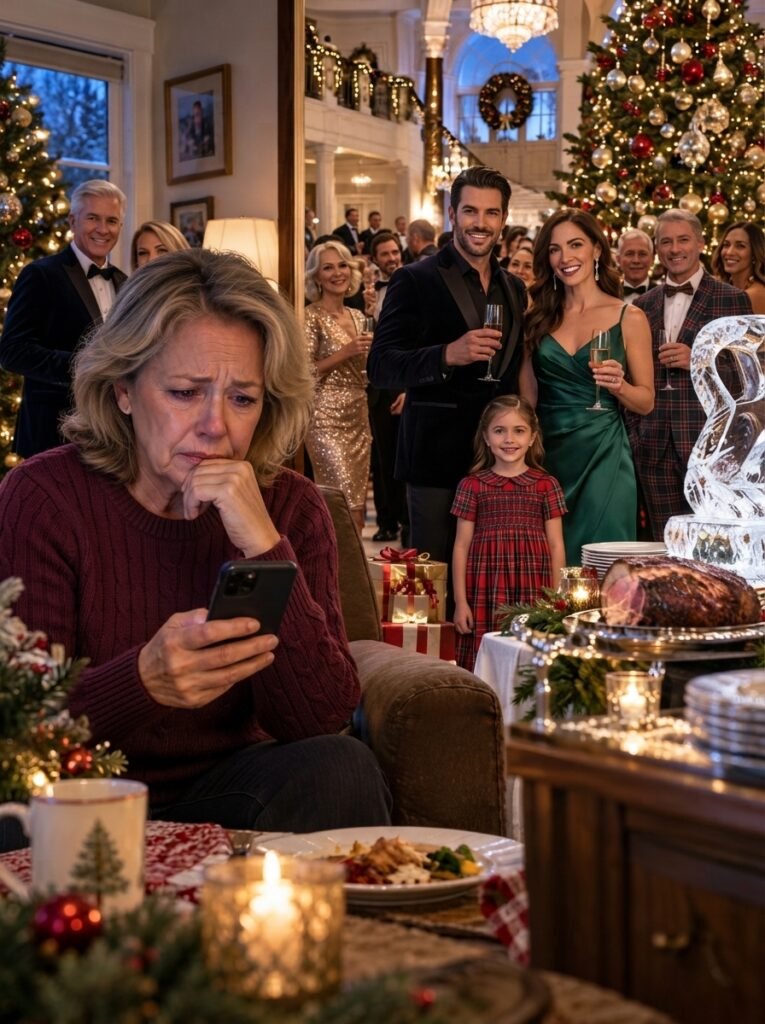
Christmas night, I was sitting alone in my living room with a plate of reheated chicken when my phone buzzed.
Outside, snow pressed against the windows. The little white lights on my Christmas tree blinked softly, illuminating the unopened gift I had wrapped for my five-year-old granddaughter, Lily.
My son David had canceled Christmas dinner that morning.
“Mom, I’m sorry,” he had told me. “We just can’t do Christmas this year. Sarah and I are drowning.”
I believed him.
Why wouldn’t I?
Two weeks earlier, David had called sounding exhausted.
He said they were three months behind on rent.
Their heating bill had gone to collections.
He was terrified Lily would wake up one morning in a freezing apartment.
So I transferred him $4,500 that afternoon.
I didn’t ask for receipts.
I didn’t demand repayment.
He was my son.
Lily was my granddaughter.
That was enough.
Then, at 8:43 p.m. on Christmas night, David sent me another message.
“Rent is still short. Need $3,000 by tomorrow or we get an eviction notice.”
I stared at it.
Another $3,000.
Something about the message bothered me—not the amount, exactly, but the timing.
I opened Facebook almost without thinking.
Sarah’s sister, Nicole, was livestreaming.
Music floated from my phone.
Then laughter.
Crystal chandeliers.
Ice sculptures.
Waiters carrying champagne.
A chef slicing prime rib.
For several seconds, I assumed Nicole was at some corporate Christmas gala.
Then the camera swept across the room.
Sarah’s parents.
Her cousins.
Her aunts.
Her friends.
People I knew.
People who had once sat at my Thanksgiving table.
Then I saw David.
My supposedly broke son was standing beneath a chandelier holding a glass of expensive scotch.
He wore a black suit I had never seen before.
Sarah stood beside him in a cream-colored cashmere coat.
I recognized it immediately.
Months earlier, she had shown me the coat in a catalog.
“Beautiful,” I had said.
She had sighed.
“Maybe someday. We can’t afford nice things.”
Now she was wearing it.
The livestream continued.
Nicole turned toward the entrance, laughing.
And there, beside two enormous flower arrangements, was a gold-lettered sign.
THE ANNUAL HOLIDAY GALA
HOSTED BY DAVID & SARAH
I read it twice.
Then a third time.
My stomach went cold.
The money I had sent for rent and heat had helped pay for this.
And I had been told Christmas was canceled.
I was the only family member missing.
Then Sarah appeared on camera and lifted her champagne glass.
“Thank you all for coming!” she said. “We wanted to treat our favorite people this year.”
Favorite people.
I looked around my silent living room.
At the plate of chicken.
At Lily’s unopened present.
At my phone.
Something inside me broke very quietly.
I typed five words.
“Stay out of my life. Liar.”
Then I turned my phone to silent.
By morning, David had called me 42 times.
Sarah had called 17.
I ignored every one.
Instead, I made coffee and replayed the livestream.
This time, I watched carefully.
David handed thick envelopes to the catering staff.
Sarah posed beside expensive decorations.
Guests opened gifts.
There was a bartender.
A pianist.
An ice sculpture.
Nothing about the evening looked inexpensive.
My phone flashed again.
David.
I let it ring.
Then I opened my laptop.
For years, I had told myself that helping family was different from being used.
That morning, for the first time, I understood the difference.
I logged into my bank.
First, I canceled the automatic $800 monthly transfer that had been going into David’s checking account.
Then I removed David and Sarah from my family phone plan.
Then I canceled the insurance payments on their two luxury SUVs.
They had promised to reimburse me for the insurance.
They hadn’t paid me in eight months.
I didn’t call them.
I didn’t threaten them.
I simply stopped paying.
Around noon, Sarah emailed.
She called the party a “harmless misunderstanding.”
She claimed her retired parents had paid for it.
Then, three paragraphs later, she demanded the $3,000.
Apparently, they were still about to be homeless.
I closed the email.
At 1:17 p.m., I received a voicemail from David using another phone.
His voice was furious.
“Mom, what the hell are you doing? Our phones stopped working. Sarah says you didn’t send the rent money.”
I pressed speaker.
“Are you seriously trying to make us homeless over one party?”
Then came the sentence that changed everything.
“Sarah deserved a good night. We used the emergency cash for the venue, but the rent is still behind.”
I stopped breathing for a second.
He had admitted it.
The emergency money.
My money.
They had used it for the party.
But David wasn’t apologizing.
He sounded offended that I objected.
“Your money is family money,” he continued. “Stop throwing a tantrum. Turn the phones back on and send the $3,000.”
I saved the voicemail.
Then I backed it up twice.
After that, I opened a blank spreadsheet.
For the next four hours, I went through four years of bank statements.
Every emergency.
Every transfer.
Every bill.
$1,200 for a broken furnace.
$2,500 for a security deposit.
$800 for designer luggage Sarah supposedly needed for a work trip.
Car repairs.
Medical bills.
Preschool tuition.
Vacation expenses.
Overdue utilities.
One month, David needed $2,000 because his employer had “messed up payroll.”
Another month, Sarah needed money for dental work.
Then there was the emergency veterinarian bill for a dog they no longer owned.
Individually, each payment had felt temporary.
Together, they looked like a business model.
At the bottom of my spreadsheet, I entered the final number.
$62,450.
I stared at it.
Then I remembered Lily’s college account.
When Lily was born, I opened a savings account for her future.
I deposited $500 every month.
David was listed as joint owner.
I had never checked the withdrawals because I believed there wouldn’t be any.
Suddenly, I needed to know.
I drove to my bank.
The roads were icy, and the afternoon sky was already darkening.
At the counter, I handed the teller my ID.
“I need a complete statement for this joint savings account.”
She typed.
Her expression changed.
Just slightly.
Then the printer began humming.
She placed the statement in front of me.
The balance should have been close to $30,000.
Instead, it was:
$1,847.13.
My fingers went numb.
There were dozens of withdrawals.
Restaurants.
Luxury stores.
Vacation resorts.
Cash transfers.
And one transaction for $8,500 to a real-estate closing company.
“That account was for my granddaughter’s education,” I whispered.
The teller looked genuinely uncomfortable.
“I think you should speak with our branch manager.”
Twenty minutes later, I walked into the parking lot with a stack of documents pressed against my chest.
I sat in my car and searched the closing company on my phone.
They were legitimate.
They handled property purchases, refinances, deeds, and escrow services.
Why had David sent them $8,500?
I searched public property records.
David and Sarah had purchased property three months earlier.
Not an apartment.
Not a tiny starter home.
A house.
Paid largely in cash.
I stared at the screen.
For months, they had told me they were struggling to pay rent.
Meanwhile, they had purchased real estate.
My phone rang.
David.
This time, I answered.
“Mom,” he snapped immediately, “we need to talk.”
“Yes,” I said quietly. “We certainly do.”
Someone tapped on my car window.
I turned.
It was the bank manager.
He looked pale.
I lowered the window.
“Mrs. Bennett,” he said, “please don’t leave yet.”
My heart started pounding.
“Why?”
He glanced toward the bank.
“Fraud prevention flagged something while we were reviewing your accounts.”
I got out of the car.
“What kind of something?”
He hesitated.
Then he said the words that turned my anger into fear.
“Has your son ever had power of attorney over you?”
“No.”
“Have you signed any documents giving him authority over your property?”
“No.”
His face tightened.
“We need to go back inside.”
In his office, he turned his monitor toward me.
Three months earlier, someone had submitted documents containing my name, date of birth, Social Security information, and a notarized signature.
The documents appeared to give David limited authority to manage real-estate matters on my behalf.
The signature looked like mine.
It wasn’t.
I felt sick.
“What did he use it for?”
The manager looked at me for a long moment.
Then he pulled up another record.
“Your home.”
I stared at him.
“What about my home?”
He swallowed.
“According to the county filing, ownership was transferred into an LLC three months ago.”
I laughed once.
Not because it was funny.
Because my brain rejected the sentence.
“That’s impossible.”
He showed me the address.
My address.
The house where I had raised David.
The house my husband and I had paid off before he died.
The house I was still living in.
The listed owner was now D&S Family Holdings LLC.
David and Sarah.
I felt the room tilt.
“I never sold my house.”
“I understand.”
“I never transferred anything.”
“I believe you.”
Then he showed me something worse.
A home-equity credit line had been requested against the property.
$275,000.
It was scheduled to close after New Year’s.
I sat absolutely still.
They hadn’t simply stolen from me.
They were preparing to borrow against my home.
The next call I made was not to David.
It was to an attorney.
Her name was Elena Ramirez.
My husband had once used her firm for estate work.
She listened without interrupting.
Then she said, “Do not sign anything. Do not transfer money. Do not meet your son alone. Send me every document you have.”
By that evening, we had begun freezing everything we could.
The bank opened a fraud investigation.
Elena contacted the title company.
I filed a police report.
And because the fraudulent deed had not yet been used to complete the equity loan, the lender placed an immediate hold on the transaction.
For the first time all day, I could breathe.
Then my doorbell rang.
David and Sarah stood on my porch.
David looked furious.
Sarah looked terrified.
I didn’t open the door.
I spoke through it.
“Go home.”
“Mom,” David said, “stop this.”
“This?”
“You called the bank.”
“Yes.”
“You had no right.”
For several seconds, I couldn’t even respond.
Then I laughed.
“My name is on the original deed.”
Sarah stepped forward.
“You’re misunderstanding what happened.”
“Then explain it.”
Silence.
David finally spoke.
“We were protecting the property.”
“From whom?”
He didn’t answer.
I looked through the glass at the child I had once rocked to sleep with pneumonia.
The boy who used to bring me dandelions from the backyard.
The teenager who cried at his father’s funeral.
And suddenly I could barely recognize him.
“You forged my signature.”
David’s jaw tightened.
“You were going to leave everything to me eventually.”
There it was.
Not denial.
Entitlement.
Sarah whispered, “David—”
“No,” he snapped. “She needs to hear this.”
Then he looked straight at me.
“You’re sitting in a paid-off house worth almost half a million dollars while we’re struggling.”
“You just bought a house.”
His face changed.
Only slightly.
But enough.
“I found the closing payment,” I said.
Sarah looked at David.
“You checked Lily’s account?”
The horror on her face told me everything.
I stepped closer to the door.
“You stole from your daughter too?”
David slammed his palm against the door.
“It was temporary!”
I flinched.
“We were investing it. Once the business took off, Lily would’ve gotten it back ten times over.”
“What business?”
Neither answered.
That night, Elena discovered it.
David and Sarah were planning to launch a luxury event company.
The Christmas party had not simply been a party.
It had been a showcase.
Potential clients were invited.
So were local business owners.
The ice sculptures, catering, bartenders, decorations—everything had been designed to create photographs for their marketing.
And I had financed much of it without knowing.
The house they purchased was intended to become an event venue.
My stolen money helped fund it.
The planned $275,000 equity loan against my home was supposed to renovate it.
Suddenly, the $3,000 “rent emergency” made sense.
It was another business expense.
I thought that was the full betrayal.
I was wrong.
For the next three months, the investigation expanded.
Sarah’s father had notarized the forged property document.
He claimed he had believed I signed it.
Sarah claimed David told her I approved everything.
David claimed Sarah’s parents designed the business plan.
Everyone blamed someone else.
My house was eventually restored to my name through an expedited legal process after the forged signature was established.
The equity loan disappeared.
The title insurer pursued David and Sarah.
The district attorney opened a fraud case.
Their event property was frozen during litigation.
Through a civil settlement and restitution agreement, much of Lily’s missing college money was eventually recovered.
I moved it into a protected education trust.
David would never control another dollar belonging to Lily.
For weeks, I barely slept.
Grief is strange when the person you’re grieving is still alive.
I missed my son.
But I missed a version of him that perhaps had not existed for years.
One evening in March, Elena called me.
“We received additional discovery from David’s laptop.”
I almost told her I didn’t want to know.
Then she added, “I think you need to see this in person.”
The next morning, I sat across from her.
She placed a folder on the desk.
“I originally thought the house transfer and business financing were the end goal,” she said.
“They weren’t?”
“No.”
She opened the folder.
The first document was a legal petition.
My name appeared at the top.
I began reading.
Then my hands started shaking.
It was a draft petition for adult guardianship.
Against me.
David and Sarah had been preparing to ask a judge to declare me mentally incompetent.
The petition claimed I had become confused.
Forgetful.
Financially irresponsible.
Socially withdrawn.
It said I had recently begun giving away large sums of money without understanding what I was doing.
My throat tightened.
“How long had they been planning this?”
Elena turned to the next page.
The draft had been created almost nine months earlier.
Before the Christmas party.
Before several of David’s emergencies.
Before Sarah’s dental bill.
Before the furnace.
Before the car repair.
I looked at Elena.
She looked sick.
Then I understood.
“No,” I whispered.
Elena nodded slowly.
“They were creating evidence.”
All those emergency transfers.
All the money David had asked me to send.
They planned to present those payments as proof that I could no longer manage my finances.
My own generosity was going to be used against me.
But it got worse.
Attached to the petition was a spreadsheet.
I recognized the number at the bottom immediately.
$62,450.
The exact same amount I had calculated on Christmas morning.
Except David had made his spreadsheet months before I made mine.
Beside every payment was a note.
“Unexplained gift.”
“Possible confusion.”
“Repeated transfer.”
“Demonstrates poor judgment.”
I could barely breathe.
“They asked me for the money,” I said.
“I know.”
“They begged me.”
“I know.”
“And they were going to tell a judge I sent it because I was losing my mind?”
“Yes.”
My eyes burned.
Then Elena turned another page.
It was an affidavit prepared for Sarah’s mother.
Another for Sarah’s father.
Another for Nicole.
Each described me as increasingly isolated.
One sentence appeared repeatedly.
“She refused to attend the family Christmas celebration despite repeated invitations.”
I stared at the sentence.
My heart stopped.
Christmas.
The canceled dinner.
The party.
I had always believed they excluded me because they didn’t want me there.
But that wasn’t the real reason.
They had told me Christmas was canceled.
They had told everyone else that I had been invited and refused to attend.
My absence was evidence.
My empty chair was evidence.
The livestream.
The photographs.
The witnesses.
Everything had been arranged so that after New Year’s, David could stand before a judge and say:
Look at my mother.
She sends away thousands of dollars for no reason.
She isolates herself.
She refuses family gatherings.
She behaves irrationally.
She cannot manage her own affairs.
And once a court gave him control, the fraudulent power of attorney wouldn’t matter anymore.
He would have legal authority over my accounts, investments, and home.
I looked at Elena.
“The Christmas party wasn’t celebrating their business.”
“Not only.”
She pushed one final document toward me.
It was an email David had sent Sarah three days before Christmas.
The subject line read:
AFTER MOM
I couldn’t open it at first.
Elena did.
David had written:
If she sends the last $3K after refusing Christmas, we have everything we need. Dad’s lawyer says the pattern will look bad enough. Once guardianship goes through, we can refinance the house legitimately and no one can challenge it.
I felt something inside me go completely still.
That last $3,000 had never been about rent.
It wasn’t even mainly about their business.
It was bait.
They wanted one final transfer after excluding me from Christmas so they could portray me as a confused elderly woman sending money irrationally while withdrawing from her family.
My refusal had ruined the pattern.
My five-word message had changed everything.
Stay out of my life. Liar.
Elena leaned back.
“There’s something else.”
I almost laughed.
“What else could there possibly be?”
She turned her laptop toward me.
A video began playing.
It was Nicole’s Christmas livestream.
The same one I had watched alone.
But this was a longer copy recovered from David’s computer.
Near the end of the party, the camera drifted toward David and Sarah.
They apparently didn’t realize Nicole was still broadcasting.
Sarah whispered something.
David laughed.
Then his voice came clearly through the recording.
“By next Christmas, Mom’s house will be ours.”
Sarah lifted her glass.
“To family money.”
They clinked glasses.
I watched it once.
Only once.
Then I closed the laptop.
David eventually pleaded guilty to multiple financial offenses rather than risk trial on every count.
Sarah accepted a separate plea agreement and testified about the forged documents.
Her father lost his notary commission and faced his own charges.
Their business disappeared before it ever officially opened.
The event property was sold.
Part of the proceeds restored Lily’s education fund.
I did not attend David’s sentencing.
I sent a statement instead.
There was only one paragraph I cared about.
“I hope my son someday understands that losing my money was survivable. Losing my trust was not.”
A year later, I sold my house.
Not because David had driven me out.
Because I wanted the decision to be mine.
I bought a smaller place near a lake with a wide porch and maple trees in the yard.
The remaining money went into trusts David could never touch.
One afternoon, a letter arrived.
The handwriting was uneven.
Inside was a drawing from Lily.
A house.
A tree.
Two stick figures holding hands.
One little.
One with gray hair.
Above us she had drawn an enormous yellow sun.
At the bottom, someone had helped her write:
I LOVE YOU GRANDMA.
I framed it.
For a long time, I thought that was the ending.
Then, almost two years after that Christmas, Elena called again.
Her voice was different.
Not worried.
Almost amused.
“You remember David’s guardianship petition?”
“I wish I didn’t.”
“There was a clause in your late husband’s estate trust we overlooked because it never became relevant.”
My husband had created the trust decades earlier.
Most of it had passed to me when he died.
But one provision concerned any descendant who attempted to obtain my assets through fraud, coercion, or a legal declaration of incapacity made for financial benefit.
I had never known it existed.
My husband had insisted on it after watching his own elderly aunt lose everything to a manipulative relative.
The clause was brutally simple.
If our son ever attempted such a thing, David automatically forfeited every future inheritance interest connected to the family trust.
And the forfeited share?
It transferred directly to the next generation.
To Lily.
Not controlled by David.
Not controlled by Sarah.
Administered by an independent trustee until Lily turned thirty.
I sat speechless.
Elena smiled.
“Your husband apparently thought ahead.”
Tears filled my eyes.
For the first time in years, they weren’t tears of humiliation.
They were relief.
David had spent years trying to steal his inheritance early.
And by trying to take everything from me, he had legally given everything he might someday have inherited to the daughter whose college fund he stole.
The last time David wrote to me, his letter contained one question.
Did Dad really put that clause in the trust?
I never answered.
I didn’t need to.
Because in the end, David was right about one thing.
There had always been family money.
He simply never understood what family meant.