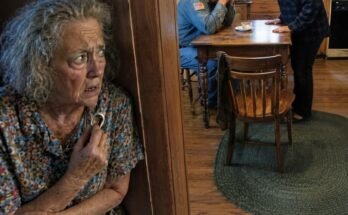
My 10-year-old daughter almost died during a severe allergic reaction after my family abandoned her and refused to call an ambulance.
Instead of helping her, they loaded the other children into an SUV and left for a luxury day trip as though nothing serious was happening.
I never raised my voice.
I never threatened them, chased them down the driveway, or posted an angry accusation online.
But three hours later, the comfortable lives they had built with my help began falling apart.
At 11:07 that morning, my phone buzzed against my desk.
My sister Rebecca was calling from my mother’s house, where they had agreed to watch my daughter, Emma, while I worked.
Emma had severe allergies, and everyone in the family knew it.
They knew where her emergency medication was kept, they knew what symptoms required immediate action, and they knew that hesitation could become dangerous very quickly.
That was why the irritation in Rebecca’s voice frightened me before I even understood what was happening.
“Emma has a rash again,” she said.
She sounded inconvenienced, not alarmed.
“She’s making herself panic because she knows we’re leaving.”
Behind Rebecca’s voice, I heard something that made every muscle in my body tighten.
Emma was trying to breathe.
Each inhale ended in a thin, strained whistle, the kind of sound no parent can mistake once they have heard it during a medical emergency.
“Call 911 now,” I said.
My voice stayed controlled because I needed Rebecca to listen, not argue.
“Then get the red emergency pouch from her backpack.”
For one second, I expected movement, a shouted instruction, or the sound of someone hurrying toward Emma.
Instead, my mother answered from somewhere near the phone.
“An ambulance will turn this into a whole production,” she said.
Her tone was the same one she used when she thought someone was being dramatic at a family dinner.
“We already paid for the day package, and the other kids shouldn’t lose their trip because Emma is upset.”
I stared at my computer screen without seeing it.
My daughter was struggling to pull air into her lungs, and my mother was worried about wasting money on a prepaid outing.
“Put Emma on the phone,” I said.
There was movement in the background, but it was not anyone rushing to help her.
I heard a car door open.
I heard Rebecca tell someone to load the cooler into the SUV.
I heard one of the children asking where a bag should go.
Emma never came to the phone.
I ended the call and contacted emergency services myself.
I gave the dispatcher my mother’s address, grabbed my keys, and ran out of the building with the phone on speaker.
The dispatcher asked whether Emma had access to her prescribed medication.
“She should,” I said.
“It’s in a red pouch inside her backpack.”
I hated the uncertainty in my own answer.
The pouch was supposed to remain with Emma wherever she went.
She had been taught how to recognize the beginning of a reaction and how to get an adult’s attention immediately.
She also knew that the red pouch was not a toy, not something to hide, and not something she could leave behind.
My family knew all of that too.
Traffic lights felt endless, but I did not scream or drive recklessly.
Panic would not get me to Emma faster, and an accident would only create another emergency.
The dispatcher stayed with me while I drove, repeating that help was on the way and asking whether anyone at the house was responding.
I called Rebecca again.
She did not answer.
I called my mother.
Her phone rang until the call ended.
At 11:18, I turned into the driveway.
My family’s SUV was already rolling backward.
Rebecca was driving.
My mother sat in the passenger seat, and Emma’s cousins were buckled into the back with their day-trip bags around them.
The cooler I had heard being loaded was visible behind the last row.
The front door of the house stood open.
For half a second, I thought Emma might be coming outside with them.
Then I saw her through the doorway.
She was on the kitchen floor just inside the house.
Her face was blotchy, her eyelids were swelling, and one hand was pressed against her throat.
Her backpack lay open beside her.
The red emergency pouch was missing.
I slammed my car into park and got out.
Rebecca looked directly at me through the open driver’s-side window.
She saw my face, saw me running toward the house, and knew emergency services were on the way.
My mother turned once and looked back.
Neither of them opened a door.
Neither of them asked whether Emma was breathing.
Neither of them stayed.
Rebecca continued backing out of the driveway, turned onto the street, and drove away with my mother and the other children.
They left Emma on the floor.
I ran through the open front door and dropped beside her.
Her breathing was still present, but every breath looked like work.
I called her name and told her I was there.
Her eyes moved toward me, and that tiny response was the only thing keeping my fear from swallowing every clear thought I had.
“Red pouch,” I said into the phone.
“It isn’t in the backpack.”
The dispatcher told me to look nearby without leaving Emma alone.
I scanned the kitchen floor, the counter, and the chairs.
Then a strip of red fabric caught my eye above the refrigerator.
The pouch had been placed on top, pushed far enough back that only one corner was visible from below.
A 10-year-old child could never have reached it.
Even standing on a chair would have been dangerous while she was dizzy and struggling to breathe.
I grabbed it, returned to Emma, and gave her the prescribed emergency medication while the dispatcher guided me through the seconds before help arrived.
Her breathing did not immediately return to normal.
That terrified me, but she remained conscious.
I kept one hand near her shoulder and spoke to her in the calmest voice I could manage.
I told her the paramedics were coming.
I told her she had done nothing wrong.
I told her to keep looking at me.
The first siren grew louder outside, and relief hit me so sharply that my hands began to shake.
Paramedics entered through the open door, assessed Emma, continued treatment, and moved her onto a stretcher.
One of them asked where the other adults were.
“They left,” I said.
The words sounded impossible even as I said them.
“They took the other kids on a day trip.”
There was no time for anyone to react to that answer because Emma needed immediate care.
I followed the ambulance to the hospital with her backpack and the red pouch on the passenger seat beside me.
The pouch looked ordinary.
It was fabric, a zipper, a strap, and the medication my daughter had been taught could save her life.
Yet someone had taken it from her backpack and placed it where she could not reach it.
At the hospital, Emma received continued treatment and was placed under observation because her symptoms had been severe.
A clinician explained that a longer delay could have killed her.
The sentence did not arrive with dramatic music or raised voices.
It was delivered in the calm, direct tone medical professionals use when they need a parent to understand the seriousness of what happened.
I sat beside Emma’s bed with her small hand wrapped around two of my fingers.
Her eyelids were still puffy, and she looked exhausted.
I wanted to call Rebecca and demand an explanation.
I wanted to ask my mother how a prepaid trip had become more important than her granddaughter’s life.
I wanted to describe every sound I had heard through the phone and make them listen until they finally understood what they had done.
But Emma needed a calm room more than I needed an argument.
So I stayed quiet.
I did not scream at anyone.
I did not post accusations online.
I did not call every relative we had and ask them to choose a side while my daughter was still being monitored.
I waited until Emma was stable.
Then I looked at the practical connections that had allowed my mother and Rebecca to treat my help as something permanent, no matter how they behaved.
My mother had been living rent-free in the apartment above my garage.
The arrangement had begun as temporary help, but temporary had quietly stretched into an open-ended promise that cost her nothing.
Rebecca had been using my spare SUV for work.
I paid the registration, handled the maintenance, and kept the vehicle available because she said losing transportation would cost her the chance to get back on her feet.
I had also been paying for her children’s after-school care.
I did it because the children needed consistency and because I believed family support should mean helping someone rebuild without humiliating them.
I had never used the apartment, the vehicle, or the money as leverage during an argument.
But support did not mean giving people unlimited access to my resources after they had abandoned my daughter during a life-threatening emergency.
Three hours after Rebecca’s first call, I opened the family group chat.
There were already cheerful messages about the day trip.
Someone had sent a photo of the other children holding their bags near the SUV before they left.
Rebecca had not mentioned Emma.
My mother had not asked how she was doing.
I typed one message.
I wrote that Emma was stable and receiving continued care.
Then I stated the boundaries that would take effect because of what had happened.
My mother would receive proper written notice to move out of the apartment above my garage.
Rebecca would return my SUV and the spare key that evening.
I would make sure her children still had groceries and transportation for the following week because I would not punish them for the choices adults had made.
But the open-ended money, vehicle access, and free housing were over.
Most importantly, neither Rebecca nor my mother would ever be alone with Emma again.
I read the message twice before sending it.
There was no insult in it.
There was no threat.
There was only a description of what would change.
Their replies arrived almost immediately.
My mother called me cruel.
Rebecca said I was dramatic, ungrateful, and vindictive.
Another message accused me of using Emma’s medical condition to control the family.
Rebecca wrote that I was destroying several lives over “one scary afternoon.”
That phrase stayed on the screen while I looked at my daughter in the hospital bed.
One scary afternoon.
As though Emma had dropped a plate or gotten carsick before a family outing.
As though Rebecca and my mother had simply made a bad judgment call under pressure.
As though I had not heard them loading a cooler while my daughter fought for air.
My mother wrote that she had nowhere else to go.
Rebecca said she could lose her job without the SUV.
They listed every consequence they might face, but neither of them asked what would have happened to Emma if I had missed the call.
Neither of them asked what she had experienced while lying on that kitchen floor.
Neither of them explained why the emergency pouch had been above the refrigerator.
I did not answer immediately.
A nurse entered to complete routine questions with Emma.
The questions were simple and calm, asked in language a frightened 10-year-old could understand.
The nurse asked when Emma first noticed the reaction.
She asked whether Emma had eaten anything unusual.
She asked which adults had been present and where her emergency medication had been when the symptoms began.
Emma’s fingers tightened around mine.
She stared down at the hospital blanket.
Her voice was quiet when she finally answered.
“Grandma took it out of my backpack,” she whispered.
I stopped breathing for a moment.
Emma continued looking at the blanket.
“She put it on top of the refrigerator and said if I could reach it, I’d make everybody stay home again.”
The room seemed to narrow around those words.
Until that moment, a small part of me had still been trying to understand the situation as negligence.
Cruel negligence, selfish negligence, and nearly fatal negligence, but perhaps still a moment in which two adults had minimized symptoms and made a terrible decision.
Emma’s answer destroyed that explanation.
Someone had deliberately removed the one thing she had been taught to use while she was still capable of helping herself.
The pouch had not been misplaced during confusion.
It had not fallen out of the backpack.
It had not been moved while someone searched for something else.
It had been taken from Emma and placed out of reach because the adults believed her medical needs might interfere with their plans.
They had treated lifesaving medication as a tool she might use to inconvenience them.
I asked Emma whether she was sure.
She nodded without looking up.
I immediately regretted the question because her expression told me she thought I might not believe her.
“I believe you,” I said.
“You did exactly what you were supposed to do.”
The nurse documented Emma’s answer without turning the moment into a performance.
I kept my voice even because Emma was watching my face.
She had already been made to feel that her body’s emergency was an act of manipulation.
I would not make her carry the burden of managing my anger too.
My phone continued buzzing on the chair beside me.
The family group was filling with arguments about the apartment, the SUV, and the cost of after-school care.
My mother wrote that family members did not throw one another onto the street.
Rebecca demanded to know how she was supposed to work without transportation.
Another relative asked whether I could reconsider after everyone had calmed down.
The focus remained on what my boundaries would cost them.
No one asked why a child’s emergency medication had been hidden.
I picked up the phone and began typing a response.
Before I could send it, another message appeared in the family group.
It was from Rebecca.
For the first time since the call at 11:07, she did not accuse me of overreacting.
She did not mention the prepaid day package, the SUV, her job, or the children’s after-school care.
She wrote only two sentences.
“Leave Mom out of this,” Rebecca said.
“Hiding the pouch was my idea.”