The moment the attorney said, “Craig… did your parents ever tell you we contacted them about the missing money?”, I knew the $40,000 was only the beginning.
I was standing barefoot in my kitchen with my grandfather’s will spread across the table, my coffee untouched beside me.
“No,” I said.
There was silence on the other end.
Then Mr. Harris exhaled slowly.
“I think you should come to my office.”
Ten years earlier, I had asked my parents a much simpler question.
“Did you spend my college fund on Melissa’s wedding?”
My mother froze with her coffee halfway to her lips.
My father stared at the wall.
Neither said no.
I had been nineteen.
My grandparents had left $40,000 specifically for my education.
Not groceries.
Not a new roof.
Not emergencies.
College.
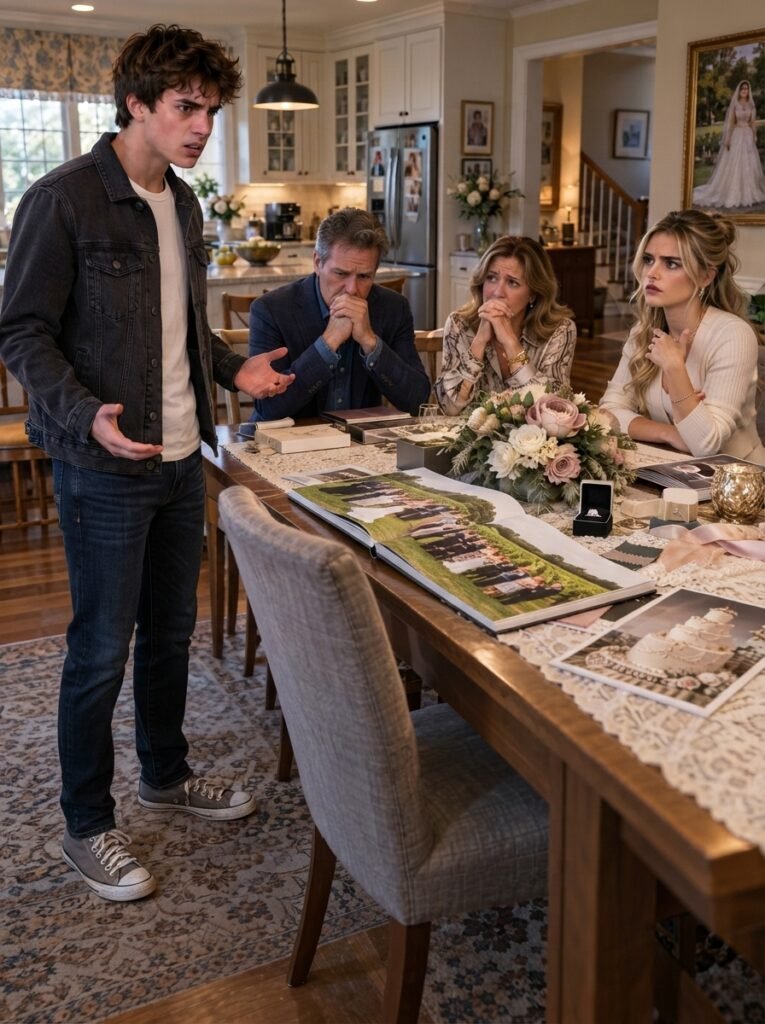
My older sister Melissa had gotten engaged during my freshman year, and suddenly our modest suburban house looked like a wedding-planning company had exploded inside it.
Venue brochures covered the kitchen table.
Fabric swatches filled baskets.
Mom talked endlessly about centerpieces, photographers, cakes, invitations, and flowers.
Melissa wanted a historic estate.
A marble staircase.
A live jazz band.
Imported flowers.
Silk chair covers.
A horse-drawn carriage.
She wanted the kind of wedding where every guest walked in and immediately understood that somebody had spent far too much money.
I knew my parents couldn’t afford it.
I just didn’t know they had decided I could.
One night, I came downstairs for water and heard my parents whispering.
Mom said, “Once we use the rest of Craig’s college fund, we’ll be okay.”
My hand tightened around the stair railing.
Dad said something about credit cards.
Then refinancing.
I went upstairs without letting them know I had heard.
Two mornings later, I confronted them.
Mom barely looked ashamed.
“Melissa deserves her special day.”
Dad said they thought I would understand because I was “the mature one.”
Then I asked how I was supposed to finish college.
Mom sighed like I was inconveniencing her.
“Well, most people just take out loans.”
She shrugged.
“You’ll be fine.”
That sentence stayed with me longer than anything else.
You’ll be fine.
I moved into a basement apartment near campus.
I worked evenings.
Weekends.
Holidays.
I stocked shelves, waited tables, did freelance computer work, and applied for every scholarship I could find.
Some semesters I studied full-time.
Others I couldn’t afford to.
My four-year degree took six years.
And through all of it, Melissa’s wedding existed in my memory like some ridiculous monument built out of my future.
I had attended.
That was probably the stupidest part.
I stood near the edge of the reception watching people admire the flowers.
Champagne sparkled beneath chandeliers.
The jazz band played beside the dance floor.
Guests took photos near the marble staircase.
Melissa arrived in the horse-drawn carriage she had insisted on having.
Everyone said the same thing.
“What a beautiful wedding.”
No one looked at me.
No one said thank you.
Not once.
Ten years later, I had managed to build a decent life anyway.
I worked in tech project management.
I owned a small condo.
I drove a reliable car.
I had savings.
Not a fortune.
Just proof that after being knocked backward, I had kept moving.
And I was still paying the student loans Mom had told me to “just get.”
My relationship with my parents had become polite.
Birthdays.
Christmas.
Short calls.
Weather.
Work.
Nothing important.
Melissa and I barely spoke at all.
Then Mom called.
Her voice was unusually warm.
She asked how my job was going.
Whether I was seeing anyone.
Whether I still liked my condo.
I answered and waited.
Five minutes later, she finally said it.
“Your father and I have gotten into some debt.”
Credit cards.
Interest.
Bills.
They were drowning.
“We were hoping you could help us until we get back on our feet.”
“How much?”
A pause.
“About thirty-two thousand.”
I laughed.
I honestly thought I had misheard her.
Then I asked why she believed I should give them money after they had taken mine.
She started crying.
“You’re our son.”
And then came the phrase I had been expecting.
“You’re doing so well.”
I looked around my condo.
At the furniture I had bought.
At the laptop I used for work.
At the folder containing the latest statement for loans I should never have needed.
Then Mom said Melissa had been through “some hard years” and wasn’t in a position to help.
That was when I said:
“Ask Melissa.”
Then I hung up.
After that, the calls became relentless.
Mom left voicemails.
Dad called from work.
Then from his cell.
Then Melissa texted me from a number I didn’t recognize.
“You could have said no without being a selfish prick.”
I stared at her message for a full minute.
Then I wrote:
“Funny coming from someone who spent my college fund on parties and centerpieces.”
Her response came almost instantly.
“It wasn’t your money. Mom and Dad said it was for the family, and I’m the one who actually needed it.”
That sentence changed something in me.
The next morning, Dad emailed.
The subject line was:
HELP.
Attached were statements showing roughly $32,000 spread across several credit cards.
At the bottom he wrote:
“We expect some level of support from our son who we raised and gave everything to.”
Everything.
That word made me angry enough to stop being passive.
I dug through old financial-aid emails.
Loan documents.
University billing records.
Then I requested a certified copy of my grandparents’ will from the county archive.
Two weeks later, it arrived.
And there it was.
The money had been placed in trust and was to be used solely for my college education.
Not “primarily.”
Not “preferably.”
Solely.
Then I found something else.
The name of the estate attorney.
Daniel Harris.
Still practicing.
Still at the same firm.
I called.
And twenty minutes later, he asked whether my parents had ever told me his office had contacted them about the missing money.
That was how I ended up driving across town the next afternoon with my grandfather’s will on the passenger seat.
Mr. Harris was somewhere in his late sixties, with silver hair and glasses hanging from a cord around his neck.
When I gave him my name, his expression changed.
“You look like your grandfather.”
Nobody had said that to me in years.
He led me into his office and closed the door.
On his desk was an old file.
My grandparents’ names were written across the tab.
He opened it.
“Your grandparents were very specific people.”
“I noticed.”
A faint smile crossed his face.
“Your grandfather especially.”
Then the smile disappeared.
He removed several pages.
“These are copies of the trust statements.”
I had already seen the withdrawals.
$18,000.
$12,000.
$10,000.
Exactly $40,000.
But Harris showed me documents I had never seen.
Each withdrawal had been categorized as an educational expense.
The first supposedly covered tuition and housing.
The second allegedly covered books, fees, and academic travel.
The third was marked as remaining educational expenses.
“That’s fraud,” I whispered.
“Yes.”
Then he turned over another page.
There was my name at the bottom.
My signature.
Except it wasn’t mine.
My stomach twisted.
The document stated that I acknowledged the withdrawals and confirmed they had been used for educational purposes.
Someone had forged my signature.
“I never signed this.”
“I know.”
“How?”
“Because your grandfather required us to keep a sample of your signature when the trust was established.”
He showed me a photocopy from when I had been sixteen.
A form I vaguely remembered signing.
The signatures weren’t even particularly close.
“Then why wasn’t anything done?”
Harris leaned back.
“We tried.”
He showed me two certified letters.
Both had been delivered to my parents’ house.
One had been signed for by my mother.
The other by my father.
The letters demanded documentation proving the withdrawals had benefited me.
My parents responded with copies of tuition invoices.
At first glance, they looked legitimate.
Then Harris placed one of my real college statements beside them.
The forged invoices contained my school logo, address, student number—
but the amounts had been altered.
My mouth went dry.
“They created fake college bills?”
“That appears to be what happened.”
I felt sick.
Taking the money had been bad enough.
But this was deliberate.
Calculated.
They hadn’t convinced themselves they were merely borrowing family money.
They had known exactly what they were doing.
Then Harris said:
“There’s more.”
He opened another folder.
“Your grandparents had concerns about your parents’ judgment before they died.”
I looked up.
“What kind of concerns?”
“Mostly concerns about favoritism.”
My chest tightened.
Apparently, my grandparents had noticed everything.
Melissa receiving a car at sixteen while I shared Dad’s old sedan.
Melissa’s failed college tuition being paid repeatedly.
My parents rescuing her from one crisis after another.
My grandmother had confronted them about it more than once.
I had never known.
“Your grandparents worried that money left directly to you could be redirected.”
“So they created the trust.”
“Yes.”
Harris paused.
“But that wasn’t the only protection they created.”
He pulled out a document thicker than the others.
I expected another financial statement.
Instead, I saw an address.
My parents’ address.
The house where I had grown up.
“What is this?”
“Your grandparents purchased that property when your parents were struggling financially.”
I remembered hearing something about that when I was little.
I had always assumed my parents eventually bought the house from them.
They hadn’t.
Harris continued.
“When your grandparents died, your parents were granted a lifetime right of occupancy.”
I stared at him.
“A what?”
“They could live there. Maintain it. Pay taxes. But they did not inherit ownership.”
“Who did?”
Harris pushed the document toward me.
My name was there.
CRAIG ANDREW MILLER — REMAINDER BENEFICIARY.
For several seconds, I literally couldn’t understand the words.
“I own their house?”
“Not exactly. The estate trust owns it. Your parents have occupancy rights.”
Then Harris tapped a paragraph halfway down the page.
“But their occupancy was conditional.”
I read it.
Once.
Twice.
Then slowly a third time.
The condition stated that if either of my parents knowingly misappropriated, transferred, concealed, or benefited from assets belonging to a grandchild’s protected trust, their occupancy rights could be terminated after verification of the breach.
I looked at Harris.
He looked back at me.
The room felt suddenly too quiet.
“You’re telling me…”
“Yes.”
He folded his hands.
“When your parents took your education fund, they potentially forfeited their right to live in that house.”
I laughed.
But it came out more like a gasp.
Forty thousand dollars.
They had taken $40,000 from me to give Melissa the wedding of her dreams.
And in doing so, they may have surrendered a house worth nearly half a million.
Then another thought hit me.
“Do they know?”
Harris didn’t answer immediately.
Instead, he reached into the file and removed another certified-mail receipt.
My father’s signature was at the bottom.
“They do.”
The letter had been sent eight years earlier.
It explained that the estate had become aware of irregular withdrawals and reminded them of the occupancy clause.
Eight years.
They had known for eight years.
Suddenly the strange phone call made sense.
Mom’s sweetness.
Dad’s desperation.
The sudden obsession with “family.”
But why now?
I asked Harris.
That was when he gave me the next shock.
“Did your father send you anything besides the credit card statements?”
“An email.”
“Anything requiring a signature?”
“No.”
Then I remembered.
There had been another attachment.
Something called a debt consolidation proposal.
I had never opened it.
I pulled out my phone.
Found Dad’s email.
Downloaded the second attachment.
Harris read it over my shoulder.
His expression hardened.
Near the bottom was a section labeled:
PROPERTY SECURITY AUTHORIZATION.
And beneath it:
REMAINDER BENEFICIARY CONSENT.
There was a blank line for my signature.
I felt cold.
“What would signing this do?”
Harris looked at me.
“It would allow them to use the house as collateral.”
“They were asking me for $32,000…”
“No, Craig.”
His voice was quiet.
“They were asking you to sign away the protection your grandparents left you.”
I drove home in complete silence.
My phone rang three times.
Mom.
Dad.
Mom again.
I ignored them.
That night, I barely slept.
At seven the next morning, I called Dad.
He answered immediately.
“Craig?”
“We need to talk.”
His tone softened.
“Of course.”
“Come over tonight. You, Mom, and Melissa.”
Silence.
“Why Melissa?”
“Because this concerns her.”
I hung up before he could ask anything else.
They arrived at seven fifteen.
Mom came carrying a casserole.
That almost made me laugh.
Dad looked exhausted.
Melissa wore expensive sunglasses on top of her head and walked in without saying hello.
We sat around my dining table.
Nobody touched the food.
Dad started.
“Son, I’m glad you’ve finally realized—”
I placed copies of the trust documents on the table.
He stopped speaking.
Mom’s face went white.
Melissa looked confused.
“What is this?”
I looked at my parents.
“Tell her.”
Mom whispered, “Craig…”
“Tell her.”
Dad leaned back.
His jaw tightened.
“This is unnecessary.”
“Then I will.”
I turned to Melissa.
“The $40,000 you said wasn’t mine?”
She rolled her eyes.
“Oh, Jesus.”
“It legally belonged to an education trust created specifically for me.”
Her expression shifted.
“And Mom and Dad forged records claiming it paid my tuition.”
Melissa looked at them.
Mom immediately said, “We did what we thought was best for the family.”
“No,” I said.
“You committed fraud because Melissa wanted a bigger wedding than you could afford.”
Melissa pushed back from the table.
“I never asked you to commit fraud.”
Mom looked at her.
Something flickered between them.
Tiny.
But I caught it.
“What?” I asked.
Nobody answered.
“Melissa?”
She crossed her arms.
“I knew they were borrowing some money.”
“Borrowing?”
“I didn’t know all the details.”
Dad suddenly snapped.
“Enough.”
That was when I realized there was still something missing.
Harris had shown me the forged signature.
But he had never told me who had forged it.
I had assumed Mom or Dad.
So I had asked him before leaving.
He had stared at the document for a moment.
Then said something strange.
“I think you should ask your sister.”
Now, sitting across from Melissa, I understood.
I pulled out the forged acknowledgment.
“Recognize this?”
She barely glanced at it.
“No.”
“Really?”
Dad stood.
“This conversation is over.”
“Sit down.”
He stared at me.
For the first time in my life, I didn’t look away.
He sat.
I slid another document beside the forged signature.
Melissa’s old college withdrawal request.
Harris had found it in the estate records.
Same looping M.
Same tilted lowercase r.
Same strange way of crossing the t.
Melissa’s face drained of color.
Mom whispered her name.
And suddenly I knew.
Melissa had forged my signature.
She started crying.
Not dramatic crying.
Real crying.
Ugly, panicked breathing.
“I was twenty-three.”
“You were old enough to know my name wasn’t yours.”
“Mom said you weren’t using the money!”
“I was in college!”
“She said you could get loans!”
The room went silent.
There it was.
The exact sentence.
The sentence that had followed me for ten years.
Except now I knew Mom had used it before she ever said it to me.
Melissa wiped her face.
“They told me the wedding deposits were already paid. Dad said if they lost them, everything would collapse. Mom said Grandpa would have wanted the family to be happy.”
I looked at Mom.
“Did Grandpa ever say that?”
She looked down.
“No.”
Then Dad slammed his palm on the table.
“What do you want, Craig?”
Finally.
The real question.
Not whether they had hurt me.
Not whether they had committed fraud.
What would it cost them?
I placed the property document on the table.
Dad became perfectly still.
Melissa picked it up.
Her eyes moved across the page.
Then she looked at Mom.
“What is this?”
Mom whispered, “Nothing.”
“It says Craig gets the house.”
Dad stood again.
“You don’t understand the legal situation.”
“Actually,” I said, “I understand it very well now.”
Melissa looked between us.
“You told me this house was yours.”
“It is our home,” Mom said.
“That isn’t what I asked.”
Nobody spoke.
Then the final piece clicked into place.
Melissa looked at the credit card statements.
Then at Dad.
“Why are you suddenly trying to pay everything off?”
Dad didn’t answer.
Mom did.
“The bank refused the refinance.”
Melissa stared at her.
Mom began crying again.
“They found the estate restriction during the title search.”
There it was.
The $32,000 request had never really been about debt.
The bank had discovered my grandparents’ trust.
My parents couldn’t borrow against the house without my consent.
So they had tried to get the money from me first.
And if that failed, they planned to slip my signature onto the consolidation documents.
For the second time in my life, my parents had tried to make me pay for their choices.
Only this time, they almost made me sign away a house I didn’t know was mine.
Dad looked at me.
“You wouldn’t throw your own parents out.”
It wasn’t a question.
Mom sobbed harder.
“This is your childhood home.”
I thought about being nineteen.
Standing in their kitchen.
Asking how I would pay for college.
I remembered Mom looking at me like my future was an inconvenience.
You’ll be fine.
I could have repeated it.
Part of me wanted to.
Instead, I said:
“I’m not throwing you out tonight.”
Dad’s shoulders dropped.
Relief.
Way too soon.
“I’m giving you ninety days.”
His face changed.
Mom stared at me.
“Craig…”
“Ninety days to find somewhere else.”
“You can’t do this.”
“I can.”
“Over money?”
That almost broke me.
“Over money?”
I stood.
“You took the one thing Grandma and Grandpa specifically protected for me. You lied about it. You forged documents. You watched me work myself sick for six years. You watched me take loans. Then ten years later, you came back and asked me for more.”
My voice cracked.
“This was never about forty thousand dollars. It was about the fact that you believed whatever belonged to me could always be taken if Melissa wanted it badly enough.”
No one spoke.
Then Melissa whispered:
“I didn’t know about the house.”
I looked at her.
“That doesn’t erase what you did.”
“I know.”
For once, she didn’t argue.
My parents left.
Melissa stayed.
For nearly an hour, neither of us said anything meaningful.
Then she finally asked:
“Do you hate me?”
“I don’t know.”
She nodded.
“That’s fair.”
Three months later, my parents moved into a rental townhouse.
They told relatives I had evicted them.
Some relatives called me cruel.
Others stopped calling after I sent them copies of the forged documents.
My attorney—Harris referred me to one of his partners—helped formally terminate my parents’ occupancy rights.
The house was eventually transferred out of the estate trust.
To me.
I sold it.
After taxes, fees, repairs, and everything else, I walked away with more money than I had ever seen in my life.
The first thing I did was pay off every remaining student loan.
I expected to feel triumphant.
Instead, I sat alone in my condo staring at the zero balance and cried.
Not because of the money.
Because for the first time since I was nineteen, their decision was no longer following me.
Melissa and I slowly began speaking again.
Not because I forgave her immediately.
I didn’t.
But she did something our parents never did.
She apologized without explaining why I should excuse her.
She sold some jewelry from the wedding.
Then her expensive camera equipment.
Then, eventually, she sent me $10,000.
I tried to return it.
She refused.
“It isn’t enough,” she said. “But it’s something.”
My parents never apologized.
Dad sent one final email accusing me of choosing money over family.
Mom sent birthday messages that alternated between guilt and nostalgia.
I stopped responding.
I thought that was the end.
It wasn’t.
Six months after the house sold, Mr. Harris called me again.
His voice sounded almost amused.
“Craig, I found something while closing your grandparents’ estate file.”
My stomach tightened.
“What now?”
“A sealed envelope.”
My grandfather had left instructions that it was to be given to me only if the property clause was ever triggered.
The next morning, I sat in the same office where the nightmare had begun.
Harris handed me an old cream-colored envelope.
My name was written across the front in my grandfather’s handwriting.
Inside was a single page.
I unfolded it.
Craig,
If you are reading this, then your grandmother and I were right to worry.
I am sorry for that.
We have watched you grow into a young man who gives more than he asks for. That is a good quality, but in the wrong family, good qualities can become handles people use to carry away pieces of you.
Your mother once told us that Melissa needed more because you were “easy.”
Your grandmother answered:
“Easy children still deserve to be protected.”
That was why we protected the education money.
That was why we protected the house.
Not because we wanted you to become richer than your sister.
Because we wanted at least one person in your life to say:
This is Craig’s.
Leave it alone.
I had to stop reading.
My vision blurred.
There were only a few lines left.
Then I reached the final paragraph.
And discovered the last secret my grandparents had kept.
The house was never the real inheritance.
My grandfather had created one additional account.
Harris handed me another page.
I stared at the number.
The account had been funded with investments shortly before my grandparents died.
It had remained untouched for more than a decade.
With growth, it was now worth $287,416.
I looked at Harris.
“I don’t understand.”
He pointed to my grandfather’s final line.
I read it aloud.
“If your parents honor what belongs to you, this money is to be divided equally between you and Melissa when you both turn thirty-five. But if they take what is yours and Melissa knowingly participates, her share is to remain in trust and be used for one purpose only.”
My heart started pounding.
I read the next sentence.
Then I laughed.
I laughed so hard Harris started laughing too.
Because after spending my college fund on Melissa’s extravagant wedding, after the carriage and flowers and silk chairs and champagne, my grandparents had arranged the most poetic consequence imaginable.
Melissa’s half of the hidden inheritance could never be given directly to her.
It could only be used for educational expenses for her children.
No weddings.
No luxury purchases.
No withdrawals.
No substitutions.
Education only.
And if Melissa never had children, the money would fund scholarships for students whose education had been disrupted by financial abuse within their families.
I sat there staring at the document.
My grandparents had somehow reached across more than a decade and finished the argument none of us had known they were part of.
Melissa had once helped take my education money to pay for her wedding.
Now the inheritance she would eventually pass forward could be spent on only one thing:
someone else’s education.
I called her from the parking lot.
When I explained it, she was silent for so long I thought the call had dropped.
Finally, she whispered:
“Grandma really thought of everything.”
“Apparently.”
Then Melissa surprised me.
She laughed softly.
Not bitterly.
Not angrily.
“Good.”
“What?”
“Good.”
Her voice broke.
“Maybe something decent should come out of what I did.”
That was the moment I finally believed she had changed.
Not when she cried.
Not when she sold her jewelry.
Not when she gave me money.
When she learned she had lost control of an inheritance worth more than the wedding that started everything—
and said good.
Three years have passed.
My parents still live in the rental townhouse.
We don’t speak.
Melissa has a daughter now.
Her name is Clara.
Last month, I received a photo of her sitting on Melissa’s lap while Melissa read her a picture book.
Underneath it, Melissa had written:
“Her college fund is going to be ridiculous.”
I smiled for a long time.
Then I put my phone down.
My grandparents couldn’t stop my parents from hurting me.
They couldn’t stop Melissa from making a terrible choice.
They couldn’t keep me from losing years to jobs, debt, anger, and resentment.
But they had understood something I needed almost thirty years to learn.
Family is not a license to take.
Love is not obedience.
And being “the mature one” does not mean becoming the person everyone is allowed to sacrifice.
Sometimes the most important inheritance isn’t money.
Sometimes it is finally learning that when someone says, You’ll be fine, what they really mean is:
I’m willing to let you suffer because I believe you’ll survive it.
I did survive.
But survival wasn’t the ending.
For the first time in my life, I stopped being the child who was expected to absorb every loss quietly.
I kept what my grandparents had fought to protect.
I paid off the debt that never should have been mine.
I walked away from people who believed my success entitled them to another piece of me.
And somewhere in a protected account, money my sister once believed should fund a perfect wedding is now waiting for her little girl to grow up.
Waiting for textbooks.
Tuition.
A dorm room.
A future.
Exactly as my grandparents intended.
And this time, nobody gets to touch it.