The first person who tried to take my daughter away from me was my own mother.
She didn’t arrive wearing a disguise.
She didn’t creep into the hospital nursery in the middle of the night.
She wore her favorite pearl earrings, carried a designer handbag, and smiled at the nurses as though she were simply another excited grandmother.
And while I lay exhausted in a hospital bed after twenty-two hours of labor, she was making arrangements to take my newborn daughter somewhere I had never agreed to send her.
The terrifying part?
She had already started making plans for our house, our car, and our daughter’s future before Juniper had taken her first breath.
But what I discovered over the following weeks would make those plans seem almost insignificant.
Because thirty-three years earlier, my mother had been involved in something remarkably similar.
And the baby at the center of that first incident had been me.
My name is Adrienne Voss, although everyone calls me Addie.
For six winters, I conducted atmospheric research in Antarctica.
I’ve worked through blizzards that swallowed entire research stations, repaired instruments while my eyelashes froze together, and spent weeks living with scientists whose personal hygiene standards would have frightened a raccoon.
Once, during a particularly violent storm, our heating system failed at two in the morning.
The outside temperature had fallen to minus forty-seven degrees.
We had thirty minutes to stabilize the backup generator before the temperature inside our living quarters became dangerous.
I remember standing in that mechanical room, tightening a connection with fingers so numb I could barely feel the wrench.
I wasn’t frightened.
There wasn’t time to be.
I’ve always been good in emergencies.
My father used to call that my most irritating quality.
“You’re too independent for your own good, Adrienne,” he’d say.
My mother preferred a different version.
“At least we never have to worry about you.
Brynn needs us more.”
For most of my life, I considered that a compliment.
I didn’t realize it was an excuse.
My younger sister, Brynn, was twenty-nine and had never been expected to solve a problem her parents could solve for her.
When she failed a college course, Mom called the professor.
When she crashed her car, Dad negotiated with the insurance company.
When she broke up with a boyfriend, my mother spent three nights sleeping on her couch.
When I called home from Antarctica after surviving a dangerous storm, Mom asked whether I could transfer some money to Brynn because she’d fallen behind on rent.
Still, I loved my sister.
I loved my parents.
And when I became pregnant with my first child, a foolish little part of me believed things might finally change.
I was giving them another grandchild.
Surely that would matter.
My husband, Micah, wasn’t quite so optimistic.
“Addie,” he told me one evening as we painted the nursery, “your parents have spent thirty years showing you who they are.”
I rested a hand against my enormous stomach.
“People change when babies arrive.”
He looked at me for a long moment.
“Sometimes.”
I should have listened.
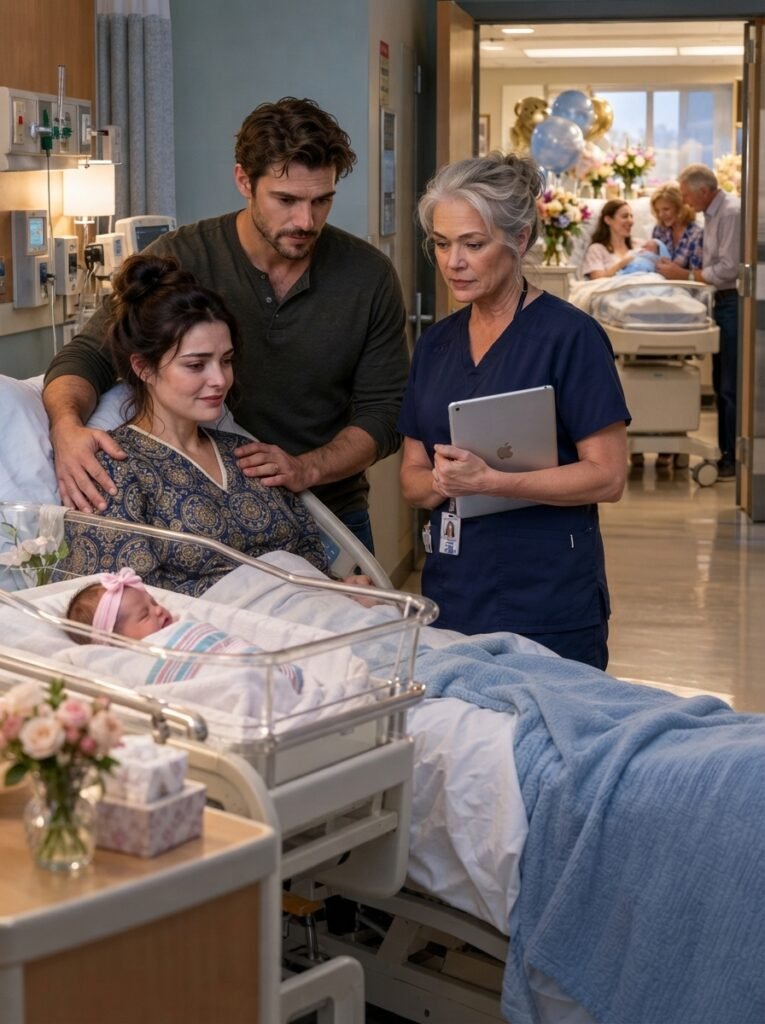
Our daughter was born on a Thursday afternoon in October at Cascadia Regional Medical Center, just outside Seattle.
Rain streaked the windows.
My contractions had begun the previous evening, and by the time the doctor announced that I was ready to push, I felt as though someone had dismantled my body and reassembled it incorrectly.
Micah held my hand.
“You’re doing great.”
“I am absolutely not doing great.”
“You’re doing better than I would.”
“If you say one more encouraging thing, I’m divorcing you.”
He nodded solemnly.
“Understood.”
At exactly 5:18 p.m., our daughter entered the world.
Seven pounds, three ounces.
A remarkable amount of dark hair.
Tiny pink fingers that immediately wrapped themselves around Micah’s thumb.
We named her Juniper.
I’d loved the name for years.
Something about it reminded me of resilience—an evergreen surviving where almost nothing else could grow.
Micah leaned over our daughter, tears streaming down his cheeks.
“Hi, Junie,” he whispered.
“I’m your dad.”
I watched the two of them and felt something inside me settle.
For the first time in my life, I wasn’t somebody’s responsible daughter or inconvenient older sister.
I was somebody’s mother.
And I would never let her wonder whether she mattered.
Two doors down, my sister Brynn had delivered a baby boy named Beckett a little more than an hour earlier.
Her pregnancy had been complicated by severe morning sickness, although she’d otherwise remained healthy.
Mine had involved anemia, repeated monitoring, and several frightening episodes of high blood pressure.
But I knew better than to mention those differences.
With my family, comparing hardships was forbidden unless Brynn was winning.
Our parents had arrived at the hospital shortly before noon.
Mom had hugged me quickly in the hallway.
“Your sister’s anxious, sweetheart.
We’ll just get her settled and come right back.”
Dad had patted my shoulder.
“You’re the tough one.”
Then they disappeared into Brynn’s room.
By the time Juniper arrived, they’d been there for hours.
At 5:42, Micah sent a photograph to our family group chat.
“She’s here!
Seven pounds, three ounces.
Mom and baby are both healthy.
Meet Juniper!”
Mom responded with a pink heart.
Then she posted a picture of Beckett wearing a knitted gold crown.
Dad wrote, “Beautiful baby.”
I stared at the screen.
His message appeared directly beneath Beckett’s photograph.
I couldn’t even tell which grandchild he meant.
“Don’t,” Micah said gently.
I turned my phone facedown.
“Don’t what?”
“Don’t let them ruin this.”
I smiled at him.
But I kept watching the door.
At six o’clock, the room remained empty.
At six fifteen, I heard laughter from the hallway.
At six twenty, I saw someone carrying a giant bouquet of flowers toward Brynn’s room.
At 6:27, I called Mom.
She answered after several rings.
“Hello, sweetheart!”
Behind her, I heard people talking, someone laughing, and my father’s unmistakable voice complaining about cake.
“Mom,” I said, trying to keep my voice steady, “are you and Dad coming to meet Juniper?”
Silence.
Then my mother sighed.
“Oh, Addie.
We’re absolutely exhausted.”
I looked at my daughter sleeping in her bassinet.
“Exhausted?”
“Your father and I have been sitting in uncomfortable hospital chairs for nearly nine hours.
Brynn really needs us right now.”
“I’ve been in labor for twenty-two hours, Mom.”
“Don’t start.”
“I just had a baby, too.”
“Honey, your sister has always had a harder time with things.
You’ve always been so good at managing on your own.”
Something inside me tightened.
“So because I can manage, you don’t want to meet my daughter?”
“Adrienne, that’s not what I said.”
Dad took the phone.
“We’re tired.
Do you know what that means?”
I actually laughed.
It hurt my stitches.
“Dad, I spent the last twenty-two hours giving birth.”
“Everything doesn’t have to be a competition.”
I stared at the hospital wall.
Then he delivered the sentence I’ll remember for the rest of my life.
“You’ve survived Antarctica, for heaven’s sake.
Surely you can manage one afternoon without an audience.”
For a moment, I couldn’t breathe.
Then I whispered, “Enjoy the cake.”
I ended the call.
And I cried.
Not because I wanted flowers.
Not because I needed presents or balloons.
Because my parents had spent nine hours sitting two doors away, and neither had found five minutes to meet my daughter.
Micah approached my bed.
He kissed my forehead.
“You don’t have to keep asking them.”
I nodded.
I thought that would be the end of it.
Unfortunately, it was only the beginning.
Our nurse entered fifteen minutes later.
Her name was Maribel Sato.
She was a compact woman in her late fifties, with silver-streaked hair, reading glasses hanging from a cord, and the confident movements of someone who could reorganize an emergency department during an earthquake.
She checked Juniper’s temperature, adjusted her blanket, and examined my chart.
“How are we feeling?”
“Like I got hit by a truck.”
“Perfectly normal.”
“Is the truck okay?”
She smiled.
Then she noticed my swollen eyes.
Her expression softened.
“Rough afternoon?”
I shrugged.
“Family stuff.”
She glanced toward the empty visitor chairs.
“Are your parents coming?”
“They’re celebrating my sister’s baby down the hallway.”
Maribel stopped writing.
“Your sister?”
“Brynn Weller.
Room 314.”
Her eyes moved to my wristband.
“Your mother is Celia Weller?”
“Yes.”
She stared at me for a moment longer than seemed normal.
Then she pulled the privacy curtain farther across the room.
“Mrs.
Voss, I need to ask you something.”
Something in her voice made Micah look up.
“Have you authorized anyone besides yourself and your husband to make decisions regarding your daughter’s discharge?”
I frowned.
“No.”
“Have you discussed allowing your mother to take Juniper home?”
My entire body went cold.
“What?”
Maribel set down her clipboard.
“Earlier today, your mother approached the nurses’ station.
She asked whether a grandmother could collect a newborn if the baby’s mother was too exhausted to leave the hospital.”
I sat straighter.
“Why would she ask that?”
“She also asked whether a relative could complete discharge paperwork on the mother’s behalf.”
Micah rose from his chair.
Maribel continued.
“She specifically wanted to know whether the hospital would allow a newborn to be taken directly to a grandparent’s home.”
I looked toward Juniper.
My daughter slept peacefully, making tiny movements with her lips.
“She never mentioned anything like that to me.”
Maribel nodded.
“We explained that a baby can only be discharged according to hospital procedures and proper parental authorization.”
“And?”
“Your mother was quite unhappy with that answer.”
Micah had gone pale.
I noticed immediately.
“Micah?”
He stared at the floor.
“There’s something I need to tell you.”
My heart started pounding.
“What?”
“When I went for coffee earlier, I overheard your parents talking to Brynn.”
“About what?”
He hesitated.
“Our house.”
I stared at him.
“And our Subaru.”
“Why?”
He took a breath.
“Your mother told Brynn they could move into our house while we’re at the hospital.
Your dad said he could take the Subaru tonight because they still have our spare key.”
For several seconds, I couldn’t process his words.
I kept waiting for an explanation.
Perhaps they wanted to stock the refrigerator.
Perhaps they were planning to help us settle in.
But Micah looked miserable.
“I confronted them,” he admitted.
“They told me I misunderstood.
I didn’t want to upset you while you were in labor.”
“What exactly did they say?”
“They were talking about moving furniture into our garage before we got home.”
My mouth went dry.
“Furniture?”
“Brynn’s furniture.”
The room went silent.
Then Maribel said, “There’s something else.”
She glanced at the door.
“Your mother submitted a document.”
“What kind of document?”
“A temporary caregiving authorization.
It appeared to contain your signature.”
I shook my head.
“That’s impossible.”
Maribel’s expression tightened.
“That’s why our charge nurse referred it to the hospital administrator.”
Before I could respond, someone knocked.
A woman wearing a charcoal blazer entered with a thick folder.
Behind her stood a hospital security officer.
“Mrs.
Voss?
I’m Dana Whitcomb, the patient services administrator.”
My pulse accelerated.
Dana approached my bed.
“We need to clarify some concerning paperwork submitted earlier today.”
She opened the folder.
On top was a document labeled:
TEMPORARY NEWBORN CAREGIVING AUTHORIZATION
The first line contained my full legal name.
The second contained Juniper’s.
Farther down, a paragraph claimed that I had voluntarily authorized Celia Weller to assume temporary responsibility for my daughter’s care following discharge.
And at the bottom—
My signature.
Except I hadn’t signed it.
I reached toward the page with trembling fingers.
“That’s not mine.”
Dana nodded.
“We suspected there might be a problem.”
I examined the handwriting.
It resembled my signature.
But the letter A had the looping flourish I’d used years earlier, before changing how I signed documents.
Then I noticed the date.
The form claimed I had signed it at 3:12 p.m.
At 3:12, I’d been in active labor under continuous monitoring.
Micah had been beside me.
A nurse had been checking my blood pressure.
And my mother had been celebrating in Brynn’s room.
“I never signed this.”
Dana closed the folder halfway.
“Thank you for confirming.”
Then she added something that made my stomach drop.
“Mrs.
Voss, your mother also submitted a written statement expressing concerns about your emotional stability.”
I blinked.
“My what?”
The administrator spoke carefully.
“She claimed you were experiencing a psychiatric crisis and might not be capable of caring for your newborn.”
Micah swore under his breath.
I stared at Dana.
My mother had spent my entire life boasting about my strength.
Now she was telling strangers I couldn’t be trusted with my own child.
“That is a lie.”
“We have not accepted those claims as fact,” Dana assured me.
“And a relative’s allegation does not give them authority over your child.”
I gripped the sheets.
“Then why is security here?”
“Because we need to make certain there is no further unauthorized attempt to access your daughter’s care or discharge.”
A second knock interrupted us.
Someone in the hallway raised her voice.
“WHERE IS MY DAUGHTER?”
My mother.
Footsteps hurried toward our room.
The door opened.
Celia Weller stood in the doorway wearing pearls, a pale pink cardigan, and an expression of manufactured concern.
“Addie, sweetheart—”
Then she saw Dana’s folder.
Her face went white.
For the first time in my life, my mother looked frightened of me.
“What is going on?”
Mom demanded.
Dana stepped between her and the bassinet.
“Mrs.
Weller, we’re conducting a private conversation with the patient’s family.”
“I’m her mother.”
“That doesn’t override her privacy.”
Mom’s eyes flashed.
“Adrienne, tell this woman to stop being ridiculous.”
I looked directly at her.
“Did you submit paperwork to take Juniper home?”
She hesitated.
That hesitation told me everything.
“Answer me.”
“Sweetheart, you’ve had a very difficult delivery.
We thought you might appreciate some assistance.”
“By forging my signature?”
Her mouth tightened.
“I did no such thing.”
Dana calmly held up the document.
“Mrs.
Weller, this form was submitted under your name.”
Mom’s eyes darted toward the security officer.
“I was trying to help.”
“Help whom?”
Micah demanded.
“Don’t take that tone with me.”
“My wife was giving birth while you were planning to take our daughter.”
Mom straightened.
“You’re being dramatic.”
I felt anger rise through the exhaustion.
“No, Mom.
Dramatic is bringing a crown-shaped cake into a maternity ward.
This is something else.”
For a moment, she looked stunned.
Then her expression hardened.
“You’ve always been impossible to help, Adrienne.”
“Then stop trying.”
She glanced toward Juniper.
“That baby deserves stability.”
My heart thudded.
“She has stability.”
“Your husband works long hours.
You disappear to Antarctica for months at a time.”
“I made arrangements to stay home after the birth.”
“And what happens when another research opportunity comes along?”
“That’s between Micah and me.”
My mother looked at Dana.
“Do you see?
She’s already becoming defensive.”
The security officer moved closer.
Dana’s voice remained calm.
“Mrs.
Weller, you need to leave.”
Mom stared at her.
Then she looked at me.
“You’ll regret embarrassing your family like this.”
I met her eyes.
“You embarrassed yourselves the moment you tried to take my daughter.”
The officer escorted her into the hallway.
Mom began protesting immediately.
Two doors away, someone stopped laughing.
For the first time that afternoon, Brynn’s celebration went quiet.
I watched my mother disappear.
Then I turned to Dana.
“Please tell me she can’t take Juniper.”
Dana’s expression softened.
“She has no authorization to remove your daughter.
We are also documenting the attempted submission of a false form.”
Maribel placed a hand on my shoulder.
“And I will personally make sure the staff knows that only you and your husband may make decisions for Juniper.”
I burst into tears again.
But this time, they were tears of relief.
Micah leaned down and held me.
“I’m so sorry,” he whispered.
I shook my head.
“Don’t apologize for them.”
He kissed my hair.
“I’m not.”
At 8:43 that evening, our doorbell camera sent an alert.
Micah checked his phone.
I watched his expression change.
“Addie.”
“What?”
“Your father’s at the house.”
He turned the screen toward me.
There, standing on our front porch, was Franklin Weller.
He carried two large cardboard boxes.
Behind him sat a rented moving van.
My heart began pounding again.
Dad placed a box on the ground, reached into his pocket, and pulled out a key.
Our spare key.
He inserted it into the lock.
The door opened.
For several seconds, I simply stared.
Then my father disappeared into our house.
“Call the police,” I whispered.
Micah was already dialing.
Our home was in Maple Glen, a quiet neighborhood twenty minutes from the hospital.
We’d purchased it four years earlier after spending nearly a decade saving.
It wasn’t enormous.
Three bedrooms.
A modest backyard.
A small garage where Micah kept his tools and I stored equipment from my research trips.
The nursery had pale green walls, a secondhand rocking chair, and wooden stars Micah had carved himself.
We’d chosen that house because its windows faced east.
I wanted our daughter to wake up with sunlight in her bedroom.
Now my father was walking through it without permission.
Our neighbor, Ruth Delgado, lived across the street.
She was sixty-eight, retired from the postal service, and possessed an extraordinary ability to notice anything unusual within three blocks.
Micah called her.
She answered immediately.
“That your father with the moving van?”
“Yes.”
“Thought so.
Doesn’t look like he’s bringing casseroles.”
“Ruth, he doesn’t have permission to be there.”
There was a pause.
“Well, that explains the look on his face when I asked what he was doing.”
“We’ve called the police.”
“Good.
I’ll keep an eye on him.”
Before Micah could stop her, she added, “I’m putting my shoes on.”
Ten minutes later, our security camera showed Dad carrying a floor lamp toward the front door.
Then Ruth appeared.
She marched across the driveway wearing a purple raincoat and holding her enormous golden retriever by the leash.
“Franklin!” she called.
Dad stopped.
“Ruth.”
“Where’s Addie?”
“Hospital.”
“And Micah?”
“Hospital.”
“So whose furniture are you moving into their house?”
Dad visibly stiffened.
“Family business.”
Ruth looked at the camera above the garage.
“That’s funny.
Because Addie just told me this isn’t authorized.”
Dad’s face changed.
He pulled out his phone.
Thirty seconds later, mine began ringing.
I answered on speaker.
“What have you done?” he demanded.
I stared at the screen.
“What have I done?”
“You called the police on your own father?”
“You entered my house without permission.”
“I have a key!”
“Not anymore.”
He laughed bitterly.
“Adrienne, don’t be ridiculous.
You and Micah have three bedrooms.
Brynn needs somewhere stable to raise Beckett.”
“Then she can find somewhere stable.”
“She’s your sister!”
“And Juniper is my daughter.”
“Don’t change the subject.”
I felt something inside me become completely still.
In Antarctica, that feeling usually meant I’d stopped panicking long enough to solve the problem.
“Get out of my house, Dad.”
“Adrienne—”
“Take your boxes.
Take your moving van.
Leave my property.”
There was a long silence.
Then he said something strange.
“You don’t understand what you’re interfering with.”
I frowned.
“What does that mean?”
But he’d already ended the call.
When police arrived, Dad was standing in our driveway arguing with Ruth.
He eventually agreed to leave after officers established that he had no permission to be there.
The officers recorded our account and advised Micah about securing the property.
Ruth stayed until the moving van disappeared.
Then she sent me a photograph.
It showed our front door standing closed beneath the porch light.
Her message read:
“Nobody gets into that house without going through me first.”
I cried harder reading that than I had during my father’s phone call.
A woman who had lived across the street for four years was protecting my home more fiercely than the people who had raised me.
By midnight, I’d developed a headache.
Not an ordinary headache.
A painful pressure behind my eyes, accompanied by a strange dizziness.
Maribel checked my blood pressure and immediately called the physician.
My readings were dangerously elevated.
Within minutes, nurses were adjusting monitors, reviewing medication orders, and discussing postpartum preeclampsia.
Micah stood beside my bed, holding Juniper.
For the first time since her birth, I was genuinely afraid of what might happen to me.
The doctor explained that severe blood pressure complications could occur even after delivery.
I needed treatment and careful monitoring.
As the medication began flowing through my IV, I heard my mother’s voice in my head.
“Brynn really needs us right now.”
I almost laughed.
My daughter was less than seven hours old.
My father had attempted to move another family’s furniture into our house.
My mother had submitted a false caregiving document.
And now I was being treated for a potentially dangerous postpartum complication.
Yet somewhere down the hallway, my parents apparently believed they were the exhausted ones.
Micah sat beside me until morning.
At four o’clock, he whispered, “I’m hiring a lawyer.”
I opened my eyes.
“For the house?”
“For everything.”
I looked at Juniper sleeping in her bassinet.
“Do you think they’ll stop?”
Micah didn’t answer immediately.
Then he said, “I think we need to find out why they’re doing this.”
It was the first time either of us had asked the right question.
Because my parents had always favored Brynn.
They had always expected me to sacrifice for her.
But they had never done anything remotely like this.
Forged paperwork.
A moving van.
An attempt to take a newborn.
This wasn’t ordinary favoritism.
Something much bigger was happening.
And by the following afternoon, we had our first clue.
The lawyer’s name was Leah Ortiz.
She specialized in family law and civil litigation and had helped one of Micah’s colleagues through a complicated property dispute.
When Micah explained the situation over the phone, she asked three questions.
“Did your parents have any ownership interest in your home?”
“No.”
“Did either parent have power of attorney for you or your husband?”
“No.”
“Have you signed any document authorizing them to care for your daughter?”
“Absolutely not.”
There was a pause.
“Then I’d like you to preserve every message, photograph, camera recording, and document you have.”
Micah spent the afternoon organizing evidence.
He made copies of our doorbell footage.
He saved my parents’ calls and texts.
He requested copies of the hospital’s incident documentation through the proper channels.
And he arranged for a locksmith to replace every exterior lock.
Our garage code was changed.
The security system password was updated.
Our spare Subaru key was deactivated through the dealership.
For the first time since Juniper’s birth, I felt the faintest sense of control.
Then Brynn sent me a message.
“You really had Dad questioned by the police?
Mom is crying.
I hope you’re proud of yourself.”
I stared at the screen.
Micah sat beside me.
“Don’t answer.”
But I typed anyway.
“Why were you planning to move into my house without asking?”
Three dots appeared.
Disappeared.
Appeared again.
Finally, she wrote:
“Beckett deserves a stable home.
You have more than enough space.”
I replied, “Then why didn’t you ask me?”
Her answer arrived almost immediately.
“Because you always make everything difficult.”
I read it twice.
Then I put the phone down.
At that moment, I remembered something from childhood.
I was twelve.
Brynn was eight.
Our grandmother had given me a beautiful wooden jewelry box for Christmas.
It was handmade, with tiny carved snowflakes decorating the lid.
Brynn wanted it.
When I refused to give it to her, she began crying.
Mom told me I should share.
Dad said I was too old to care about childish things.
By dinner, the jewelry box belonged to Brynn.
I remember standing in my bedroom afterward, staring at the empty place on my dresser.
Grandma Ruth came upstairs and found me crying.
She sat on the bed.
“Why did you give it away?”
“Mom said Brynn needed it more.”
Grandma was quiet for a moment.
Then she said, “Addie, being capable doesn’t mean you owe everyone everything you have.”
I had forgotten that conversation for years.
Now, sitting in a hospital bed with my newborn daughter beside me, I remembered every word.
Grandma Ruth had died eleven years earlier.
I missed her terribly.
And for the first time, I wondered what she would have said about the family I’d been trying so hard to please.
Three days after Juniper’s birth, Leah called.
“Addie, do you know anything about your parents’ finances?”
I frowned.
“Not much.”
“Have they mentioned selling their house?”
“No.”
“Foreclosure?”
My heart sank.
“What?”
Leah explained that a preliminary review of public property records showed serious financial trouble.
My parents had taken out multiple loans against their home.
Their mortgage payments had become irregular.
A lender had initiated foreclosure proceedings.
And there was more.
“Your father appears to have personally guaranteed a substantial business loan.”
“What business?”
“A company called Weller Residential Holdings.”
I’d never heard of it.
Leah continued.
“The registered address matches your parents’ home.
Your sister is listed as a managing member.”
I closed my eyes.
Brynn had told me she worked in marketing.
Apparently, the marketing business had acquired real estate investments.
Investments that had failed spectacularly.
“And now they want my house,” I said.
“It certainly gives us a possible motive.”
I looked at Juniper.
“But why the baby?”
“That,” Leah said, “is what concerns me most.”
She explained that having physical custody of Juniper would not automatically give my parents legal authority over her.
Nor would it give them ownership of our house.
But the false claims about my mental health suggested they might have been trying to create circumstances they could later use in a guardianship petition.
“Would that work?”
“Not simply because they said it would,” Leah replied.
“Courts require evidence and proper legal procedures.
But malicious allegations can still cause serious disruption.”
I looked at Micah.
His jaw tightened.
Leah continued.
“There’s something else.
The form your mother submitted wasn’t handwritten from scratch.”
“What do you mean?”
“It resembles a template used in emergency family caregiving situations.
Someone altered it.”
My pulse quickened.
“Who?”
“We don’t know yet.”
I swallowed.
“Could Brynn have done it?”
“Possibly.”
“Could Dad?”
“Possibly.”
Leah’s voice softened.
“Addie, we need to consider that this was coordinated.”
That word lodged in my mind.
Coordinated.
Not an impulsive act.
Not an overbearing grandmother offering unwanted help.
A plan.
My family had prepared paperwork before my daughter was born.
They had arranged a moving van.
They had discussed taking our car.
And they had expected me to cooperate.
Why?
That question followed me home.
It sat beside me while I rocked Juniper through sleepless nights.
It whispered from the shadows of the nursery.
And then, six days after we returned from the hospital, someone arrived carrying a package that answered a question I hadn’t even known to ask.
Maribel Sato stood on our porch wearing a navy blue coat.
I opened the door and stared at her.
“Maribel?”
She smiled faintly.
“I hope I’m not disturbing you.”
“Of course not.”
Micah came downstairs carrying Juniper.
When Maribel saw the baby, her expression softened.
“Look at you,” she whispered.
“Already getting bigger.”
We invited her inside.
She declined coffee and sat carefully at our kitchen table.
Something about her manner made me nervous.
“Is everything okay?”
Maribel folded her hands.
“I’ve been thinking about your mother.”
I glanced at Micah.
“That makes three of us.”
She didn’t smile.
“Addie, I need to ask you something unusual.”
“Okay.”
“How much do you know about your birth?”
I blinked.
“My birth?”
“Yes.”
I shrugged.
“Not much.
I was born in Seattle.
My mother had a difficult delivery.
That’s about it.”
“Do you have your original birth certificate?”
“Somewhere.”
“Did your parents ever tell you that you were adopted?”
The silence that followed seemed to fill the entire house.
I actually laughed.
Not because anything was funny.
Because my brain had no other available response.
“Adopted?”
Maribel watched me carefully.
“No,” I said.
“They didn’t.”
Micah slowly lowered himself into the chair beside me.
“Why are you asking?”
Maribel took a breath.
“Thirty-three years ago, I worked as a young nurse at Harbor Memorial Hospital.”
I frowned.
“Harbor Memorial?”
“It’s what Cascadia Regional was called before the renovation and merger.”
She looked down at her hands.
“I remember a woman named Celia Weller.”
My stomach tightened.
“That was my mother?”
“Yes.”
Maribel’s eyes lifted to mine.
“And I remember her asking almost exactly the same questions she asked about Juniper.”
I couldn’t move.
“What questions?”
“Whether a relative could take a newborn home.
Whether someone other than the birth mother could sign discharge documents.
Whether a mother who was exhausted or emotionally distressed could be prevented from making decisions.”
Micah gripped the edge of the table.
“Are you saying—”
“I’m saying I’ve heard those questions before.”
Maribel paused.
“I was a junior nurse.
I didn’t have access to everything, and I won’t pretend I understood what was happening at the time.
But I remember the incident because it upset several members of our staff.”
My voice came out barely above a whisper.
“Who was the baby?”
Maribel hesitated.
Then she said, “I believe it may have been you.”
I stared at her.
For thirty-three years, I’d known exactly who I was.
Adrienne Weller.
Older daughter.
Responsible sister.
The difficult one.
The independent one.
Now a woman I’d known for less than a week was telling me that the foundation of my life might be a lie.
I shook my head.
“No.”
Maribel didn’t argue.
Instead, she reached into her handbag and removed a small envelope.
“I wrote down what I remembered after the hospital incident.
I wasn’t certain enough to say anything then, and I needed to respect the privacy of the people involved.”
She placed the envelope on the table.
“After seeing your mother again, I sought guidance about what I could appropriately disclose.
I can tell you what I personally witnessed.
The rest must come from official records.”
I looked at the envelope.
“What did you witness?”
Her eyes filled with tears.
“A young woman crying because someone was trying to take her baby.”
The kitchen seemed to tilt.
“And a woman named Celia Weller insisting that she knew what was best.”
I didn’t open the envelope immediately.
I couldn’t.
Instead, I went upstairs and stood in front of the nursery window.
Rain fell softly against the glass.
Juniper slept in Micah’s arms behind me.
I thought about every photograph I’d ever seen of myself as a baby.
There weren’t many.
A few pictures taken when I was three.
Some from my fourth birthday.
One of me sitting on Dad’s shoulders at a county fair.
But I couldn’t remember ever seeing a photograph of Mom holding me in a hospital bed.
Whenever I asked, she’d say the pictures had been lost during a move.
I had accepted that explanation.
Why wouldn’t I?
Children don’t begin life questioning whether their parents are telling the truth.
They begin by trusting them.
I went downstairs.
Maribel was still sitting at the kitchen table.
I opened the envelope.
Inside was a handwritten account, carefully dated and signed as a recollection rather than an official medical record.
Maribel described working a night shift in October, thirty-three years earlier.
A young mother had given birth to a baby girl after a difficult delivery.
A woman named Celia Weller had repeatedly questioned staff about temporary custody and discharge arrangements.
The young mother had been distressed.
Maribel remembered hearing her say:
“Please don’t let them take her before I get to hold her again.”
My hands began shaking.
Micah reached across the table.
“Addie.”
I couldn’t answer.
Maribel looked at me.
“I don’t know everything that happened afterward.
There were social workers and attorneys involved.
I transferred departments not long after.”
She swallowed.
“But when I heard your mother’s name at the nurses’ station, I remembered that young woman.”
I stared at the note.
“Do you remember her name?”
Maribel nodded.
“Miriam.”
The room went utterly silent.
“Miriam Hale.”
I had never heard that name.
But something strange happened when Maribel said it.
It felt important.
As though a locked door somewhere inside me had moved on its hinges.
I looked toward Juniper.
Then back at the nurse.
“Is she alive?”
Maribel hesitated.
“I don’t know.”
I pressed a hand against my chest.
“Can we find out?”
Her expression softened.
“With the right legal help, you can try.”
That night, after Maribel left, I sat beside Juniper’s crib and watched her sleep.
I thought about the unknown woman who might have given birth to me.
A woman who had begged someone not to take her baby.
Thirty-three years later, I’d made almost the same plea.
And the same woman had been standing on the other side of the door.
My mother.
Or the woman I had always believed was my mother.
Leah reacted to Maribel’s information with cautious seriousness.
“Memories from thirty-three years ago aren’t enough to establish what happened,” she said.
“But we can request records and investigate.”
I told her everything I knew.
My birth date.
My childhood addresses.
My parents’ full names.
The hospital.
The missing baby photographs.
The fact that my original birth certificate had always been kept in a locked filing cabinet in Dad’s study.
Leah helped me initiate the appropriate requests for my birth and adoption records.
She also obtained permission to pursue additional information through a confidential intermediary if an adoption had occurred.
The process would take time.
Meanwhile, my parents were escalating.
Mom sent twenty-three messages in one day.
The first read:
“Adrienne, we need to talk like adults.”
The fifth:
“You’ve humiliated us in front of the hospital staff.”
The ninth:
“Your father is under terrible stress because of your behavior.”
The fifteenth:
“You were always such a difficult child.”
The twenty-third:
“After everything we did for you, this is how you repay us?”
I stared at that last message for a long time.
After everything we did for you.
What exactly had they done?
Fed me?
Clothed me?
Raised me?
Those were things parents were supposed to do.
But what if their kindness had always come with a hidden invoice?
I didn’t answer.
Instead, I forwarded the messages to Leah.
Two days later, Dad called from a number I didn’t recognize.
I answered because I thought it might be the hospital.
“Adrienne.”
His voice was sharp.
“Hello, Dad.”
“We need to settle this nonsense.”
“What nonsense?”
“Your mother is devastated.
Brynn is struggling.
You’re acting like we’ve committed some terrible crime.”
I looked at the sleeping baby in my arms.
“You submitted a false document to take my daughter.”
“Your mother was trying to protect her.”
“From whom?”
“From your recklessness.”
I stared out the window.
“My recklessness?”
“You disappear halfway around the world for months.
You think that makes you special.”
“No.
I think it makes me employed.”
He ignored me.
“Your mother and I have sacrificed enough.”
“For what?”
Silence.
I leaned forward.
“Dad, why did you try to move Brynn into my house?”
“She needs stability.”
“Why did Mom try to take Juniper?”
“She needs stability too.”
“Why did Mom tell the hospital I was mentally unstable?”
He exhaled sharply.
“Because you’ve never been good at accepting help.”
I almost laughed.
Then I asked the question that had been burning inside me.
“Who is Miriam Hale?”
The silence changed.
It wasn’t irritated silence.
It wasn’t offended silence.
It was the unmistakable silence of a person who had heard something impossible.
Finally, Dad whispered, “Where did you hear that name?”
My heart started pounding.
“Answer me.”
He didn’t.
Then he said, very quietly:
“You need to stop asking questions, Adrienne.”
The call ended.
I sat motionless.
Because in all my life, I had never heard my father sound afraid.
Until that moment.
The next week brought three discoveries.
The first concerned my parents’ finances.
Their real estate company had accumulated enormous debts.
Some investments had failed.
Others appeared to involve questionable transfers between related companies.
Brynn had been receiving monthly payments from the business despite performing little documented work.
Their house was at risk.
Their savings were nearly exhausted.
The second discovery concerned my grandmother.
Grandma Ruth had left more than I’d been told.
Much more.
Leah uncovered references to a trust connected to my name.
The trust had originally been created to support my education and long-term financial security.
Over the years, its assets had included investments and property interests.
My father had served as a fiduciary.
Yet I’d never received regular statements.
I’d never been told the trust existed.
And when Leah began requesting an accounting, the responses were evasive.
“Addie,” she said during a meeting, “I need you to understand something.
There may be substantial financial misconduct here.”
I looked at her.
“How substantial?”
“We can’t know until we obtain complete records.”
“Thousands?”
She hesitated.
“Potentially much more.”
Micah leaned forward.
“Are you saying her parents might have been using money that legally belonged to her?”
“I’m saying the available records raise serious questions.”
My stomach turned.
I thought about the years I’d worked overtime.
The student loans.
The secondhand furniture.
The winter I’d gone without a reliable car because I couldn’t afford repairs.
Meanwhile, Brynn had driven a luxury SUV.
Mom had taken expensive vacations.
Dad had remodeled their kitchen twice.
I had believed they were simply better at managing money.
Now I wondered whether they’d been managing mine.
The third discovery arrived on a rainy Tuesday morning.
Leah called.
“Addie, I have confirmation that an adoption record exists.”
I closed my eyes.
Even though I’d expected it, hearing the words hurt.
“An adoption?”
“Yes.”
Micah reached for my hand.
Leah continued.
“The records are restricted, but we have enough information to confirm that Celia and Franklin Weller adopted you as an infant.”
I couldn’t speak.
The room blurred.
I’d spent my life wondering why my parents loved Brynn so differently.
I’d told myself I was too serious.
Too stubborn.
Too independent.
Too difficult.
But now another possibility stood before me.
Maybe they had never seen me as their child at all.
Maybe I’d always been something they were responsible for.
Something useful.
Something they owned.
Micah squeezed my hand.
“Addie, look at me.”
I opened my eyes.
“None of this changes who you are.”
I nodded.
But it changed everything I thought I knew about where I’d come from.
And there was still one question that terrified me.
Why had Celia and Franklin adopted me?
Brynn arrived at our house three evenings later.
She stood on the porch holding a small paper bag.
Her eyes were red.
Her hair was pulled into a messy ponytail.
For once, she wasn’t wearing makeup.
I almost didn’t recognize her.
“Can I come in?”
I hesitated.
Then I stepped aside.
Micah was upstairs putting Juniper to bed.
Brynn placed the bag on our kitchen counter.
“Mom made cookies.”
I looked at it.
“Seriously?”
Brynn winced.
“Yeah.
I know.”
I pushed the bag away.
“What do you want?”
She stared at her hands.
“I didn’t know about the hospital paperwork.”
I said nothing.
“I swear, Addie.
Mom told me you were planning to let her help with Juniper.”
“Did she also tell you I was giving you my house?”
Brynn’s face crumpled.
“No.”
I folded my arms.
“Then why did you have a moving van?”
She began crying.
“Because Mom and Dad said you were going to let us stay.”
“For how long?”
She looked away.
“Brynn.”
“Indefinitely.”
I stared at her.
“And you thought I was okay with that?”
“They said you and Micah had talked about it.”
“Then why didn’t you ask me?”
She wiped her face.
“Because I knew you’d say no.”
There it was.
The truth.
Ugly, simple, and impossible to misunderstand.
I pulled out a chair.
“Sit down.”
She obeyed.
“Tell me everything.”
Brynn took a shaky breath.
She explained that her real estate business had failed.
Her boyfriend, Grant, had disappeared after leaving her with debts.
Mom and Dad had repeatedly used their own money to rescue her.
Eventually, they’d borrowed against their house.
Then against business assets.
Then against investments they expected to access later.
When they couldn’t borrow anymore, Dad began talking about our home.
“He said you had plenty of room,” Brynn whispered.
“He said it wasn’t fair for you to have an entire house when I was about to have a baby and could lose mine.”
I stared at her.
“So his solution was to take mine?”
She nodded.
“Mom said once I moved in, you’d get used to it.”
I felt sick.
“And Juniper?”
Brynn’s face changed.
“What about her?”
“Why did Mom try to take her from the hospital?”
Brynn looked genuinely confused.
“I don’t know.”
“Think.”
She swallowed.
“Mom said if Juniper stayed with them for a while, you’d be more willing to accept the arrangement.”
I stared at her.
“What arrangement?”
Brynn covered her mouth.
Then she whispered, “They wanted you to move out.”
For a moment, I couldn’t hear anything except the refrigerator humming.
“What?”
“They thought you and Micah could stay with his parents temporarily.
I’d live here with Beckett.
Mom and Dad would help.”
I laughed.
A harsh, disbelieving sound.
“So I give birth, lose my house, lose my car, and my parents take my daughter?”
Brynn began crying harder.
“I didn’t think it would happen like that.”
“How exactly did you think it would happen?”
She didn’t answer.
I stood.
“Get out.”
“Addie—”
“Get out of my house.”
She rose slowly.
At the door, she turned.
“Mom said something else.”
I closed my eyes.
“What?”
Brynn’s voice trembled.
“She said you weren’t really supposed to have any of it.”
I looked at her.
“What does that mean?”
“I don’t know.”
She hesitated.
“She said Dad had spent years keeping your money in the family, and it wasn’t fair for you to suddenly claim everything.”
My stomach dropped.
“Claim what?”
Brynn whispered:
“She said the money was never supposed to become yours.”
That night, I couldn’t sleep.
I sat in the nursery rocking Juniper while the rain tapped softly against the windows.
My daughter opened her eyes and stared at me.
They were dark and serious.
Micah said she looked like a tiny judge evaluating the credibility of everyone around her.
I smiled despite everything.
“Hey, little bird.”
Juniper made a small sound.
I touched her cheek.
“Nobody gets to decide your life for you.”
She closed her eyes.
I kept rocking.
I thought about the years I’d spent trying to earn my parents’ approval.
Getting perfect grades.
Winning scholarships.
Working summer jobs.
Moving across the country for research opportunities.
Never asking for money.
Never causing trouble.
I remembered graduating from college.
Mom and Dad had missed the ceremony because Brynn was having a difficult breakup.
I remembered receiving my first Antarctic assignment.
Dad had told me not to expect the family to rearrange Christmas around my schedule.
I remembered calling Mom from a research station after a coworker suffered a serious injury.
She’d interrupted me to ask whether I could help Brynn with a credit card payment.
And I remembered the way Grandma Ruth used to look at me sometimes.
As though she wanted to tell me something.
As though she were waiting for the right moment.
Before she died, she’d given me one final gift.
A small silver compass.
On the back, she’d engraved five words.
YOU ARE NOT WHAT THEY SAY.
I’d carried that compass to Antarctica every winter.
At the time, I thought it meant I was stronger than my parents believed.
Now I wondered whether she’d meant something else.
I stood carefully, placed Juniper in her crib, and went downstairs.
Micah sat at the kitchen table reviewing documents.
“I want to find out everything,” I told him.
He looked up.
“Everything?”
“About the trust.
About the adoption.
About Miriam Hale.”
He nodded.
“Then we will.”
I placed Grandma Ruth’s compass on the table.
“And I want to know what my grandmother was trying to tell me.”
Two weeks later, Leah uncovered the first major piece of the financial puzzle.
A series of investment accounts had been established for my benefit when I was very young.
Some assets had originally come from Grandma Ruth.
Others had been transferred from an older account connected to the Hale family.
My father’s name appeared repeatedly in documents concerning those assets.
But he wasn’t the owner.
I was.
The trust terms were complicated.
Some money had been designated for education.
Other assets were intended to support my future children.
The records suggested that when certain conditions were met, my father was required to provide an accounting and transfer management responsibilities to an independent fiduciary.
The birth of my first child was one of those conditions.
I stared at Leah.
“Juniper?”
She nodded.
“The trust contains a provision concerning descendants.”
I looked at Micah.
He looked equally stunned.
Leah continued.
“Your parents may have believed that gaining control over Juniper’s care would help them influence how the trust was administered.”
“Would it?”
“Not automatically.
Physical custody does not give someone control over a trust, and guardianship of a child is different from authority over that child’s property.”
She paused.
“But people sometimes make desperate plans based on bad legal assumptions.”
I thought about the forged hospital form.
The moving van.
The attempt to portray me as incapable.
Suddenly, the pieces began fitting together.
My parents were facing financial collapse.
A trust connected to me was approaching a transition that could expose years of questionable transactions.
And the birth of my daughter had triggered that transition.
They needed control.
Control of my home.
Control of my finances.
Control of the story people believed about me.
And if possible, control of my child.
My stomach turned.
“How much money are we talking about?”
Leah looked at the preliminary calculations.
“We’re still tracing assets, but the trust’s documented value was several million dollars before the disputed transactions.”
I couldn’t breathe.
“Several million?”
She nodded.
“And we have reason to believe some of those funds were diverted.”
For a long time, nobody spoke.
Then Micah asked, “Could the house my parents-in-law were trying to occupy have been purchased with money from those accounts?”
Leah looked at him.
“Which house?”
“Their house.”
She studied the documents.
“We’re investigating that possibility.”
I stared at the table.
My parents hadn’t merely favored Brynn.
They might have spent decades using resources intended for me.
And now they were trying to prevent me from discovering it.
But even that wasn’t the worst revelation.
Because three days later, we learned what had happened to Miriam Hale.
Her full name was Miriam Elizabeth Hale.
She was sixty-one years old.
She lived in Port Townsend, Washington.
And she was alive.
When Leah told me, I nearly dropped the phone.
“Alive?”
“Yes.”
I gripped the kitchen counter.
“Are you sure?”
“We’ve confirmed her identity through available records.
The confidential intermediary is working through the proper consent process before any contact.”
I closed my eyes.
For thirty-three years, somewhere in the world, there had been a woman who might be my biological mother.
A woman whose name I’d never heard.
A woman whose face I’d never seen.
“Does she know about me?”
Leah hesitated.
“She knows she had a daughter.”
I pressed a hand over my mouth.
“Does she know I was adopted by Celia and Franklin?”
“We don’t know yet.”
I slid into a chair.
Micah came over.
I whispered, “She’s alive.”
He wrapped his arms around me.
For several minutes, I couldn’t speak.
Then a frightening thought occurred to me.
“What if she doesn’t want to meet me?”
Micah held me tighter.
“Then we respect that.”
I nodded.
“But what if she does?”
He smiled sadly.
“Then you get to decide what happens next.”
I spent the next several days imagining her.
Did she have dark hair?
Did she laugh like me?
Was she stubborn?
Did she like coffee?
Did she look at the sky and wonder what was happening thousands of miles away?
The questions were endless.
Then the intermediary called.
Miriam had consented to contact.
She wanted to meet me.
She had been hoping to hear from me for thirty-three years.
I sat down on the nursery floor and cried so hard that Micah came running.
He found me holding the phone against my chest.
“Addie?”
I looked at him.
“She wants me.”
Those three words broke something open inside me.
Because I couldn’t remember the last time I’d felt wanted by someone who didn’t need anything from me.
We met on a cold Saturday afternoon in November.
Miriam chose a small café overlooking the water in Port Townsend.
Micah drove.
Juniper slept in the back seat.
I spent the entire journey watching the clouds move over the Olympic Peninsula.
At one point, Micah reached across the center console and took my hand.
“You can change your mind.”
I shook my head.
“No.”
“You’re nervous.”
“I’m terrified.”
He smiled.
“You’ve survived Antarctica.”
I looked at him.
“Don’t you dare finish that sentence.”
He laughed.
And for the first time in weeks, I laughed too.
The café smelled of cinnamon and fresh bread.
A woman stood near the window.
She wore a dark green sweater and held a folded paper napkin in both hands.
Her hair was silver at the temples, but most of it was still dark.
When she turned toward us, I stopped walking.
She had my eyes.
The same shape.
The same dark lashes.
The same slightly crooked left eyebrow.
For a moment, neither of us moved.
Then she whispered, “Adrienne?”
I nodded.
Her hands flew to her mouth.
“Oh, my God.”
I tried to speak.
Nothing came out.
Miriam took one hesitant step toward me.
“May I hug you?”
I nodded again.
She wrapped her arms around me.
And something inside me collapsed.
I had spent thirty-three years believing I was difficult to love.
Now a woman who had never watched me grow up was holding me as though she’d been waiting for this moment her entire life.
“I’m sorry,” she whispered.
I shook my head against her shoulder.
“Don’t.”
“I’m so sorry.”
We stood there crying while Micah quietly stepped aside with Juniper.
Eventually, we sat at a table near the window.
Miriam couldn’t stop looking at me.
“You look so much like my mother.”
I laughed through tears.
“People always told me I didn’t resemble anyone in my family.”
Her smile trembled.
“Well, now you know why.”
She reached into her handbag and removed a photograph.
It showed a young woman standing beside a lake, wearing jeans and an oversized sweater.
Her dark hair blew across her face.
She looked about twenty-eight.
It was Miriam.
And the resemblance was unmistakable.
I touched the picture.
“What happened?”
Her smile vanished.
She folded her hands.
Then she told me the story of my birth.
Miriam had been twenty-eight when she became pregnant.
She worked as an assistant librarian and was finishing a graduate program.
My biological father had left before I was born.
Her parents were dead.
She had little money and no nearby family.
During pregnancy, she’d struggled with anxiety and depression.
A social services organization referred her to a private adoption support program.
One of the administrative workers was a woman named Celia Weller.
I felt a chill.
Miriam noticed.
“She was so kind at first.”
I stared at her.
“Kind?”
“She brought me groceries.
Helped me apply for housing assistance.
Told me I wasn’t alone.”
Miriam’s hands trembled.
“She said she knew a wonderful couple who desperately wanted a child.”
My stomach turned.
“Who?”
Miriam looked at me.
“She never told me their names.”
I couldn’t breathe.
“She said they were financially secure.
Stable.
Loving.
She said they’d provide everything I couldn’t.”
Miriam looked down.
“I was frightened.
I didn’t have anyone explaining my options clearly.
And I was ashamed of how frightened I was.”
She swallowed.
“After you were born, I had complications.
I was exhausted.
The hospital brought in social workers, and there were discussions about temporary care.”
My heart pounded.
“What did Celia do?”
Miriam closed her eyes.
“She kept telling me I wasn’t capable of raising you.”
I stared at her.
“She said I was unstable.
That I was selfish for wanting to keep you.
That a good mother would understand when to let someone stronger take over.”
I felt Micah’s hand settle over mine.
The words were too familiar.
Celia had said almost the same things about me.
Miriam continued.
“Eventually, I agreed to an adoption.
But I believed the family had been independently approved through the program.
I believed you were going to a couple in another state.”
I whispered, “Did you know it was Celia?”
She shook her head.
“No.”
Tears spilled down her cheeks.
“I didn’t know she’d arranged for herself and her husband to adopt you.”
The café seemed to disappear.
I could hear the distant clatter of dishes.
The hiss of a coffee machine.
Rain against the windows.
But all I could see was my mother’s face.
Celia.
The woman who had raised me.
The woman who had claimed I was too independent to need her.
The woman who had tried to take Juniper.
She had entered my life by convincing another woman that she was unfit to be my mother.
And thirty-three years later, she’d tried the same thing again.
Miriam wiped her eyes.
“I want you to understand something, Adrienne.
I did sign adoption documents.
I made decisions I have regretted every day.
I can’t blame everything on someone else.”
I looked at her.
“But you didn’t know who was adopting me?”
“No.”
“Did you try to find me?”
Her expression crumpled.
“Every way I legally could.”
She explained that she’d asked for information repeatedly over the years.
Some records were sealed.
Some requests went unanswered.
She’d registered with reunion services.
She’d written letters to the adoption agency.
But the information available to her was incomplete.
“I thought you were somewhere far away,” she whispered.
“I imagined you growing up in Oregon or California.
I never dreamed you were living less than an hour away.”
My chest ached.
“Did Celia ever contact you again?”
Miriam’s face hardened.
“Once.”
I leaned forward.
“When?”
“When you were about sixteen.”
I froze.
“Sixteen?”
“She called me.”
“What did she say?”
Miriam’s eyes filled again.
“She told me you were doing well.
She said I should leave you alone.”
I couldn’t move.
“She said you knew you’d been adopted but had no interest in meeting me.”
I shook my head.
“I didn’t know.”
“I understand that now.”
“She lied.”
Miriam nodded.
“Yes.”
I stared at the table.
At sixteen, I’d been desperate to understand why I never seemed good enough.
I’d spent nights crying because Mom compared me unfavorably to Brynn.
Meanwhile, somewhere nearby, another woman had been hoping to meet me.
And Celia had told her I didn’t want her.
I covered my face.
Micah put an arm around my shoulders.
Miriam reached across the table.
“Adrienne, please look at me.”
I did.
Her voice shook.
“I never stopped wanting you.”
I began crying.
She squeezed my hand.
“And I am so proud of the woman you’ve become.”
I laughed through tears.
“You don’t even know me.”
She smiled.
“Then I hope you’ll let me.”
For a long moment, I couldn’t speak.
Then Juniper stirred in her carrier.
Miriam turned.
Her eyes widened.
“Is that—?”
I nodded.
“Your granddaughter.”
She stared at Juniper as though the entire universe had suddenly rearranged itself.
“May I see her?”
Micah lifted the carrier onto the chair beside us.
Miriam leaned closer.
Juniper opened her eyes.
And Miriam began crying all over again.
“Oh,” she whispered.
“Hello, sweetheart.”
I watched them together.
Three generations.
Separated by lies.
Brought together by the birth of one little girl.
But the story still wasn’t finished.
Because I had not yet discovered what my parents had done with the money.
And the truth would be worse than anything I’d imagined.
The forensic accounting took months.
Every time Leah thought she’d reached the bottom of the financial records, another account appeared.
Loans.
Transfers.
Property purchases.
Investment withdrawals.
Documents signed on my behalf.
Some transactions had been legitimate.
Others were questionable.
And several appeared to involve outright falsification.
The trust had contained assets intended for me.
My father had been responsible for administering portions of it under arrangements made while I was a minor.
Instead, significant sums had been diverted.
Money had moved into accounts controlled by my parents.
Some had financed Brynn’s education.
Some had paid for vehicles and vacations.
Some had been invested through Weller Residential Holdings.
And some had been used to support the lifestyle my parents had always presented as the reward for their hard work.
I sat in Leah’s office one December afternoon as she explained the findings.
“Addie, we estimate that the disputed transactions total more than six million dollars over the years.”
I stared at her.
“Six million?”
“Approximately.
The final figure will depend on what the records establish.”
I felt nauseated.
Micah gripped my hand.
Leah continued.
“We’ve also uncovered evidence suggesting that certain financial reports provided to beneficiaries and institutions were inaccurate.”
I shook my head.
“I never received reports.”
“Exactly.”
My father had told me Grandma Ruth left me little more than sentimental belongings.
A compass.
A few books.
An old coat.
Meanwhile, he had been controlling assets she’d intended for my future.
I remembered the winters I’d worried about rent.
The used car I’d driven until its engine failed.
The scholarships I’d applied for because I didn’t think my family could help.
All those years, they’d praised me for managing on my own.
They had made independence necessary, then used it as an excuse to abandon me.
But the most devastating evidence came from a letter.
It had been found among archived papers connected to Grandma Ruth’s estate.
The letter was addressed to my father.
It was written in her unmistakable handwriting.
Leah handed me a copy.
I read it slowly.
Franklin,
Adrienne is not an investment and she is not a debt you are entitled to collect.
The funds established for her are hers.
You and Celia were entrusted with her care.
That trust does not make her property yours.
I have watched you treat Brynn’s wants as more important than Adrienne’s needs for too many years.
You must stop.
One day, Adrienne will understand what has been done.
When that day comes, I hope you have enough courage to tell her the truth.
Mother.
I finished reading.
Then I read it again.
My grandmother had known.
Perhaps not every detail.
Perhaps not the full extent of the financial misconduct.
But she’d known enough to be frightened.
And she’d tried to intervene.
I stared at Leah.
“Why didn’t she tell me?”
Leah spoke gently.
“We may never know exactly what she understood or what stopped her.
But this letter shows she was concerned.”
I looked at Grandma Ruth’s signature.
Eleven years earlier, I’d stood beside her grave and believed I’d lost the only adult in my family who truly understood me.
Now I realized she’d been fighting for me in ways I hadn’t known.
I pressed the letter against my chest.
And for the first time since the hospital, I felt something stronger than anger.
I felt grief for the years we’d lost.
The legal proceedings unfolded slowly.
There was no dramatic moment when a judge slammed a gavel and announced that everyone who’d hurt me was going to prison.
Real life was messier.
There were filings.
Hearings.
Requests for records.
Disputed signatures.
Financial experts.
Interviews.
More paperwork than I’d encountered during six Antarctic research seasons combined.
The hospital cooperated with the investigation through appropriate channels.
Its records showed that my mother’s caregiving form had not been properly authorized.
Staff statements documented her repeated inquiries about taking Juniper home.
The hospital’s security records supported our account of the confrontation.
The forged signature became part of a broader investigation.
Meanwhile, the financial records raised additional questions that were referred to the relevant authorities.
My parents retained an attorney.
Their attorney insisted that everything had been a misunderstanding.
Mom claimed she’d been acting from concern.
Dad claimed the trust finances were complicated and that any errors were innocent bookkeeping mistakes.
Brynn initially supported them.
Then she was questioned about the moving van.
About her text messages.
About the discussion concerning our house.
And about the business funds she’d received.
For the first time in her life, she couldn’t simply cry until our parents fixed the problem.
She had to answer questions.
Eventually, she provided information that contradicted parts of their account.
I didn’t celebrate.
Watching my family collapse wasn’t satisfying.
It was devastating.
They were people I’d loved.
People whose birthdays I remembered.
People whose favorite foods I knew.
People I’d spent decades trying to please.
And now I was learning that some of the sacrifices I’d made for them had never been necessary.
They had simply expected me to make them.
One afternoon, Mom asked to meet.
Leah advised against an unsupervised conversation.
Instead, we arranged a meeting with attorneys present.
Celia entered the conference room wearing a cream-colored coat.
Her hair was perfectly styled.
Her lipstick was immaculate.
For a moment, I saw the mother I’d grown up with.
The woman who’d taught me to braid my hair.
The woman who’d made chicken soup when I had the flu.
The woman who’d stood in the kitchen and told me I was stronger than my sister.
My throat tightened.
Then she looked at me.
“Adrienne, you’ve made such a terrible mess of this family.”
And the feeling disappeared.
I sat down.
“No, Mom.
I’m finally cleaning it up.”
Dad came with her.
He looked older than I remembered.
His hair had thinned.
His shoulders slumped beneath his expensive coat.
He didn’t meet my eyes.
Celia spoke first.
“We raised you.”
I nodded.
“You did.”
“We gave you a beautiful childhood.”
“Some parts were beautiful.”
She blinked.
“After everything we sacrificed—”
I held up a hand.
“Please don’t.”
Her lips pressed together.
I looked directly at her.
“I met Miriam.”
Her face went completely still.
For several seconds, she didn’t move.
Then she whispered, “You had no right.”
I stared at her.
“No right?”
“Those records were private.”
“She’s my biological mother.”
“I am your mother.”
I felt a familiar pressure behind my ribs.
For years, those words would have made me apologize.
Now they didn’t.
“You adopted me,” I said.
“You raised me.
Those things matter.
But you lied about where I came from.”
Celia looked toward her attorney.
Then back at me.
“Miriam wasn’t capable of raising you.”
I leaned forward.
“Did you tell her I knew I was adopted?”
Her eyes flickered.
“That was a long time ago.”
“Did you tell her I didn’t want to meet her?”
Silence.
“Answer me.”
Celia looked away.
I felt tears burning behind my eyes.
“You took away thirty-three years I could have known her.”
“She made her choice.”
“She made a choice based on information you helped provide.”
Celia’s face hardened.
“You’re romanticizing a woman who couldn’t care for her own child.”
I looked at her for a long time.
Then I asked:
“Is that why you tried to take Juniper?
Because you thought you could make me believe I wasn’t capable either?”
She opened her mouth.
Closed it.
Dad finally spoke.
“Adrienne, this has gone far enough.”
I turned toward him.
“No.
It hasn’t.”
I placed a copy of Grandma Ruth’s letter on the table.
Dad’s face changed.
“Where did you get that?”
“From the records.”
He stared at the page.
I continued.
“She knew you were using money intended for me.”
“That’s not what happened.”
“Then explain it.”
He said nothing.
“Explain the accounts.”
Silence.
“Explain the false documents.”
Silence.
“Explain why Mom tried to take my daughter.”
His hands began shaking.
Finally, he whispered, “We were going to lose everything.”
Celia turned sharply.
“Franklin.”
He ignored her.
“The business failed.
The loans were coming due.
We thought we could straighten it out.”
I stared at him.
“By taking my house?”
“We thought you could help.”
“You never asked.”
He looked miserable.
“Your mother thought that if we could get everyone under one roof, things would settle down.”
I shook my head.
“And Juniper?”
Dad closed his eyes.
“We thought if you were forced to slow down, you’d understand.”
I couldn’t believe what I was hearing.
“You tried to use my baby to control me.”
Celia suddenly leaned forward.
“We made you what you are!”
The entire room went silent.
Her face flushed.
“We gave you opportunities.
We raised you.
We taught you discipline.
And now you’re treating us like criminals over some money and paperwork.”
I stared at her.
“Some money and paperwork?”
My voice shook.
“That paperwork was my daughter’s future.”
Celia’s eyes flashed.
“And you would have been nothing without us.”
For a moment, the old fear rose.
The fear of disappointing her.
Of being difficult.
Of not being enough.
Then I thought about Miriam.
About Grandma Ruth.
About Juniper sleeping safely at home.
And I smiled.
Not because I was happy.
Because I finally understood.
My mother had spent thirty-three years convincing me that love was something I owed her for being allowed to exist.
I stood.
“You’re wrong.”
She stared at me.
“I was a person before you adopted me.”
I picked up my purse.
“And I’m a person now.”
Then I walked out.
By spring, life had begun changing.
Juniper learned to smile.
Micah cried the first time she laughed.
I returned to research gradually, working remotely while adjusting to motherhood.
Our house was peaceful again.
Ruth brought over casseroles and insisted on teaching Juniper how to wave.
Maribel visited occasionally.
Miriam came on Sundays.
At first, our conversations were awkward.
We didn’t know how to fit thirty-three missing years into afternoon visits.
We discussed ordinary things.
Books.
Coffee.
Weather.
Juniper’s sleep schedule.
Micah’s inability to assemble baby furniture without losing screws.
Gradually, we began sharing deeper stories.
Miriam told me about her childhood.
I told her about Antarctica.
She showed me photographs from the years we’d been apart.
I showed her my research journals.
One Sunday, I brought out Grandma Ruth’s silver compass.
Miriam turned it over in her hands.
“Who gave you this?”
“My grandmother.”
She read the inscription.
YOU ARE NOT WHAT THEY SAY.
Her eyes filled.
“She must have loved you very much.”
I nodded.
“She did.”
Miriam looked at me thoughtfully.
“Your grandmother and I met once.”
I froze.
“What?”
“It was years ago.
After I tried contacting the adoption agency again.”
My heart accelerated.
“What happened?”
Miriam explained that Grandma Ruth had reached out through an intermediary after learning more about the adoption.
They’d spoken briefly.
Ruth had wanted to understand what happened.
She’d seemed deeply troubled by the story.
“She said she hoped you’d eventually have the chance to learn the truth.”
I stared at the compass.
“She knew.”
Miriam nodded sadly.
“At least some of it.”
I looked down at the five engraved words.
You are not what they say.
Suddenly, the message meant something entirely different.
Grandma hadn’t simply been encouraging me to be strong.
She’d been telling me that my identity belonged to me, not to the people who controlled my story.
I began crying.
Miriam reached for my hand.
And this time, I let her hold it.
The financial case eventually produced a negotiated civil recovery alongside continuing investigations into the disputed transactions.
Some diverted assets were recovered.
Other claims remained contested.
My parents’ property was sold.
The failing business was wound down.
The trust was placed under independent administration.
The documented accounting failures were addressed through formal proceedings rather than family promises.
I learned that money could repair some practical damage.
It could pay debts.
Secure housing.
Fund Juniper’s education.
Support research.
But it couldn’t give me back the birthdays I’d spent feeling unwanted.
It couldn’t restore the conversations I might have had with Miriam at sixteen.
It couldn’t erase the memory of my mother standing outside my hospital room with paperwork she’d never had permission to sign.
And it couldn’t undo the moment Dad said he’d spent nine hours sitting in an uncomfortable chair.
Some injuries don’t disappear when the people who caused them lose their power.
They simply become easier to carry.
Brynn contacted me several months later.
Her message was short.
“I’ve been thinking about everything.
I owe you an apology.”
I stared at it.
For once, I didn’t rush to make her feel better.
I waited.
Then another message arrived.
“I knew Mom and Dad treated us differently.
I liked it because I was the one they favored.
I let you pay for things I should have handled myself.
I let them tell me I deserved your house.”
I read the words slowly.
Then she wrote:
“I don’t expect you to forgive me.
But I’m sorry.”
I looked at Juniper crawling across the living room carpet.
She had recently discovered that furniture could be used to pull herself upright.
Micah was lying on the floor beside her, pretending not to notice that she’d stolen his glasses.
I smiled.
Then I typed:
“Thank you for saying that.
I hope you and Beckett are doing well.”
I didn’t invite her over.
I didn’t offer money.
I didn’t promise everything would go back to normal.
Because normal had nearly cost me my daughter.
And I wasn’t going back.
That summer, Miriam invited us to spend a weekend with her in Port Townsend.
Her house stood near the water, surrounded by wildflowers and tall evergreens.
It was small but beautiful.
There were bookshelves in nearly every room.
A worn blue sofa.
A kitchen table scarred by years of use.
And a garden that looked as though it had been designed by someone who loved plants but refused to tell them where to grow.
Juniper adored it.
She spent an entire afternoon watching butterflies drift through the flowers.
Micah helped Miriam repair a loose porch railing.
I stood by the kitchen window and watched them.
For the first time in my life, I had a family gathering where nobody expected me to solve a crisis.
Nobody asked for money.
Nobody demanded that I surrender something because someone else needed it more.
We simply existed together.
It was extraordinary.
That evening, Miriam asked if I’d help her bring down a box from the attic.
“What’s in it?”
She smiled nervously.
“Something I’ve wanted to show you.”
We climbed the narrow stairs.
The attic smelled of cedar and old paper.
Miriam pointed toward a wooden chest beneath the window.
Micah carried it downstairs.
Inside were photographs.
Letters.
Old birthday cards.
Newspaper clippings.
A small knitted blanket.
And dozens of envelopes.
Each envelope had a year written on the front.
1994.
1995.
1996.
1997.
They continued all the way through 2025.
I stared at them.
“What are these?”
Miriam sat beside me.
“Letters.”
“To whom?”
Her eyes filled.
“To you.”
I couldn’t move.
She picked up the first envelope.
“I wrote one every year on your birthday.”
My throat tightened.
“Every year?”
She nodded.
“I didn’t know where you were.
I didn’t know whether I’d ever see you again.
But I wanted you to know that someone was thinking about you.”
I looked at the stack.
Thirty-two letters.
One for nearly every birthday since I was born.
Miriam handed me the first.
My fingers trembled as I opened it.
The paper had yellowed.
The handwriting was neat but slightly uneven.
My darling girl,
Today you are one year old.
I hope someone is making you laugh.
I hope someone is holding you when you cry.
I hope you know how beautiful you are.
I wish I could tell you that myself.
I stopped reading.
Tears blurred the page.
Micah sat quietly beside me.
Miriam whispered, “You don’t have to read them all now.”
I shook my head.
“I want to.”
I opened the next.
And the next.
One letter described a beautiful spring morning.
Another mentioned a song Miriam had heard on the radio.
One included a pressed flower.
Another contained a little drawing of a birthday cake.
At ten, she’d imagined me learning to ride a bicycle.
At sixteen, she’d hoped I had friends who understood me.
At twenty-one, she’d written that she hoped I was studying something I loved.
At thirty, she’d said she hoped I knew that being loved didn’t require being perfect.
By the time I reached the final envelope, I was sobbing.
I looked at Miriam.
“Why did you keep writing?”
Her voice broke.
“Because I couldn’t bear the thought of you growing up believing nobody wanted you.”
I leaned toward her.
She held me.
And for a long time, neither of us spoke.
I thought that was the end of the surprises.
I thought I’d learned every secret worth uncovering.
But late that evening, Miriam brought out one final envelope.
It was much older than the others.
The paper was cream-colored.
The edges had softened with time.
And across the front, written in careful blue ink, were the words:
For My Daughter, When She’s Old Enough to Understand.
Miriam placed it in my hands.
“I wrote this before the adoption was finalized.”
I swallowed.
“What is it?”
“Something I hoped you’d receive one day.”
I opened the envelope.
Inside was a folded letter and a small photograph.
The photograph showed Miriam lying in a hospital bed.
Her hair was damp.
Her face was exhausted.
But she was smiling.
And in her arms was a tiny newborn wrapped in a white hospital blanket.
I stared.
My first photograph.
The first photograph I’d ever seen of myself with the woman who gave birth to me.
I touched the edge of the image.
“That’s us?”
Miriam nodded.
“Yes.”
I couldn’t stop looking.
Then I unfolded the letter.
My beautiful little girl,
I don’t know what your life will look like.
I don’t know where you’ll grow up or who will teach you to ride a bicycle.
I don’t know whether you’ll love books or music or the ocean.
But I know that you are loved.
And I know that your arrival changed my life forever.
I paused.
My eyes moved farther down the page.
There was a sentence written near the bottom.
A sentence that made every sound in the room disappear.
I read it once.
Then again.
I looked at Miriam.
My hands were shaking so badly that the paper rattled.
“Mom?”
It was the first time I’d called her that.
She looked up sharply.
I held out the letter.
“What does this mean?”
Her eyes followed my finger.
Then she began crying.
I stared at the words.
Because thirty-three years before my daughter was born, Miriam had written:
“I wanted to name you Juniper.”
I couldn’t breathe.
Micah leaned forward.
“What?”
I turned the letter toward him.
He read the sentence.
Then looked at our daughter sleeping in her portable crib.
Juniper.
The name we’d chosen because I loved its quiet strength.
The name that had felt right the instant I’d imagined holding my child.
The name I’d carried in my heart for years without knowing why.
Miriam was crying.
“I loved that name,” she whispered.
“But I was told the adoptive family would choose something different.”
I stared at her.
“How did you choose it?”
She smiled through tears.
“When I was a little girl, my father planted a juniper tree outside my bedroom window.
He told me it was the kind of tree that could survive almost anything.”
My breath caught.
She continued.
“When I was pregnant with you, I used to sit beneath that tree and imagine the kind of person you might become.”
I looked toward the sleeping baby.
Then back at Miriam.
“That’s why I chose it.”
She frowned.
“What?”
“I loved the idea of a tree that could survive where almost nothing else could grow.”
Micah covered his mouth.
For a moment, nobody spoke.
There was no logical explanation for how a name could travel across thirty-three years of separation.
Maybe it was coincidence.
Maybe two women who’d never known each other simply loved the same beautiful word.
I didn’t need to explain it.
Because for once in my life, I didn’t feel compelled to turn something precious into a problem I had to solve.
I simply let myself feel it.
Miriam reached for my hand.
“She’s beautiful, Adrienne.”
I looked at Juniper.
Then at the woman who had given birth to me.
And I whispered:
“So are you, Mom.”
Several months later, on Juniper’s first birthday, we held a party in our backyard.
There were balloons.
A cake shaped like a little evergreen tree.
A handmade banner.
Micah spent an unreasonable amount of time arranging miniature wooden animals around the dessert table.
Ruth brought homemade cookies.
Maribel arrived with a children’s book about the weather.
Miriam brought a tiny silver bracelet engraved with Juniper’s name.
Brynn sent a gift and a card for Beckett’s cousin.
We thanked her.
We weren’t ready for more.
And that was okay.
Juniper sat in her high chair wearing a green dress, smashing cake between her fingers.
Everyone laughed.
Micah leaned toward me.
“Remember her first day?”
I looked at him.
“Which part?”
“The part where your parents managed to turn a maternity ward into a crime scene.”
I laughed so hard I nearly spilled my lemonade.
Then I looked around the backyard.
At Ruth laughing with Maribel.
At Miriam holding the camera.
At Micah wiping frosting off Juniper’s nose.
And something extraordinary occurred to me.
I wasn’t waiting for anyone.
Not anymore.
I wasn’t checking the gate to see whether my parents would arrive.
I wasn’t wondering whether they’d remembered the party.
I wasn’t hoping they’d finally choose me.
The people who wanted to be there were already there.
Later that evening, after the guests had gone home, Miriam helped me clean the kitchen.
She stopped beside the window.
“Addie?”
“Yeah?”
“There’s one more thing I want you to know.”
I turned.
She smiled gently.
“For years, I imagined what I’d say if I ever found you.”
I leaned against the counter.
“What did you decide?”
She walked toward me.
“I decided I wouldn’t ask you to forgive me for the years we lost.
I wouldn’t ask you to call me Mom.
I wouldn’t ask you to pretend everything was fine.”
Her eyes filled.
“I just wanted you to know that you were never unwanted.”
I looked at her.
Then I stepped forward and hugged her.
“I know.”
And I did.
For the first time, I truly did.
That winter, I returned to Antarctica for a short research assignment.
Micah and Juniper stayed home, surrounded by people who loved them.
It was the first trip I’d taken since her birth.
The night before I left, I stood in the nursery watching Juniper sleep.
She had grown so much.
Her dark hair curled around her ears.
One tiny hand rested against her cheek.
I thought about the day she was born.
The empty chairs.
The nine hours my parents spent celebrating another baby.
The phone call.
The forged document.
The moving van.
The nurse who asked one question that changed everything.
Then I thought about Miriam.
About the letters.
About Grandma Ruth’s compass.
About the strange, beautiful coincidence of my daughter’s name.
I leaned over Juniper’s crib and kissed her forehead.
“I promise you something, little bird.”
She stirred.
“No matter where life takes you, you’ll never have to earn my love.”
I stayed beside her for several minutes.
Then I turned off the lamp.
In Antarctica, the first storm arrived three days after I reached the research station.
The wind screamed against the walls.
Ice crystals whipped across the dark windows.
Our instruments recorded extraordinary conditions.
I stood outside for a moment in my heavy protective gear, looking across a landscape that had terrified explorers for centuries.
For years, I’d believed Antarctica was the coldest place I’d ever known.
I was wrong.
The coldest place had been a hospital room where I’d waited for my parents to come through a door two rooms away.
And the warmest place?
It wasn’t a house.
It wasn’t a childhood memory.
It wasn’t even the arms of the woman who had finally found me.
It was the family I’d built after learning that love wasn’t something people could demand in exchange for shelter, money, obedience, or gratitude.
Love was showing up.
Love was protecting someone when they couldn’t protect themselves.
Love was standing beside a hospital bed and saying, “You don’t have to keep asking them.”
Love was writing birthday letters to a daughter you feared you’d never see again.
Love was a retired neighbor in a purple raincoat refusing to let a moving van enter someone’s driveway.
Love was a silver-haired nurse who recognized that something was terribly wrong and refused to look away.
And love was a little girl named Juniper, whose very existence had uncovered a secret buried for thirty-three years.
I reached inside my coat and took out Grandma Ruth’s compass.
The silver was worn smooth.
The needle settled toward north.
I turned it over.
YOU ARE NOT WHAT THEY SAY.
For most of my life, I’d thought those words meant I had to become stronger.
Now I understood.
I had always been strong enough.
I simply hadn’t known that I deserved to be loved without proving it.
That evening, I called home.
Micah answered with Juniper balanced on his lap.
She squealed when she saw my face.
“There’s Mommy!” he said.
Juniper pressed both hands against the screen.
I laughed.
“Hi, little bird.”
Behind them, Miriam was helping Ruth decorate cookies.
Maribel’s voice drifted from the kitchen.
Someone was laughing.
Someone was singing badly.
The house was full of life.
Micah smiled.
“How’s the weather?”
I glanced toward the frozen horizon.
“Cold.”
“How cold?”
I watched the wind lift a shimmering curtain of ice across the landscape.
“Cold enough to make a person appreciate coming home.”
He grinned.
“We’ll be here.”
I looked at Juniper.
At Micah.
At the family who had chosen to love me without conditions.
And I finally understood something my parents never had.
A family isn’t defined by who claims ownership of you.
It’s defined by who makes sure you never have to face the cold alone.
Thirty-three years earlier, someone had convinced a frightened young woman that she wasn’t strong enough to keep her daughter.
One year earlier, that same person had tried to convince the world that I wasn’t strong enough to keep mine.
She had failed.
Because this time, the truth had come through the door first.
And this time, the baby stayed exactly where she belonged.
With her mother.
With her father.
With people who loved her.
Not because she was useful.
Not because she was obedient.
Not because she owed anyone anything.
Simply because she was Juniper.
And that was more than enough.